Leave a comment

SHE’S BEEN MISTREATED NOT DEFEATED

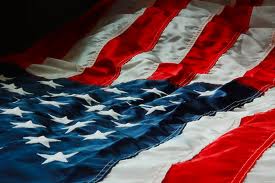
AMERICAN FLAG 1

By Don Kenton Henry


The Lady’s served her children well

She’s known joy and she’s known hell

She’s lost more than just one son and daughter too

She’s been through tragedy and triumph

Ever watchful and reliant

And she does it all for me and you


A shining beacon across the seas leading those yearning to be free

With hopes of dignity and safety; a chance to make a better life

Where a person is judged by deed – not their color or their creed

To pursue happiness and liberty without strife


But it’s easy to throw stones, cast bullets and throw bombs

At one who helps those who might be different

And none are quite so vulnerable as those who stand tall above the crowd, shouting liberty out loud

And dare give everyone a place at a table set for all

See Freedom cannot be when it’s meant for just you and me

It has to be for brothers and sisters weak and small – as well as strong and able

Let our differences not be a threat – this is the lady’s test

To keep us all together as a whole

So step forward, help her hold that torch, feed her heart, water her soul

Teach your young to drench the roots of freedom


But please bring something to her table; give whatever you are able

Let her know that you are grateful to live the life you choose

And realize the tide of freedom ebbs if that arm drops by her side

Then all you take for granted . . . we will lose


Take a stand – don’t bite the hand that feeds you

Don’t let us lose the right to speak, protect our families, take a knee or choose our leaders

It’s been a glorious ride . . . though of late she’s been mistreated

She can only be defeated from within

And you cannot keep her by replacing things which made her great

With things from which so many died and so many did escape

Cast your lot with Lady Liberty, ring her bell, water her tree

Lock hands and stand with me, keep her safe as she has we

Stand tall with our Lady Liberty


← Back

Thank you for your response. ✨

http://bardofthewoods.com

http://allplanhealthinsurance.com

https://thewoodlandstxhealthinsurance.com

thisdonald is “Ragin’ Against The Storm”

Leave a comment

THIS TALE WAGS ITSELF

By Don Kenton Henry

Alas, everyone who ever went as far as the fourth grade is familiar with the work of Mark Twain. And everyone who grew up in small town America can relate at least a little to that of which what he wrote. Twain himself grew up in a small town on a river. The “Mighty Mississippi”. I grew up on a much smaller river, The Wabash. My town―Finn’s Landing, Indiana―is even smaller than Twain’s Hannibal, Missouri today. This is only fitting since my reputation as a writer is also much smaller than Twain’s. Twain was a teller of tales. One of his, a Connecticut Yankee In King Arthurs Court, I did a humorous interpretation of in high school speech team competition with great success. Another, The Prince And The Pauper, was about a pauper who traded lives with a Prince. The entire country of sixteenth century England mistook one for the other. Like Twain, I tell tales but mine have one advantage over his. Mine are true. And I submit the circumstances described herein are proof that life imitates art more often than the reverse. Though sometimes I wish it wasn’t.

Everyone loves their pets. My favorite are dogs and I have had many. My father raised and trained bird dogs and, while he was around, that is mostly what we had. Once he left for Texas, at my age eleven, my mother let us have a German Shepherd. Later, when I was sophomore in college, I purchased a Great Dane puppy from Dan Bonfiglio, a dog trainer who had been the head of the canine corps for the US Marines during the Vietnam War and later trained animals for Walt Disney studios. He retired to acreage not far north of Finn’s Landing and taught dogs everything from basic obedience to guard and home protection. His favorite were Great Danes and he says mine grew into the most magnificent Dane he had ever seen. As with the great thoroughbred Secretariat, born in the same decade, one did not have to be a student of the breed to know that this was a specimen that came around once in a hundred years or more. Everyone who ever saw him agreed. His coat was the color of rich homemade peanut brittle and he had a mask as black as onyx. What distinguished him was, unlike most show quality Danes beginning around this time, he did not sacrifice substance for height. He was a throwback to the Danes of old―mastiffs―generally owned by nobility―that could bring down a boar or a stag. While modern Danes are so tall they appear as though you could knock them over with a feather, my dog, while tall, had a chest as broad as Mount Rushmore and just as hard as the granite mountain itself. His sculpture would have made a noble monument to “Man’s Best Friend”. When I came to  name him, I took inspiration from a dog in town known to everyone. Prince Valiant. He was owned by Mr. Jordan, husband of my sixth grade teacher and brother to our town optometrist, Dr. Jordan. Prince Valiant was a Great Dane also. Only he was black. Originally as black as onyx. However, by this time, much of his coat about his head had turned to gray. Completely obedient, Prince Valiant followed Mr. Jordan everywhere through town. No leash was needed for he never left Mr. Jordan’s side. Mr. Jordan must have been retired for the two were seemingly everywhere and inseparable. In town, where the courthouse square was the center of the universe, “Prince” (for short) was known and accepted by all the shop keepers. Even at Peter & Falk’s Drug Store soda fountain where we escaped the heat of many a summer day and where Mr. Jordan had lunch throughout the year. Prince would lie quietly sleeping at Mr. Jordan’s feet while the latter had his usual fare which consisted of a fried cheese sandwich with pickles followed by a hot fudge sundae. Prince would awaken to a maraschino cherry with some whip cream on a long soda spoon placed just under his nose. It quickly disappeared at the end of his long tongue and Prince knew that was his cue to get up and follow Mr. Jordan home. He was a noble, if now old, dog in his own right. And if he could be named after a Knight from Camelot and the Roundtable, my dog, even more magnificent, could be also. And so I named mine King Arthur, father of the Roundtable and King of Camelot. Though fictional creations―Prince Valiant in a Classic Comic strip―our dogs―like this story―are not.

In addition to a beautiful dog, I had a very pretty girlfriend by the name of Jill. She was perhaps even more proud of King (for short) than I and together we had taken him through basic obedience training with Mr. Bonfiglio and were in the midst of the advanced course. Jill resided with her family at her mother’s home in the country and late one Sunday afternoon I was there studying for a college exam when King uncharacteristically ran off from the yard. We began a frantic effort to find him. Up and down State Rd 19 we ran calling his name and searching the neighboring yards. Karl, Jill’s younger brother, had been outside and, according to him, King had not been gone long. But he was nowhere to be found. There was no trace of him along the road and, in an area where everyone knew their neighbor, King was not the kind of dog someone could simply bring in their house and hide for long. One giant dog had simply disappeared.

Nightfall came and, with broken hearts, we called off the search. The next day I went to the local radio station, WARU, and placed a radio ad for his return. By noon they were broadcasting it hourly. Back in those days, they did this kind of thing in small towns, free of charge, as a public service. By  evening, an anonymous caller contacted me and said that he had seen King not more than a quarter of a mile up the road from Jill’s in the yard of one Bill Pitts who lived just across a side road from the old, and closed, Victory School. The caller said King was barking at Mr. Pitt’s kenneled Brittany Spaniel. That was all the caller would tell me and then hung up the phone.

Now Mr. Pitts was known to Jill and her family as a cranky s.o.b. who couldn’t tolerate kids, especially those who occasionally cut through his yard after leaving what was left of the playground of the old school. He appeared somewhat nervous when Jill and I showed up at his door. After a brief introduction I told him of the anonymous caller who said he last saw King in Pitts’s yard. After looking down and shuffling in place Pitts admitted King had been in his yard barking at his penned hunting dog. He claimed he shooed him off by yelling and waving his arms. That was the last he claimed to have seen of him until that morning when he returned home at the end of the third shift at his factory job in town. He said King was dead and lying next to the road after obviously being hit by a car.

My stomach dropped. Jill put her face in her hands. We were crushed. “Where is he now? He’s obviously not still by the side of the road or we would have seen him,” I said.

“I couldn’t stand looking at a big dog like that lying there so close to my house, so I picked him up, put him in the back of my truck and took him to the landfill just south of Denver.”

“You took our dog, our beautiful dog to a dump?” said Jill, incredulously.

“He was dead. There wasn’t anything that could be done for him. I wasn’t going to dig a grave for a dog that big.”

“He had a collar on him with my number on it. You could have called me,” I said.

Pitts became increasingly nervous. One of his children who had been listening, a boy about nine years of age, ran from the room. “I didn’t see any collar,” said Pitts.

“We have to go up there and get him,” said Jill. “We can’t leave him rotting in a landfill.”

“Oh, I wouldn’t do that young lady. I’d just let it go. It’s not going to bring him back,” said Pitts.

“No. No―we have to find him. We’ve got to go,” I said. And with that we left his house.

We went straight to Jill’s garage and got a spade and a rake, put them in the back of my ’73 Chevy Vega station wagon. A steady rain began falling as we headed for the dump. It was just a few days before Thanksgiving and, in Indiana, that meant it was a cold November rain. We didn’t say a word to each other as we followed the signs to a side road and drove a short mile or two to the gates of the dump. I parked the Vega, we got out and walked up to the gates. They were bolted shut from the inside and a sign said we were to wait for an attendant. After a short while a man, who appeared to be in his mid to late thirties, attired in work clothes and boots, saw us and walked down the small hill to the gate. We stood there and explained the situation to him. “We’ve come to find our dog and take him home for a proper burial. Can you point us to him.”

The man looked between my imploring eyes and the big green eyes of Jill which were almost in tears. His face had softened and he appeared more and more pained as he listened to our story. Then he spoke.

“I am so sorry you lost your dog. But I have to tell you, no one is allowed to bring an animal carcass here except the county road crews or a licensed veterinarian. And your dog isn’t here.”

“But he has to be. Mr. Pitts said he brought him here himself―just yesterday.”

“I know Bill Pitts. Everyone here knows Bill Pitts. But no one gets in through these gates unless we let them in and Mr. Pitts hasn’t been here. Even if he had come we wouldn’t have let him drop off a dead dog.”

Three other men had come down the hill and listened sympathetically to our story and all agreed Pitts had not been there. We suggested that perhaps Mr. Pitts came in when they were distracted and begged “couldn’t you just let us look?”

Looking from Jill’s trembling lips to my hat in hand demeanor, they relented, noting it could cost them their jobs. They opened the gate and I drove my car past their work shed to the top of the hill. Mountains of trash rolled across the land forming greater and lesser heaps where, in a perfect world, fallen corn, remnants of a fall harvest just passed, or miles broadleaf timber, one time so thick the sun was a stranger to the forest bottom, should have lain. Nature was not as sympathetic as the men of the dump and the cold rain fell on us even harder as we waded into the stink and garbage filled abyss, she with the rake in hand and I with spade. We didn’t know where to begin so we just started at the edge and began working our way in. We split up with about twenty feet between us and slowly began turning over piece after piece of trash, each a record of a debit for a spent week in family’s life or the cost of a world turning. A milk carton here. A dirty diaper there. An old shirt. A broken chair. A dead raccoon. A possum. A maggot covered cat. A photo of an ex husband or boyfriend. Somebody else’s dog. Piles upon miles of bagged trash, rotting food. Rotting flesh. One can only imagine what the place would have smelled like in the July sun.

We labored for two to three hours and shivered with the cold. Occasionally we looked up and wiped the rain from our face with the sleeves of our hooded sweatshirts soaked through to our bones. I could see the county employees stop and stare at us and could see by their expressions they wanted to tell us how futile our search was. They wanted us to stop for it pained them to see a young man of twenty and a pretty girl with long blond hair and big green eyes desperately hurting and hunting in an infinite pile of human refuse for something which didn’t deserve to be there and, in actuality, in their minds, was not.

Finally, the guy who had originally greeted us at the gate came up to us once more. He brought us some hot coffee and told us we were going to catch our death of pneumonia from our effort. We accepted the coffee gratefully and told him we would keep working until they closed. At that, he made us a deal.

“Look. If your dog is in here …”

“King. His name is King―King Arthur,” said Jill.

“Look. If King is in here, he could be anywhere. There are four of us that work here. We go through this stuff all day long. We know what you’re looking for now and if anyone is going to find him, it’s going to be us. We know where you live,” he said, looking at Jill, “and, if we find him, we’ll bring him to you. You two go home now and get warm. Deal?”

I looked at Jill. She nodded and we each said, “Deal”. We shook his hand, took our rake and spade and, with heads down, trod back to the Vega and loaded up. The four guys of the dump lined up and watched us drive down the hill and out the gate.

On the way home we stopped at Bill Pitt’s door. He answered and we stood there shaking and shivering with the cold. I confronted him. “The guys at the dump say no one but the city can dump animals there. They say they know you and you weren’t there.”

“Well … Well …” he stammered, again shuffling from one foot to the next. “Yeah, well they weren’t at the gate when I got there. Maybe they were in their shed having coffee. I don’t know but I didn’t see them. I just drove in a little ways, dropped the dog off, turned around and got out of there. I had just worked a long shift and wanted to get home.”

“How did you get in the gate?” I asked.

“It wasn’t locked. It was ajar. Maybe they were expecting a city truck. I don’t know.”

I stood there staring at him. There was no way to disprove what he said. After what seemed an eternity, Jill and I turned, got in the Vega and left.

Two or three days passed and Friday night came. We were trying to move beyond our loss which anyone who has lost a dear pet knows is difficult under any conditions. All the more so when your beloved creature is supposedly disposed of in such a callous manner. But, as I said, we were trying to move forward and decided to catch a movie in Kokomo, twenty four miles away and the nearest town with multiple movies to choose from. We caught the 6 o’clock showing of whatever it was and returned to Jill’s house by around 9 that evening. After pulling in the drive, and barely exiting the car, we were greeted by Jill’s mother, Mrs. Robison. She said, “I want to prepare you kids.”

In the light of the porch we could see the look of discomfort on her face. “Just after you left, four men you met at the county dump a few days ago showed up. They explained how sorry they felt for you kids and how much they wanted to help. They said they had good news and explained they had found King and brought him here. According to them, he had been brought to the dump from Dr. Bird’s office after being put down.” We all knew Dr. Bird. He was one of only a couple vets in town and had been my family’s for all our dogs. “I took one look at him and told them I didn’t think that looked like King to me but they explained he was dead and that animals look much different dead. ‘And besides,’ they said, they don’t get Great Danes at the dump every day and this had to be him! So . . . finally, I let them carry him into the garage. He is in there in front of the car. I put a blanket over him.”

Jill and I were incredulous. At once we were happy King had been brought home for proper burial but, at the same time, distraught at the thought of seeing him in the condition of having been dead several days by this time. We stood over the blanket, hesitating until, with the greatest trepidation, I pulled it back.

We inhaled loudly in unison. “Holy crap!” I said.

“Oh, my God!” said Jill.

“Is that King?” asked Mrs. Robison from behind us.

“No!” I exclaimed. “This ain’t King but I sure as hell know who it is!”

“Whose dog is it!” begged Mrs. Robison.

“King Arthur is a fawn Great Dane. This dog is black! They’ve brought us Mr. Jordan’s dog. This is Prince Valiant! We all raised our heads and just looked at each other in disbelief.

As late as it was at this point, I went into Mrs. Robinson’s living room wall phone just outside the kitchen where I had grabbed the phone book from a drawer.

I dialed their number. “Hello. Hello, Mrs. Jordan. Is that you? . . . This is Don Henry,” I said. “You may remember me . . . Yes, ma’am. I thought so. Is Mr. Jordan in? May I speak to him? . . . It’s kind of important.”

A long moment passed and Mr. Jordan came to the phone. “Mr. Jordan, I have some bad news to tell you. Some men from the Denver dump brought a dead dog to my girlfriend’s garage thinking it was mine that I just lost. But it’s not. It’s your dog. It’s Prince Valiant.”

“What! What! Why that’s impossible! Prince was old and suffering so but I couldn’t bring myself to put him down. There must be some mistake! It’s been taken care of.”

“No sir, I’m afraid it hasn’t. I’ve got him here.”

“I don’t know what you’re talking about, Henry. My brother had been on me for months to do so and finally he said he would take care of it and talked me into it. I told him I didn’t want Prince ending up in some landfill. I wanted him to have a proper burial. Well, my brother, Dr. Jordan, you know Dr. Jordan―everybody does―told me he was too old to be doing so and it wouldn’t be easy to find someone to volunteer to bury a dog in this frozen November ground but―if I would give him fifty dollars―he would find someone to see that Prince got a proper burial in a nice place.”

“Yes, sir. I understand. And it hurts to tell you because I know how much you loved him, just like I loved my dog, but I know Prince. I grew up watching you walk down the streets of Finn’s Landing with him and watched you hand feed him maraschino cherries and whip cream at the soda fountain and this is him. This is Prince!”

“Just where does your girlfriend live, Henry?”

Jill and I waited nervously on the sofa for Mr. Jordan to arrive. Finally, the head lights of his car shone through the plate glass of the front window and moved across the living room as he pulled in the drive. By the time he got out I was already by his car door. “He’s in the garage under a blanket, Mr. Jordan. Head down, he shuffled forward as slowly and as painfully as Prince must have in his final days. Mrs. Jordan got out of the car but stood beside it next to me. Her hair was the same brilliant silver it had been when she taught my sixth grade class. She retired not long after that. She must have been sixty-five years old and that had been ten years before. Mr. Jordan appeared even older.

“Is that him? Is that really, Prince, Don?”

“Yes, ma’am. It is.”

“Oh, my lord. This may kill him,” she said as though she truly believed it.

Then from in the garage came a long moan. Almost a wail. It was the sound you would expect from a grieving spouse at the graveside of his dearly departed. Then the words, “That son-of-a-bitch! . . . That damn son-of-a-bitch brother of mine! I’m gonna kill him!” The caustic words pierced the cold, crisp air of that last of November nights of 1974.

I went to his side. He was kneeling, stroking the head of his beloved companion of fourteen years. No maraschino cherry would awaken Prince from this sleep. “That damn brother of mine took fifty dollars from me to bury Prince and he ends up in a damn landfill. My brother’s on the board of directors of the Killarney County Humane Society for Christ’s sake! Can you believe this, Henry?”

“No, sir. It’s hard to believe.” (“At least he gets his dog back in the end,” I thought. “Mine’s still out there somewhere.”)

“Help me get him in the car, son. Can you do that?”

“Yes, sir. I’ll get him in there.” And with that I carried Prince Valiant out (not exactly on his shield). Still wrapped in Mrs. Robison’s blanket, I placed him in the trunk of Mr. Jordan’s car. Jill, Mrs. Robison and I watched as perhaps the saddest man on earth slowly drove out the drive and headed down the hill to town.

Exactly a half an hour later, after the three of us collapsed on the living room furniture and let out a collective sigh, the wall phone rang. Mrs. Robison answered.

“Don. It’s for you. It’s Dr. Jordan,” she said, holding out the phone receiver with a look of “you better be ready” on her face.

Reluctantly, I crossed the room and took the phone. “Henry!” he said. “You son-of-a-bitch!” (It was a very popular description that Thanksgiving.) You gave my goddamn brother his dead dog back. How could you do that? Now the son-of-a-bitch says he is never going to speak to me again! What were you thinking!”

“Dr. Jordan . . .” I paused, took a deep breath, then continued. “Dr. Jordan . . . first of all, I had no idea four guys from the county dump would bring me someone else’s dead dog thinking they were doing me a favor. Secondly, I had no idea such an individual existed that would cheat his own brother out of fifty dollars under the pretense of giving his dog a proper burial. It seems to me, Dr. Jordan, that neither I or your brother are the ‘sons-of-bitches’.” Mrs. Robison and Jill’s eyebrows raised in unison with that one and, after a long pause, the line went dead.

Three and a half years later I graduated from college. My mother thought it would be a could idea for me to get my eyes checked before heading off to seek my fortune. The only optometrist I had ever been to was in Finn’s Landing. Not feeling the least bit guilty and somewhat curious as to how he would react, I let my mother book the appointment.

The reception was cool as I seated myself in his examination chair. “Almost four years later and my brother still hasn’t spoken to me, Henry.” Dr. Jordan said, as he proceeded to pull a very large pair of calipers from a desk drawer.

“Imagine that,” I mumbled.

He then measured the distance between my eyes from the inner edge of one to the inner edge of the other.

“Uhhh … huh. Just as I thought. Your eyes are very far apart. You know what that suggests don’t you, Henry?”

“I know what you’re suggesting. And I suggest you measure the entire circumference of my head before you jump to conclusions. All things are proportional and I’m smart enough to know that karma is a bitch . . . Wouldn’t you agree, Dr. Jordan?”

← Back

Thank you for your response. ✨

http://bardofthewoods.com

1 Comment

Every Summer Was A Circus

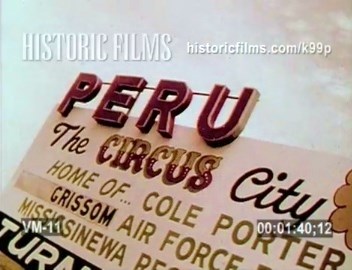
CIRCUS CITY USA SCREEN SHOT

BY DON KENTON HENRY


     I grew up in the most magical of places a boy could hope to. A place where every summer day was a circus. And when I was not watching in wondrous amazement . . . I was performing. The place was Peru, Indiana and my home at 333 Sycamore was directly across the street from the residential headquarters for retired circus performers. Oh, I am not speaking of an official retirement home. I am referring to Widow Finster’s boarding house. How, I do not know but it came to be home to Willie “The Great Wilno” – Human Projectile; acrobat and trapeze artist, Montago Vespici; bareback rider and stuntman, Sir Oliver Boliver; beautiful Queen of the Circus, The Stupendous Antoinette Silverado; Falala the Bearded Lady and clowns Paris Garters and Biffalo Buff. Those were just a few of the souls whose spirits I know now shine in the night sky but at that time lived and, for the most part, spent their last days in what would appear to most to be nothing more than another Indiana corn town. It was a time when I was growing up before their tired but still gleaming eyes.

Many other veterans of “The Greatest” and “Lesser Shows on Earth” would replace them until the last of these old timers had gone to The Great Big Top in the sky. Or perhaps to retirement homes in Sarasota, Florida. Sarasota became the new Circus Capital of The World after Peru surrendered that title when the winter headquarters, on two hundred ten acres a few miles outside town on the banks of the Wabash River, burned to the ground destroying the equipment, calliopes and magnificent circus wagons. That was November of 1941. But by the time I was a wide eyed tike, it was the early 1960’s and, like trout, weathered, tired, put out to pasture performers returned to the home they had known during so many winters. And found a home in that of the Widow Finster.

Me? No, I’m not Toby Tyler. They call me, “The Sheik”. At least that’s what the lovable, motley band of retirees from the three rings called me those years so long ago. Montago, the fearless King of the High Wire, was the one to tag me with this moniker. He anointed me such after calling me over to their home’s grand porch swing on which he sat most days, along with the others, idly swinging away the hours, watching in amusement as I and my loyal band of cohorts from The Viking Club (“No Girls Allowed!”) engaged in daring escapades oblivious to adult or parental observation. I was seven or eight years old at the time and had just dispatched a marauding gang of no less than three highwaymen with my sword fashioned from melon crate slats. This I did with graceful aplomb whilst parrying thrusts from their own swords with my trash can shield.

“I christen, you, The Sheik,” he said, in the most official of tones as Biffalo Buff and Paris Garters, seated next to him, nodded in approval. Lemonade in hand, Sir Oliver Boliver did the same from his white rocking chair under the porch fan.

“Why do you call me that, Mr. Vespici?” I asked quizzically.

“Not only because of your dashing heroics with the blade, Sheik . . . but because of your high cheekbones, dark exotic features and the wistful way the young damsels vie for your attention.”

“Huh?” I replied while cocking my head, totally puzzled by his explanation.

“Do not concern yourself, Sheik. It will all make itself abundantly clear to you in a few short years. And I, The Magnificent Montago, will be here to help you sort it out as need be. You can be assured.”

Falala laughed from under her beard, then gray and desperately in need of trimming, “You can be certain Monte will have that covered!” And with that I was off to conquer more continents.

Often times, it was the heat of the day which caused myself, my brothers, sister and the other neighborhood kids to congregate on that sweeping, wrap-around porch, shaded by it and just above the steps, at the feet of The Great Wilno who inevitably would get the conversation started. One day it began with something to the effect of, “Ah, the climatic conditions are ripe for one being shot from a cannon! Oh, to fly eighty feet through the air to be caught in the arms of a beautiful woman suspended from a trapeze. How I miss my youth in all its splendor!”

“What do you mean, ‘climaxic conditions are ripe’, Wilno?” I asked.

“Opportune, Sheik. Opportune!” he replied.

“Another word with which you will become familiar soon enough, Sheik!” interjected The Magnificent Montago.

“You really did that? You really let someone shoot you out of a cannon into the sky?” asked my younger brother, Preston.

“Not just anyone, son. Only my beautiful wife of forty years – Zazel!”

“And what happened to Zazel? Why is she not here with you, Wilno?” I questioned.

With that he cast his eyes to the porch and … after a moment’s hesitation … went on to explain. “On occasion she would allow me to shoot her from the cannon and, one windy  afternoon in Wisconsin, we attempted a shoot and she hit her head on the Ferris wheel. We must have performed that stunt a hundred times before and she always cleared the wheel. But alas, a gust of wind kicked up from out of those damn dells . . .” And his voice and mind drifted off to another place.

Sensing the consternation visible on our young faces, Biffalo Buff magically pulled some balls out of his pocket and start juggling them and Montago went inside to the kitchen and returned with a butcher knife only to begin sticking it down his throat to our horrified amazement. If it had been a day for barbecuing on a grill – as it always was on the 4th of July – he might have let a shish kabob catch fire and put it in his mouth and extinguished it! I swear that man was so multi-talented he could have filled in for any performance! One never knew when Biffalo Buff might pull his hat off to reveal a live parakeet perched on his head or Lady Falala would scream, “She walks, she talks – she crawls on her belly like a reptile! She’s a leapin’, screamin’, creepin’, crawlin’ mawnster! She’s eleven feet lawng and she’s alive! She’s the AllliiiigaaaaTOR Lady!” All the while pointing at some imaginary aberration of nature supposedly slithering on the floor in front of us until we kids – convinced something was there – jumped off the porch, squealing our way to safety. With that Widow Finster would giggle with delight and run to the kitchen to fetch us all lemonade.

Like life, summers always reach a point when one senses their eventual, then imminent passing. At this point one reaches to grasp, then savor all that is good about these treasure chests of limited opportunity. This epiphany usually dawned on my barefoot band of renegades, sidewalk surfers, Wabash river rafters, catfish catchers, gravel pit swimmers and pillagers of backyard gardens after the first week of August and before Labor Day. As a means of consolation and out of empathy for our loss of youthful freedom, which they had spent their entire lives resisting, the performers took to organizing a circus with which to celebrate another great summer before adulthood robbed us of all innocence. Before life bridled our enjoyment of it absent commitment and inevitable responsibility. In these special performances, we – The Viking Club and other children of the neighborhood – constituted the entire cast. In 1964, my tenth summer, I was designated by Wilno to be the Grand Ringmaster. The Stupendous Antoinette lent me her bull whip which I learned to crack with proficiency after hours of practice on my own front steps. Of course the real circus veterans were behind the scenes organizing the acts, lending us props, coaching us for the various stunts  and ever observant for our safety. The acts were always held in the large side and back yard of my house on which set a massive two story garage. It was assembled with wooden spikes and hand hewn beams and, in the early years of the 20th Century, the bottom floor served as a stable and a place to park one’s carriage while the second floor served as a hay loft. In reality it was an historical urban barn. In our case – a Big Top. From the rafters of what comprised the first floor ceiling were suspended a trapeze and Little Karem Atkins, under the tutelage of Montago, would here become our high flying artist and catcher for his coy and winsome partner, Elizabeth “Freckles” Lovette. The Goode brothers and Marla Markowski learned the tricks of the clown trade from , Biffalo Buff and Paris Garters. But the coup d’ grace and The Grand Finale of this year’s show would be performed by “Bucktooth” Wally Woodhams who billed himself as none other than – “The Great Wally!”. His act of course was choreographed by The Great Wilno himself and consisted of Wally being shot from a cannon. That we had no percussion device of any sort, much less one for large enough to eject a slightly pudgy eleven year old, at first seemed something of a problem. This, in fact, was no deterrent because Wilno had been the original creator of the cannon which launched him over amusement park rides and to the top of circus tents on thousands of occasions. And the loss of the beautiful Zazel on one bad day could hardly be counted against him. So it was of little surprise to all when he constructed our personal version of The Big Gun from a garbage can. The garbage can was first suspended from three ropes – two tied to each of its handles at the open end and one at the top of the opposite end. The ropes were then tied to a large branch of an oak tree such that the can suspended in a horizontal position parallel to and about six feet off the ground. One end of another rope was then placed through the bottom of the can and its opposite end trailed thirty feet or so where it was tied to the trunk, among the upper branches of a mulberry tree, above a tree house. The tree house was more of a platform as it consisted of only a floor and no walls. The concept entailed the garbage can being drawn up to the floor of the tree house where Wally would climb in, football helmet on his head. On cue from the band – comprised of one snare drum and two clashing garbage can lids – the rope would be released, sending Wally , in his can, swinging from the tree house only to be brought to a sudden and excruciating halt on the upside of a grand and sweeping arc when the slack played out of the rope. The theory was that, at the point the can came to halt, Wally would be ejected and – after flying approximately ten feet up and through the stratosphere – would land on a double mattress complete with a plastic cover which was a remnant from my bedwetting days.

The opening act would be a fearless display of hyperactive tumbling in one of the three rings composed of a deflated plastic swimming pool and slip and slide separated by the Main Ring. The latter was created by a making a circle in the grass with fifty feet of garden hose. The gymnastic feats would be performed by kids as little as four and five followed by a live animal act composed of my Brittany Spaniel, Princess and my brother Preston’s Chihuahua, Karen, jumping through hoops while my pet raccoon, Rocky, walked a tight rope in pursuit of a marshmallow. A caged tabby cat would be carted around among the perimeter of the yard in the back of a red wagon drawn by a toddler, my little brother, Mark. And this was followed by Becky Frushour, in leotard and tutu, crossing the same rope the raccoon had just walked except that she would hold a broom stick as a balancing pole. The entire extravaganza had been well advertised by poster boards nailed to telephone poles, throughout the neighborhood, announcing it a full ten days ahead of the performance. It always took place late on a Saturday afternoon so all parents, grandparents and cousins could be there.

The big day arrived and, as anticipated, the event was well attended. The audience came from two or three surrounding blocks and most found seats in the rows of folding chairs encircling the three rings. These were borrowed from the Presbyterian Church just behind my house and of which we were members. Those who could not find seats, or simply chose to, spread blankets and enjoyed picnics on the lawn.

The opening act finished to rousing applause and Becky’s tight rope act received the same. With that, I motioned everyone to the garage stable where Karem swung from the one trapeze to another, culminating in the Freckles Lovette swinging into his gangly arms.  All the while, clowns mingled among the audience pulling stunts with timing honed by countless hours practicing on The Widow Finster’s porch.

Things were going magnificently until Rocky took an exit from the animal high wire act in an attempt to steal a box of Good & Plenty candy from an elderly patron, Mrs. Braun who was sitting in the front row under an apple tree. She was not about to surrender it and put up a valiant struggle in which Rocky discovered a treat he liked even more. Ear wax. That animal went into a frenzy over ear wax and, sensing something special about Mrs. Braun, wrapped his legs around her neck and head, grasping handfuls of her silver bouffant and buried his muzzle deep in her ear. Rocky was chirring at about one hundred twenty decibels but Mrs. Braun’s blood curdling yells exceeded the level of a jet taking off on the deck of an aircraft carrier. Her cries for help brought those not terrified of rabies rushing to her aid and I, myself, was cracking my ringmaster’s bull whip like a Clyde Beatty, the famous lion tamer, as Rocky persisted in driving his nose deeper and deeper in her inner ear canal. Like the Pooh bear, he had found a honey hole. At last, The Stupendous Miss Silverado arrived on the scene and calmly placed her hands on Rocky and whispered something in his own furry ear. With that he released his death grip on Mrs. Braun’s head. Antoinette clutched him to her ample breasts, bent and retrieved the box of Good & Plenty and left with Rocky, disappearing into the Widow Finster’s house. I dropped the whip and applauded enthusiastically. At first, I did so because I was actually utterly amazed at the spell Miss Silverado cast on Rocky. But, in the end, in an attempt to make the audience think it was part of the act. Expressionless, they just stared at me and did not share in the applause.

Eventually calm was restored and the final act began, although Mrs. Braun had not remained to see it. Bucktooth, a.k.a. – The Great Wally! – climbed the slats nailed to the side of the mulberry tree onto the platform. Once there, he stood and saluted the crowd. At that point a drum roll commenced on the snare drum below and Wally crawled into the garbage can feet first. A number of parents began to look about nervously as he was about twenty feet off the ground. The Great Wilno, however, was standing by nodding and smiling reassuringly. It seemed to calm the crowd to know a true professional was overseeing this amazing, death defying stunt. I had abandoned my post as Ringmaster and climbed to the platform also. Wilno took over and directed everyone’s attention to the platform high above the ground. The drum roll was to continue another thirty seconds after Wally climbed into the breach, followed by a clash of the metal trash can lids below. That was my cue to push the can and Wally off the edge of the platform, while making certain the slack rope attached to the rear of the can played out. The eyes of the audience below, especially the children, were wide with excitement. The trash can cymbals clashed, The Great Wilno nodded and I pushed the can off toward the lawn below. Things went according to plan. For about the first ten feet of the downward trajectory. That is when the rope behind me became snagged on a nail that, unbeknownst to us, had worked its way out of a board and just high enough for the woven hemp rope to catch on. As small as the nail was, it was strong enough to bring the falling can to an abrupt halt about ten feet off the ground at a forty five degree angle. To the shock of all, Wally was ejected straight into the Kentucky Bluegrass of our lawn. His hands had been pressed tight against the walls in order to hold himself in during his descent but they slid through the exit first and were the first thing to hit the ground, breaking his fall. He flipped forward onto his back and lay there as Wilno and all the adults ran to his aid. Fortunately, Wally fared better than the beautiful Zazel and, after a good cry, got up to scattered applause and even took a bow while managing a feeble grin. The Great Wilno was officially retired by the parents in the neighborhood; the crowd disbanded and this was the last time a Human Projectile Act was part of the Sycamore Street Circus.

With the passing years, I spent less time on the Widow’s porch and younger children took my place as I came to understand the meaning of “opportune” and to fulfill my destiny as, The Sheik. Still whenever I was about to jump in my Chevelle or climb on my motorcycle and saw one or more of the performers wistfully watching from across the street, I would pause, walk over and exchange a few words. The Magnificent Montago was especially grateful whenever I brought a pretty female friend to meet him. His eyes would light up as I imagined they always did when he climbed to the top of the big top, looked down and heard the roaring applause of the crowd below. “Protect the Princess well, Sheik,” he would say as we departed. Later still, I would visit when home from college for the holidays and to the last of them, their first concern was always to address my welfare.

One trip home was for the most auspicious of occasions which occurred when The Magnificent Montago and The Stupendous Antoinette Silverado were joined in matrimony on a trapeze platform high above the sawdust of our local community circus – another gift of the performers to our town. My parents divorced when I was twelve. My mother was only thirty-eight at the time and still a very pretty woman. As such, she began to receive entreaties of courtship from various members of the community. By no stretch the least earnest – and certainly the most interesting of which – were from Falala, The Bearded Lady. My mother, being a very conventional but gracious lady, informed Falala that, “my trapeze doesn’t swing that way.” Ok – those might be my words – not hers – but Falala got the point and was crestfallen. So much so that she actually shaved her beard and cleaned up her act. Eventually, however, she rebounded and ran off with a senior biker chick who came through on a road trip. Next thing we knew, she was riding bitch on the back of a Harley across the Wabash and outta town. As the entire crew waved good-bye from the The Widow Finster’s porch, Wilno, said, “That biker’s one butch chick. I didn’t think Falala would ever ride bitch behind anyone.” And that’s the last we saw of her until the funeral of Biffalo Buff.

One day, while away at school, my mother called in the pre-dawn hours of a winter morning to tell me Biffalo Buff had passed away. He had been my favorite of the clowns, never, through the years, having failed to make me laugh. No matter how many times you’ve seen it, there is something endearing about a bird under a person’s hat. I recalled this and so much more as I packed my weekend clothes for the one hundred twenty mile ride home to attend his funeral.

Now how can you do justice to a funeral where the entire first row consists of clowns in full costume and makeup. The world’s most famous clown, Emmett Kelly was in attendance as was his son, also a clown, Emmett Kelly, Jr. Beside them sat Paris Garters, Banana Puddin’ and Daffy the Duck Wrangler. Also in attendance of course were the rest of Widow Finster’s boarders as well as additional circus performers who traveled from as far as Sarasota and Arizona to pay tribute to one of their own. We could have managed one heck of a circus with just the people in the funeral audience. If you think a funeral is a somber affair – regardless the deceased – think again. The first thing which distinguished it from the more morbid affairs we may be accustomed to came to my attention when the minister of that same Presbyterian Church came in and unknowingly took a seat on a whoopee cushion hidden under the pad of his chair. It was an enormous whoopee cushion and that kind of broke the ice, so to speak. With that invisible birds began chirping, slide whistles began blowing and cuckoos went off! One by one we began to file by the casket for one last look at that beautiful white and red face paint under a wig of orange hair. Not only was his smile painted on but it seemed that even under his makeup a real smile graced his face. Though I smiled back at my old friend, tears welled in my eyes as I leaned in  for a closer look. And that’s when it got me. A million times he had gotten me as a kid on that front porch but I never saw it coming. As I leaned over his face prepared to say, “good-bye my friend”, a stream of water squirted from the daisy on his lapel and got me right in my left eye! I caught my breath at the shock and jerked my head back wiping my face with my hand as the entire audience erupted in thunderous laughter and applause. And of course the sound of birds, whistles and cuckoos reached a crescendo! I and smiled back at the audience who could not tell my tears from the water on my face.  To this day, I do not know how or who pulled off water squirting from a dead clown’s lapel from within his casket. Did he have outside assistance? Was it divine intervention? Or was it just another perfect prank by my good friend, and one of the other world’s greatest clowns, executed – as in life – with perfect timing from the other side?

Ultimately the minister took the podium and spoke of how Biffalo Buff had brought much laughter and joy to the church, especially to the children and how charitable he had been volunteering his services for every worthy cause. He spoke of how heaven was going to be a much funnier place with Biffalo Buff there to greet the newcomers. Then close friends were given an opportunity to say a few words and there was seldom a point at which most, if not all of us, were alternately laughing and crying as each recalled a particular stunt, shtick or attempt to cheer us by Biffalo.

The Great Wilno took the podium and, after his bittersweet eulogy, to my surprise said – “Biffalo would be most happy to know The Sheik is in attendance,” and asked if I had anything to say. As a nervous twenty-year-old, I took the podium and, after some pause and hesitation, I smiled and said, “In life, and now in death, he has made me laugh. He always said life is an act in which we all perform.  We can choose either to be happy or sad performers. And – ‘I choose happy’. Laughter was his gift to the world and was one he would hope each of us would share with each other. I will do my best, to do my part.”

← Back

Thank you for your response. ✨

http://bardofthewoods.com

                                                                        
Circus Busch GREAT   WILNO (c.1927 – One Sheet)
1 Comment

LET THE LEAVES BE POETRY

LEAVES 2
By Don Kenton Henry


You were a beauty rare
I was a man with dearth of words
A paucity of poetry I claimed
I cursed my thoughts should go unheard
You, lover of song and mirth ― how could you have cared
For I without a worthy tribute


O what I’d given to have found a way
To tell you what I was feeling
And taken way your breath
To have set your heart to reeling


But no bard was there about
To take to task, for words to lend
So this simple man asked nature’s hand
I took a knee and begged the forest shout
Asked the words come from the land


And they answered


It started with the seeds of life, sprouting in the fertile ground
And soon the rustling of the leaves began to plead my case of love for me
So I stepped back and listened to a sound sent by the sea
It recognized the yearnings of my heart and sent a long and pulling tide


I watched the wind catch and whirl you with a waltz
And the clouds offered a warm summer rain which fell in three quarter time
As a gentle rolling thunder played a whispered bass


The sun appeared and caressed your face as though it were my touch
Then the sky drew a curtain and the moon lit like a distant lantern for you to see more clearly
And a southern breeze whispered in your ear ’twas me who worked their hand
The seeds the leaves the ground the tide the sun and moon the wind the southern breeze the land


And you listened
And you heard


And you took my hand and said what a poet was I to command nature’s greatest gifts ―
For elements that shape mountains earth and stone to heed my beck and answer to my call
And the petals of a million flowers fell like confetti upon us from a rose hued morning sky
And the willows no longer weeping did a curtsy
And lonely darkness said good-bye

← Back

Thank you for your response. ✨

Leave a comment

2014 in review

The WordPress.com stats helper monkeys prepared a 2014 annual report for this blog.

Here’s an excerpt:

A San Francisco cable car holds 60 people. This blog was viewed about 1,600 times in 2014. If it were a cable car, it would take about 27 trips to carry that many people.

Click here to see the complete report.

2 Comments

A JIM BEAM CHRISTMAS

By Don Kenton Henry

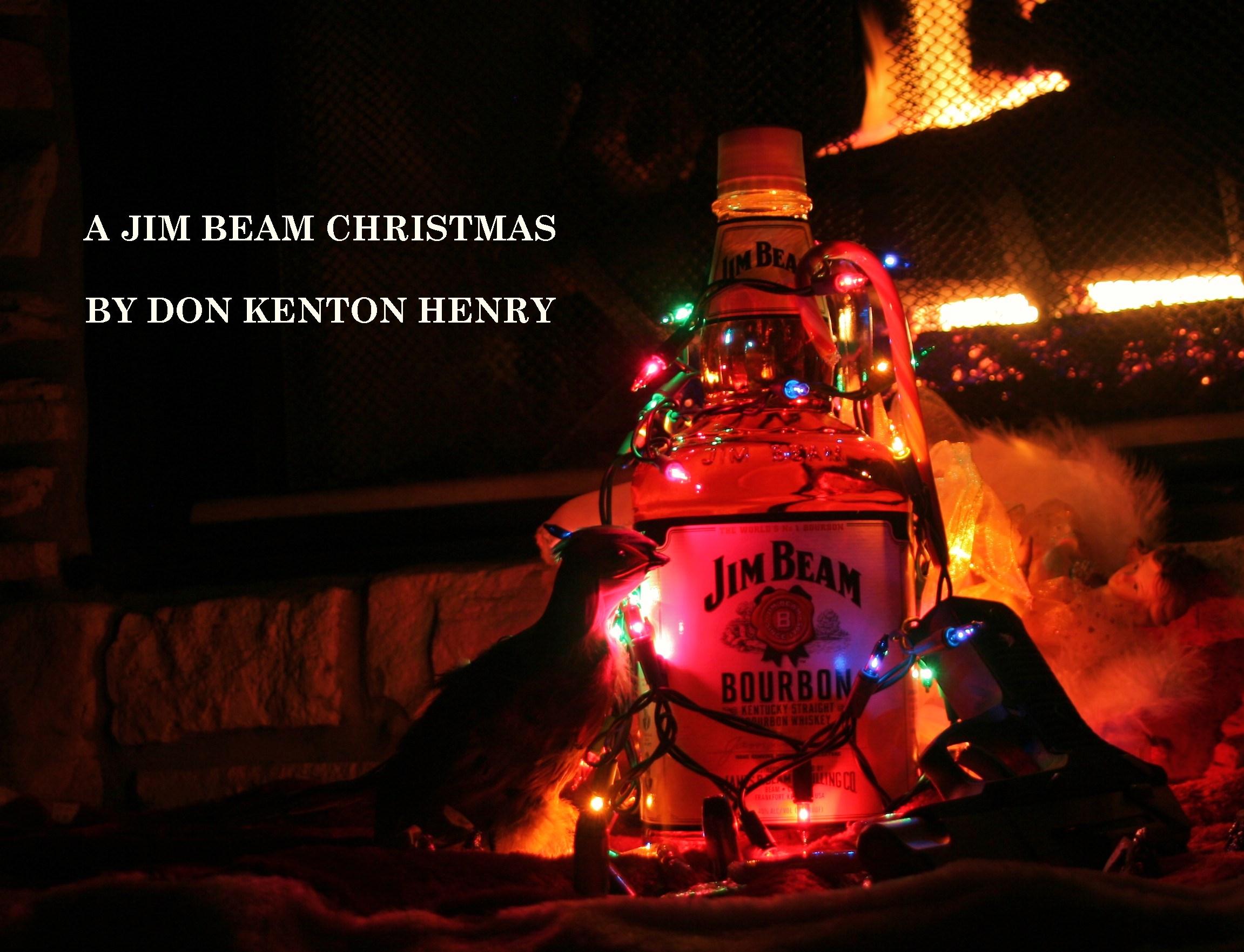
   JIM BEAM CHRISTMAS TITLE PHOTO

King had a soft mouth. That’s what my dad always said. King was dad’s prize, field-bred and accomplished, orange and white Brittany Spaniel. A “soft mouth” is a bird hunter’s parlance for a dog that will retrieve without ruffling a feather or bruising an already damaged quarry. This, and his ability to find quail or pheasants where other dogs found none, made King a stud dog in high demand throughout Central Indiana and Ohio. In addition to a beautiful hand engraved over and under Remington shotgun, he was my dad’s pride and joy and one of his few valuable possessions. And it was King that was with him when he showed up at our door that Christmas day, 1965. Except that King stayed in the car. After all, he was a working dog and not to be coddled.

We hadn’t seen either of them since Mom filed divorce papers back in October, two days past her thirty-seventh birthday. That happened after Dad lost his job as a used car salesman when he punched Mr. Richter, of Richter & Kern Buick. He knocked him through the plate glass window of the sales office onto the car lot after “one too many” over lunch at the pub across the street from the new car showroom. It just so happened the police station was two doors down from the pub. Mom had to bail Dad out of jail, and the incident made the second page in the Finn’s Landing Republican. She was certain it could cost her her job as a Killarney County Extension Agent, and that’s when she went to see Al Cole. Al was a respected and established attorney with whom she was acquainted from his comings and goings in the county courthouse where Mom’s office was located.

It was not yet mid-morning when the doorbell rang. I answered, and there, against a backdrop of newly fallen snow, stood my dad. Normally, he would have walked right in the back door wearing the attire of a field guide. That was his job at that time, at the Flying Feathers hunting preserve near Warren, Indiana. And it’s where he had lived since the divorce papers forced him out of our house. And from where he had driven that morning. Usually, by now, on a day off―and especially on a holiday―he’d be drunk. But today was different.

He stood there in pressed, cuffed wool slacks and a starched white shirt. He was minus a coat despite the cold. I surveyed him from his black dress shoes, spit-shined the way he always polished them after eight years in the Navy, to his jet black hair with nary a speck of gray. It was perfectly combed with a little dab of Brylcreem and set off his deep blue eyes. It was seldom I had seen them clear in recent years, and they stood out in brilliant contrast to my own, which he always said got washed out in the rinse cycle. His arms were full of brightly wrapped Christmas presents. He was thirty-eight years old. I was eleven.

“Merry Christmas, Junior!” he exclaimed. “You going to open the door and let your old man in, or are you going to make me freeze out here?”

“C’mon in, Dad,” I said, standing aside. My siblings had heard his voice and came running as he stepped from the foyer into the living room. I was the oldest of four and named after him. Hence ― the reference to “Junior”. Preston was seventeen months younger than I and age nine. Mari Jessica, his little Princess, was seven. And little Mark, five. They all gleefully rushed to hug him, and he hastily set the gifts down to wrap the three of them in his arms. I stood off to the side, watching. I had been on the front line with my mom too long but still wanted to believe this holiday would remain different. However, experience made me apprehensive, and I couldn’t help wondering if the other shoe would drop. My mother entered the room. She was wearing a red checkered cotton dress she had sewn herself. All of her spare money went to things for the four of her children. Store-bought clothes and books. She never denied us a book. She looked beautiful in her simple, modest way, with the red, green, and blue Christmas tree lights reflecting off her thick dark brown hair. “Good morning, Marietta. Merry Christmas!” he said. His voice was cheerful but belied the wistful look in his eyes.

She forced a weak smile in return, which I knew was for the sake of my siblings, and said, “Merry Christmas, Don. You can put the gifts under the tree with the others we waited to open until you got here. I’ll get you some coffee.” This she did but immediately returned to the kitchen, separated by a swinging green door from the rest of the house. There, she would smoke her cigarettes, drink her own coffee and try to get lost in a book that would take her far away to some romantic island or mansion on a hilltop for a while.

Dad walked to the sofa, the littlest two clinging to him. He took a seat at the end of the sofa across from the fireplace. My sister promptly climbed into his lap. Preston and Mark crowded in next to them. I took a seat in a stuffed chair along the wall between the Christmas tree and the fireplace. A real fire blazed in it, and the scent of burning oak mixed with that of sandalwood, cinnamon, and myrrh from the lit candles on the mantle adjacent to the cardboard figures of Mary and Joseph kneeling next to the cradle of baby Jesus. My dad took this in then turned his attention to the tree. “That’s a real pretty tree. Did all of you help decorate it?”

“Yes!” the four of us chimed.

“And will you look at that angel at the top! I always loved that angel. She’s such a beauty!” He was right about that. Her face was befitting . . well―an angel! But it was her wings that made her so special. They were made from real feathers, probably from a dove, and remained pristine white because my mom sealed the angel carefully in plastic wrap after taking her down each year. Those great arching wings rose from her back, high above her shoulders, and tapered to fine tips below her delicate sandaled feet. When I was very little, I imagined she could really fly and dreamed of flying off to heaven with her.
“Your mother and I were given that by your grandmother Jessie on our first Christmas together. Don’t ever let anything happen to it. It’s special.”

“Why would we let anything happen to it?” I asked.

“Well, I know you wouldn’t,” he answered with a wink.

DON HENRY SR

Now my dad could be a real charmer when he was sober. That’s how he won my mom. He had come home on leave from the Korean War and his sister, who was a student at Purdue University, set him up on a date with my mom, who was also a student there. With that smile and those eyes, quick wit, and intelligent enough to say all the right things, he won her over. The problem, however, was that he was sober less and less as the years went by. My grandfather, her father, had warned her not to marry him. To my knowledge, it was the first and last time she ever went against her father’s wishes. After a while, Dad rose from the sofa and said he would have a cigarette in the kitchen, and then he disappeared behind the green door.

I knew what was coming down. He didn’t want the divorce. When sober, he knew my mother was the best thing he had going for him, and he didn’t want to lose his family. He loved hunting, fishing, hanging out with the boys, drinking whiskey, and getting in fights. But when he sobered up, he liked having a stable place to come home to and a wife who could keep a steady job. Besides that, I think he really loved my mother and each of us. He’d shown up impeccably groomed, wearing aftershave. He probably thought once he got mom to the side, he could humbly apologize for being such a boorish fellow, win her back, and all would be well. The way, I am certain, he had done a thousand times before. He’d promise to turn over a new leaf and treat us all better. I also knew what her answer would be. She’d had enough of the physical and verbal abuse, coupled with the humiliation of her husband’s drunken behavior making our small-town paper. But it was only the concern for the safety of her children which had brought her to this place. She could no longer guarantee that if he remained in our home.

The four of us watched Miracle on 34th Street, or one or another Christmas movie classic. After what seemed an interminable period of time, Dad emerged from the kitchen by himself. His look said it all and confirmed my prediction. I let out a sigh of relief as, I must admit, some small part of me had asked, “What if he changes her mind?”

He suggested it was time to open our gifts and went to his car to get a few more. He made two trips, returning the first time with a large box, then, after staying outside a little longer, returned with a second identical box. He asked that my sister and little brother, Mark, go first and open the smaller packages with their names on them. I can’t remember what he got them. It was probably, among other things, a piece of jewelry for my sister. What I do remember, is he lavished us with gifts far beyond what was appropriate for a man with his income. Preston and I received the contents of the two big boxes. In them were huge, very heavy sleeping bags. In a day before space-age materials, they were sleeping bags made from heavy canvas, stuffed with goose down. As the accompanying literature said, “Guaranteed to Keep You Warm at 40 Degrees Below Zero”! Obviously, he was taking us on a hunting exhibition to the North Pole to begin the New Year. And he made a point of letting us know how much the sleeping bags cost but emphasized we were worth it. Years later, long after his death, I had a conversation with Preston in which he said he had tried to purchase Dad’s shotgun back from a guy in Rensselaer Dad had sold it to. The man wouldn’t part with it even when Preston offered him twice its value. Looking back, Dad must have sold it to him about the time of that Christmas of 1965. He then moved to Texas, never to return, except for two brief visits, shortly after the divorce was final in the spring of ’66.

The others fell all over themselves, thanking him for being extravagantly generous. Even I felt a little guilty for the cold shoulder I had been giving him and crossed the floor to give him a hug. His eyes shone until he looked to the green door, and then you could see the sadness enter once again. While the two youngest played with toys, Preston and I climbed in our 40 below sleeping bags in front of the fire, and Dad disappeared out to his car once more. This time he remained outside much longer. When he returned, he bent down to show me how to unzip and remove the fine wool liner from the sleeping bag for warmer weather. I could smell whiskey on his breath. In my eleven years, I had come to know the smell of Jim Beam like he was a member of the family. And I knew this holiday was far from over. He became quieter and stared into the fire more as the rest of us watched that Christmas classic unfold on the television. I tried to pay no mind as he made another trip to the car. This time he returned and broke the silence with a question. “I hear you’ve been picking on your brother Preston, Junior. Is that right?”
I rolled over on the bag to look at him. “Well, when he bugs me on purpose and rats on me to Mom and Grandpa, yeah, I guess I pick on him.”

“You’re quite a bit bigger than he is. How would you like it if I hit and picked on you?” he said. I don’t recall if I had an answer but the next thing I knew, he rose from the sofa and challenged me to a wrestling match. I also don’t recall my weight. But as I weighed only one hundred thirty-five pounds when I got my driver’s license at age sixteen, I couldn’t have been over one hundred pounds five years earlier. I was scared as he came toward me, but hoping his inebriation would work to my advantage, I dove for his legs and tried to take him down. He wasn’t big himself but, well ― at twenty-seven years my senior, you might guess he was getting the better of me, despite being drunk. He executed what I later came to know as a “single underhook”. That’s a wrestling move, and he underhooked my left arm and drove his weight down and toward it, forcing me to fall backward. We hit the edge of the Christmas tree and knocked quite a few trinkets off. A hollow glass Frosty the Snowman crunched under his foot as I fell against the humidifier. It stood about two feet high and had a lid with four very sharp corners of folded sheet metal. In falling, I had twisted my body to reverse our positions. In doing so. I caught the inside of my right wrist on one of those corners. The cut wasn’t long, less than an inch. I know, for I am looking at the scar as I write this. It was, however, deep, stopping just shy of a blue vessel, clearly visible at the cut’s deepest point. It wasted no time in bleeding like crazy, but the fight, or wrestling fiasco, did not end there. He had me in a bear hug, and I had my little arms locked around his head. He was trying to make me cry or say “UNCLE”, I guess, but I wouldn’t, and my siblings were cheering for me. Even Preston. I remember him yelling, “C’mon, Donnie! C’mon, Donnie!” and I can see his chubby face and remember him cheering me on from where I lay under my dad. Of all the things, Preston cheering for me, after all, I had picked on him, is the last thing I will forget of many more memories yet to be made that day. Finally, my mother heard the commotion and came out to find the blood of her oldest boy covering the vinyl floor of the living room at the base of the tree. Looking back, her decision to go with vinyl flooring instead of carpet, considering she had four young children yet to raise, was a wise one in times like this. Screaming, she got my dad off me. I stood and stared at my bleeding wrist. “How’s it feel, Junior?” he said before stepping out to the car again.

Mom got the first aid kit, wrapped gauze around a sterile pad she placed over the cut, and taped it down. It should have been evident at the time that the wound could have used a few stitches, but no one, least of all me, wanted to go to Dukes Hospital on Christmas Day. I remained silent on the issue, but after the three younger kids insisted she not make our dad leave, Mom returned to the kitchen, and I said I was going outside to check on King. Preston got up to follow me, and dad, once more, resumed his position on the sofa while the two littlest played with their new gifts. I imagine they tried to pretend the recent “SMACK DOWN OF DONNIE” had merely danced in their heads, no more real than visions of sugar plums.
I went to the curb where dad’s Chevy station wagon was parked, and Preston traipsed behind, still in his red and white striped Christmas pajama pants and slippers. King was sitting on the front bench seat, rose, and began wagging his stubby tail when we opened the passenger car door and slid in next to him. The vinyl was cold under our butts, and King’s nose was as warm and wet as his tongue felt to us when he licked our face. You could see his breath as he panted and ours as we laughed. It was so cold, we wouldn’t stay long without our coats, and we were just about to return to the house when I spied it. It was on the floorboard with its neck resting on the brake peddle. The bottle of Jim Beam. I reached past King and raised it in my hand. I looked at the label and then at Preston. A huge grin appeared on his face, exposing his teeth’s blindingly shiny braces. He didn’t have to say a thing, and neither did I. We both knew the drill. We had done it a hundred times before when dad’s bottle sat on the floor at the top of the stairs outside the kitchen’s rear door. While I popped the cork on that bottle, Preston rose to his knees on that bench seat, popped his little pecker out of those pajama pants, grabbed the neck of that bottle, and peed at least have a pint in what started as a half-full quart bottle. Steam rose out its neck as the warm piss hit the cold Kentucky bourbon. By the time he finished, I had whipped out my little wanger and did the same. Looking in each other’s eyes, we both giggled, and King wagged his tail furiously with approval. After putting the cork back, I turned the bottle over a time or two and put it back on the driver’s side floorboard before we left the car, hurried up the steps and into the house. We had no sooner kneeled in front of the fireplace to warm up when Dad again went out the front door. Preston and I just looked at each other.

Anxious minutes later, he returned with King by his side. King had not given us away, and―to our great relief―dad was no more the wiser that his bottle of Jim Beam had somehow amazingly replenished itself. Perhaps he took it as a Christmas miracle of sorts. We jumped up and welcomed King, who was shaking a little from the cold. After letting us fawn over him for a while, he lay down at the end of the sofa next to Dad’s feet, let out a sigh, and soaked up the heat of the smoldering fire. This was a rare treat for a working dog usually confined to a straw-filled dog box in the back of a truck or a kennel run alongside Labs, Retrievers, English Pointers, and fellow working dogs. Twice more, Dad went out to the car. And twice more, after he returned, Preston and I made an excuse to go outside and top that bottle off. Along with the bottle of Hai Karate After Shave we had given him, this was our Christmas gift that kept on giving.

HAI KARATE AFTER SHAVE PIC

The last time he returned from his trip to the car Jim Beam walked in beside him and, invisible to everyone but me, tipped his hat to all. The Spirit of St. Nicholas slipped through the green door past my mom and out the back door of the house. I watched my dad’s eyes. I could see the shine had gone out of them and had been replaced with a dull, hardened look. A look of resignation. It was a look that only the family and friends of an alcoholic, or otherwise addicted person, know as “a switch that is flipping”. His shoulders were less squared. He slumped in his seat and looked much smaller now. His countenance reflected a realization that -for once in their twelve or thirteen-year history – he could not successfully work his charm or impose his will on my mother. I gripped the carved claw handles of the easy chair. The rest of the kids were oblivious.

In one swift, smooth move―even I could not have anticipated―and without the slightest change in expression―he reached behind his back into his waistband, drew his M1911 .45 caliber pistol, the standard-issue sidearm for the United States Armed Services from 1911 to 1985―and fired a shot into the burning logs of the fireplace. Red-hot coals of the crackling fire spewed like fireworks from behind the steel mesh of the spark arresting curtain. The concussion of a second shot sent an entire flaming log into the air, and a third caught it before it could drop and sent it flying out and onto the hearth. Fortunately, the sleeping bags―good to 40 below―were also good to the point of combustion. Obviously, they had been treated with some fire retardant substance for hot coals coated them, and they did not catch fire. The other kids’ dove for cover under various pieces of furniture, but I sat frozen in my chair, too shocked to move and not wanting to get in the line of fire. King did not flinch. He was used to gunfire. Apparently, even in family living rooms. Then I watched, and as if in slow motion, Dad turned the pistol toward the top of the tree. Without a moment’s hesitation―not to aim or otherwise―BLAM! He shot the angel dead ― center mass! She slammed against the wall and dropped behind the Christmas tree. King didn’t miss a beat but acted instinctively. I was still staring at the hole in the wall when he trotted out from behind the tree as though it were just another piece of brush at the edge of an Indiana field of fallen corn. He gently lay the fallen angel in dad’s open palm. “Good boy, King,” dad said, turning the angel over and running his finger down the smooth, perfectly intact, white feathers. “You’ve always had a soft mouth.”

In the years that passed since that Christmas of 1965, I have entrusted this story to a select few. Some accuse me of embellishing it. Others listen in amazement and then interpret it as some bizarre religious experience. I dismiss such with a shrug and reply, “I simply consider it an incredible shot given the level of his intoxication.”

← Back

Thank you for your response. ✨

http://bardofthewoods.com

Leave a comment

BRANDED

CUB SCOUT LOGO II

By Don Kenton Henry

     Now I’m not saying he was fat, but in a day before “morbidly obese became the new slim” … Well … let’s just say “Woody” was chubby. We could also say he never met a piece of apple pie―or any kind of pie for that matter―he didn’t like. And he didn’t get the nickname Woody because of some awkward moment in the school locker room. It was short. For Woodhouse, that is. His last name. His first name was Steve, but Woody just seemed to fit, so that’s what we called him. He had flaming red hair, skin that was tidy bowl white and a face whose chubby cheeks were covered with freckles to match his hair. Picture Alfred E. Neuman on the cover of Mad Magazine (at the age of eleven, our favorite literary indulgence). Except much cuter. Woody was “hamster cute”. You know―like a hamster whose cheeks are stuffed full of seed. Like he’s afraid you’ll steal it from him and thinks you won’t notice he’s hiding it all in his cheeks. He was that kind of cute. And as for us calling him chubby, Woody’s defense was, “I have a glandular problem.” He picked that up from his mother who was always babying him. I got so tired of hearing that, one day I just told him, “Yeah, Woody! You got a glandular problem all right! . . . It’s your saliva gland!” And then those big, brown calf eyes of his started all watering and I quickly added, “Ahh geez … Woody. I bet if you’d just cut down to one or two Baby Ruth’s a day―from that five or six you eat― you’d be as skinny as me in no time!”

Woody’s eyes flashed and dried up almost immediately . He raised his head and answered, “I didn’t say I wanted to look like buck teeth on a beanpole!” He hit my “Achilles heel” with that one and was playing off my dad’s description of me which he had heard while having dinner at my house one evening:

“Why that boy’s teeth are so bucked … he could eat corn off the cob through a picket fence!” my dad said from across the table.

My mother had jumped to my defense and chided him, “Don, Sr.! Don’t tease the boy about his teeth. You know how sensitive he is about them. And Woody knew too. My own eyes were about to start watering when he quickly added, “Hey, Henry! Have you ever noticed, no matter how much you chew a Baby Ruth, it comes out looking just like it did when it went in?!”

“Wow,” I said, perking up. I never thought about that!” And I hadn’t. But, as of that hot summer day in 1965, it was the most profound observation I had ever heard. Kind of like Queen Isabella probably felt when Columbus returned home and told her the world was round. Such were the observations you made and the conversations you had when you were eleven years old. Such were your buddies that you could tease them―and even punch them in the gut or the nose every once in awhile― then five minutes later, you’d be sittin’ side by side on the banks of the Wabash fishin’ for catfish like nothin’ had ever happened. And when they got to the supper table with that shiner, their mother wouldn’t sue your parents over it. And all their dad would say was, “Well . . . (as he turned from the potatoes to look him straight in the eye) did you hit him back?” And heaven help you if you were someone else who picked on our buddy because, if he couldn’t whip you, both of us surely would! “Yes,” that’s how it was that so long ago summer in Finn’s Landing.

Woody and I sat under the shade of a giant Sycamore tree at the corner of the street by the same name where it intersected with Hood. I always thought the latter must be named after the great Civil War general, John Bell Hood. But that’s not very likely seeing as he was a Confederate and we were way up north in Yankee land in a place called, “Indiana”.  My house was half a block away at 117 Sycamore Street. The reason we sat where we did instead of under an oak or elm in my own yard was because that great tree provided more shade than any ten oak trees ever could have. And it set on the corner of a lawn that was elevated some five or six feet above the sidewalk, as were all the homes and lawns on that side of the street. This gave us a convenient vantage point from which to watch our friends bicycle by or the occasional 60’s muscle car stop and get it on. It was a T intersection where the teenage gear heads could see there were no cops about as they came to a halt then “burned rubber” down past my house. Woody and I screamed with delight as we watched and dreamed of the day we could cruise the Mr. Weenie in a souped up car impressing the girls.

At the time, however, we were just passing the days trying to fight boredom and stay cool in those dog days of summer before the start of our sixth grade. A dragon fly floated over me as I lay on my back and stared up through the big limbs of the tree.  “Hey, Woody, things are getting pretty boring since the Circus City Festival is over, don’t ya think?  My mom keeps telling me to ‘go read a book’. How ’bout  yours?”

“Well, I have to be up every morning at five to run my paper route. And somebody’s lawn always needs cutting. So that keeps me pretty busy.”

I wanted to ask him how he stayed so chubby doin’ all that work, but didn’t want to hear any more comments about my buck teeth, giant feet or a head as big as a pumpkin. “Yeah, that’s all good, I suppose,” I answered him. “But do you ever get to buy anything cool with all that money you make?”

“Naw. My dad makes me put it in a savings account at the Wabash Valley Savings and Loan every Friday. He wants me to save it for college or something stupid like that but I want to get one of those big red muscle cars when I turn sixteen!”

“Oh yeah, like a Ford Mustang—that would be really cool!”

“No. Like a Chevelle SS or a Pontiac GTO! Nothing like a ‘goat’!” Woody said wistfully as he too lay back staring into the Sycamore above.

“That sounds great,” I said. You be sure to let me ride shotgun when you get it.” I thought about that then added, “But that’s six years off and in the meantime it would sure be a lot more fun if we had some neat things to kill the time with.”

“Yeah, like what?” asked Woody.

“Like a pellet gun or those walkie-talkies I saw down at the Jupiter 5 and Dime! We could play Man From U.N.C.L.E. all day long with those things. No one would beat us at playin’ army ever again! One of us could scout from the top of my apple tree and, using the walkie-talkie, tell the other where the enemy was and that guy could sneak up behind ’em and shoot ’em in the butt with the pellet gun!”

“You shot me with your BB gun and that was bad enough, but I don’t think you could get away with shootin’ ’em with a pellet gun. Dr. Hill would be diggin’ it out of their butt and you’d be grounded for at least a year!”

“Yeah . . . you’re probably right. But it sure would be cool wouldn’t it!” I said, still staring up through the branches that shaded us from that parching summer sun.

“Well, keep on dreamin’ ’cause my dad ain’t gonna let me get into that college money to buy no walkie-talkies,” he said, all hang dog.

“But wait a minute!” I said. “What if we had our own money? I mean money our parents didn’t know about. Then we could buy whatever we wanted! We could buy those walkie-talkies!”

“Just how are we going to do that, Henry? I can’t  mow any more lawns without them noticing.”

I thought about this for awhile. It seems like that’s when trouble always began―when I started thinking about things.

“Woody, my grandpa (who owned a car dealership) says, nothin’ ever happens until someone makes a sale. We just gotta find something to sell.”

“Well, we sure can’t sell cars, Henry. Just what’s it gonna be? And have you ever sold anything before?”

“As a matter of fact, Woody―I have. And I’m a pretty darn good salesman too!”

“Oh, yeah? Just what was it?”

I could see the skepticism in his eyes. “It was a long time ago, when I was nine. It was in Kokomo, where we lived for one year after leaving Rensselaer and before coming here. My best buddy, Scotty Holley and I teamed up to sell tickets to a chili supper to raise money for Gray Y.  People just couldn’t say no to us! Scotty is probably the world’s greatest salesman next to me! We sold at least three or four times more than anyone else!”

“Wow!” said Woody. What made you two so good?”

“Well, it didn’t hurt any that when they passed out the tickets Scotty and I started selling as soon as we hit the streets. We were sellin’ to people who were hungry because they hadn’t had their dinner so our chili must’a sounded extra good to them! The rest of the kids went home first, changed clothes and ate their own dinner. We was sellin’ while they were eatin’! ‘The early bird gets the worm!’ my grandpa says, and by the time they came out to sell, we’d already sold tickets to everyone in the neighborhood! The night of the chili supper about everyone in the school cafeteria had got their ticket from us. They even had Scotty and I stand up and they announced it over loud speaker! We was like celebrities!

“Boy, I bet your parent’s were proud!”

“No one was very happy for very long, that’s for sure.”

“Why,” asked Woody.

“Well, about five or ten minutes into everybody eatin’ their chili, my little sister . . .  she just up and puked. I mean right there at the cafeteria table with my whole family and another family ― she just puked her guts out! And you know how when somebody pukes, you just want to puke to? Well―that’s what happened! Before you know it, somebody else is puking. Then everybody is puking. Even my mom. Everybody that is except Scotty and I. We are trying to be real brave and keep eatin’ but then we saw pretty Miss Fishberg, our fourth grade teacher, heavin’ and beans were even coming out her nose and with that even Scotty and I started barfing! Everybody started runnin’ for the doors and my mom and dad drug us all out of there fast. And I mean to tell ya, they weren’t very happy and―of course―I got another whippin’!”

“Now why the heck would you get a whippin’?” exclaimed Woody. “How could they blame you!”

“Somebody said it was because Scotty and I talked my little sister into stickin’ her finger down her throat and I reckon there may have been some truth to that. But gosh dern it! How were we supposed to know she’d really do it? We thought a five year old had more sense than that! The rest of the school year, they called us the ‘Tomain Twins’ on account a’ everybody got the poison from all that chili we sold!”

“What a dumb sister, getting’ you in trouble like that! Oh my gosh! I think I’m gonna puke myself, just thinkin’ about it. That’s a real winner of a story, Henry, that’s for sure! You sure do got ’em! But get back to ― what are we gonna sell?”

“Woody, what’s your favorite thing in the whole wide world?”

Putting his hands behind his head and staring up even harder like the answer was somewhere high in the branches of that Sycamore, Woody answered, “You mean like Baby Ruth’s?”

“Uh huh. Exactly! For you it’s candy. And for a lot of people it’s candy. It’s no accident you’re not the only fat, errrrr … I mean chubby kid in the world. I mean there are a lot of fat adults too. And even skinny people like candy. Heck! I like it. My favorite is the O’Henry bar!”

“That’s just because you say it’s named after you!” laughed Woody.

“Yeah, but the point is everybody loves candy.”

“So what? We don’t have any candy to sell. And we don’t have any money to buy any candy to sell. How does this bright idea of yours get us those walkie-talkies?”

“Were you ever a Cub Scout, Woody?” I asked turning my head toward him.

“Yeah, I was. Until I was about eight. What does that have to do with anything?”

“I was a Cub Scout too. When I lived in Rensselaer. And I quit being one when I was about eight too. My dad was the Den Leader and, after a den meeting at my house one Saturday morning, we got into a bunch of Playboy magazine’s he had hidden in his foot locker. We took ’em up in Mark Brand’s tree house and, after that, none of the parent’s would let their kids come back to our meetings anymore.”

“Why would  they do that? How did they find out about the magazines?” Woody asked, rolling his head to the side to look me in the eye.

“Well . . . we got up in Mark’s tree house and got to lookin’ at all these pictures of naked women and you could see their boobies and everything!”

Woody’s eyes got about as big as cupcakes when … well―when he saw a cupcake! “Wow . . . did they look like your mom?”

“Heck no! And your mom neither! Anyway, it was pretty exciting at first then Terry Edmonds started to feel guilty about what we was doin’ and threw down his magazine and said so. Then Dicky Beidenbender said what we was doin’ was evil and we were all going to burn in hell then Gary Ford started ripping a big fold-out up in about a million pieces. The next thing I knew, we all started doing the same. We were ripping and tearing and shredding every picture of every naked girl in them magazines like we just knew God was looking down seeing we were sorry and was gonna let us off the hook for being so bad!”

“No! I can’t believe you wasted all those naked ladies! I’ve never seen one before. My dad doesn’t keep any magazines like that! So how’d you get caught anyway?”

“Because the weather changed. God didn’t let us off the hook after all. Like I said, there were about a million pieces of those dirty pictures all over the floor of the tree house when a big wind whipped up out of nowhere! You know―like just before a storm―and started blowing boobies and butts and all other kind of parts of those naked ladies out the door and windows of that tree house and all over Mark’s yard. We jumped up and tried to grab as many as we could but it was too late. Boobies were flying all through the air along with the fall leaves and landin’ everywhere. Some were even blowin’ down the street and into the neighbor’s yards! We were hanging out the windows still grabbin’ when Mark’s parents pulled in the driveway. His mom and dad got out and just stared with their mouths wide open at all them naked lady parts all over their lawn and there we were, just hanging out of that tree house in our Cub Scout uniforms grabbin’ at the air in horror of what was to come.”

“Man o’ man!” said Woody, his mouth agape. “What happened then, Henry?”

“You can bet I got a whippin’ from my dad―we all got a whippin’―and the rest of the guys weren’t allowed to be members of my dad’s den anymore. So my brother Preston and I just kinda dropped out of the Scouts after that.”

“That’s another great story, Henry, but what does that have to do with candy and us making some money?”

“Well, before all that, my den had to raise money to buy new uniforms for everyone. So the Cub Scouts had a program where each den could buy a bunch of candy by the case and sell it to raise the money. We’d take the candy to our grandparents and cousins then door to door to our friends and neighbors and just go down the street sellin’ it. Once we showed up at the door in our old cruddy uniforms, people just started throwin’ money at us without even tasting the candy!”

“Wow! What kind of candy was it? . . . But, hey! Like I said, we don’t have any candy so what does that have to do with us?”

“Do you still have your Cub Scout uniform, Woody?” I asked.

“Yeah . . . but it doesn’t fit―that’s for sure!”

“Exactly. Well, I’ve got mine too and it sure doesn’t fit either. And what’s even better is we still have a whole case of candy, that we drug with us here from Rensselaer, stored in the coal bin of our house. It’s been sitting there for the last three years or so just gathering dust. I don’t think my parents will ever miss it.”

Woody sat up and was leaning on his elbow staring me in the eye. A little drop of drool had collected in the corner of his open mouth and had started to fall when he felt it and wiped it away with his forearm. “You let it sit there all this time? . . . So what’s the plan, Henry?”

“There are, I think, thirty boxes of candy in that case. We were sellin’ them back then for two bucks a box. Now we want to be real fair about this, so that’s all we’re gonna charge ’em. We’ll both put on our uniforms and go door to door. When we tell people we are members of Den 7, Finn’s Landing, trying to raise money for new uniforms, they’ll take one look at us and we’ll have money for those walkie-talkies in no time!”

Woody stared at me in awe. “Henry, you are a genius!”

“I know. I know―and it’s a lot easier than throwin’ papers or mowin’ lawns!”

“That’s for sure! When do we start?” asked Woody.

“Go home and get into your uniform and meet me at my house,” I said, already rising to my feet and making a beeline home. Woody jumped on his Schwinn Stingray and pedaled off.

By the time Woody made it back, I had already changed into my uniform and was standing in front of the bathroom mirror admiring myself with a giant grin on my face. My parents were at work and my brothers and sister could have cared less what I was up to, so long as I wasn’t picking on them. Woody appeared, seemingly out of nowhere, and stood next to me. His face too broke into a huge grin, then we both began giggling, then outright laughing as we surveyed the spectacle we were. Both our shirt sleeves ended about halfway down our forearms. Our yellow scout kerchiefs tied around our neck concealed there was no way possible we could button our collars. I could button most of the buttons to my shirt, however, there was no way the laws of physics were going to abate themselves, or even bend enough, to allow Woody to button all of his. The ones over his chest he managed to close but the last three buttons above his waist remained estranged from their intended hole like Moses had parted them. And Woody’s alabaster belly, accompanied by its own button, protruded from the gaping chasm of his blue scout shirt. His attempts to zip his pants were so futile he had finally resorted to placing a clothes pin about three quarters of the way up the zipper. This would serve to (just barely) spare Woody exposing himself to anyone soon to answer the door in response to our imminent marketing venture. Both our caps sat perched precariously on our heads and fell off each time we looked down to survey the high water marks where our pant cuffs stopped, leaving at least a couple inches of exposed calves between that and the top of our white socks. Woody wore his Sunday dress shoes which I worried looked way too spiffy but I wore my soiled Converse All Star High Tops.

After we had poked fun at each other just about as much as we could, I led him into the basement and the dark damp coal bin. We were probably in cribs the last time coal had been stored in there but it was still sooty. And very dark. There was one lone light bulb hanging from an oak beam and I pulled a string to illuminate the bin. In the back, against the wall, was a wooden skid with several boxed items my parents had stored on it. Separated off to the edge of the skid was the one  remaining box of candy. We bent over it and read the label affixed to the topside. “30 Count Chocolate Coconut Delight”.

“See, Woody! What did I tell ya? All this candy just waiti’ to be sold!”

“Wow, Henry! ‘Chocolate Coconut Delight’!―I just love coconut! Open the box and let’s try some!”

“No way, Woody! We can eat candy anytime! This candy is going to get us those neat things we talked about. You want to eat us out of business before we even get started! C’mon. Let’s take it outside into the garage where we’ll divide it up.”

“Darn!” mumbled Woody. “It seems like we ought to know what we’re selling.”

I ignored him at that point, picked up the box and started out the coal bin, up the stairs and out the back door of the basement into the alley at the side of our house. Woody followed me into the open door of our detached garage. Once inside we closed it. I set the box down on a counter and found a box cutter.

“We need something to carry the candy but the full box is too heavy to lug around. So we’re gonna empty about half of it. We’ll go together and take turns carrying it.” I took the cutter, opened the box and folded the sides of the lid back to reveal three stacks, ten deep, of shiny cellophane wrapped boxes. Through the cellophane, on each box, were the words, “Chocolate Coconut Delight … A taste of the islands in every bite,” over a picture of a delectable piece of the candy.

“Mmmmm!” moaned Woody. They sure sound good! Why I could eat the picture it looks so good! My mouth is waterin’!”

“Get hold of yourself, Woody,” I scolded him as I began to remove some of the boxes. I took out half, tucked them under the counter against the wall and threw a canvas tarp over them. With that I headed out the door box in hand. Woody followed behind. We went over one street from my own where I was pretty certain the residents wouldn’t know me well enough to know I was not in Scouts.

We started on the corner. “Let me do the talkin’, Woody, until you learn the pitch. That’s what they call your ‘spiel’―you know―what you say to them to make the sale. You ever see the movie, The Music Man?”

“Yeah, I think so,” answered Woody.

“Now that guy in that movie could sell anything! Why if you watched it, you already know everything there is to know about selling. But you just listen to me until you get the pitch down.”

“I know, Henry . . . we just gotta make ’em want to taste this candy!”

“No, Woody. We don’t even have to go that far. We just have to stand there and let them see us in these pathetic uniforms and they’ll want to help us. So I just want you to hold the box and kinda smile while looking sad at the same time. Can you do that?”

“I don’t know. How do I smile and look sad at the same time?”

“Smile just a little, like you’re doing it because you know you have to be brave but I want you thinkin’, I’ve lost my dog and I’m afraid it’s been hit by a car or dog napped or somethin’ terrible like that. Only don’t say that. Just think it. I’ll do all the talkin’.”

“That’s terrible. I’d cry if I lost Duke, my German Shepherd!”

“C’mon, Woody.”

We stood on the steps of the corner house. I rang the doorbell and after a long pause a young woman answered the door. She stood there and immediately began to survey us head to toe. Woody stood next to me doing his best to smile and look sad simultaneously. I, however, smiled a broad smile exposing two rows of shiny braces which appeared barely able to keep what appeared to be so much popcorn from popping right out of my mouth. But, my lips were moving and words came out instead. “Ma’am. We are with Den 7, Finn’s Landing Cub Scouts, and we need new uniforms. Scouts are hard working and industrious so we are selling delicious candy so we can buy them. Would you like to help us get new uniforms and eat some of our really delicious candy?”

The woman stood with her hands on her trim waist which was tied with a red apron. She looked like Donna, straight from The Donna Reed Show or June Cleaver of the Leave It To Beaver television series. She said nothing but her hands dropped slowly as she took stock of the sad, terribly sad, state of our uniforms. “Well, you most certainly do look in need of uniforms, boys. What are your names?”

“I’m Donnie and this here is Woody,” I said, glancing at him. Out of nowhere, Woody had developed a tic. A wicked case of Tourette’s syndrome had seemingly come on him like anaphylactic shock following a bee sting. His face was twitching and vacillating between a smile and breaking into tears. His eyes were rolling back in his head leaving only the whites exposed and the lady immediately addressed the situation.

“Are you all right, Woody?” asked the lady. “You look a little ill.”

The brown part of his eyes rolled back into view and he struggled to focus on her. “Yes, ma’am, it’s just that my German Shepherd . . . errrr, I mean―my pants are a little tight and my feet hurt.”

She cocked her head quizzically then recovered. “Oh my! Well we need to get you boys some new uniforms, don’t we? What kind of candy do you have?”

“It’s Chocolate Coconut Delight, ma’am. And you’re going to feel like you’re on an island when you take a bite. Oh!―and it’s two dollars a box. A real bargain!”

“Well, to get out of here and go to an island for two dollars really is a bargain! Would that be the Hawaiian islands?”

I just shrugged and looked at Woody who had managed to regain his composure but seemed stumped himself. Then he cocked his own head and asked, “What other islands are there ma’am?”

She opened her mouth as if to answer then simply smiled and said, “Well, I’ll have two boxes. Now wait right here while I get your money.”

Woody and I looked at each other with wide eyes. We’d made our first sale. We were officially business men! The woman returned with the money. “Now boys, good luck with those uniforms. You be sure to come by and show them off when you get them, you promise me?”

“Yes, ma’am. We sure will. And you enjoy the Chocolate Coconut Delights, ok?”

“I’m going to my island right now and taking my husband with me,” she smiled as she closed the door. I turned to Woody as we hit the sidewalk.

“Your pants are too tight and your feet hurt! Man, she could see that! That’s what they call ‘over-selling’. You were supposed to keep quiet!”

“We got the sale, didn’t we? Four bucks! We can already buy about a ton of 12 cent comic books with that!”

“Don’t start counting our money yet,” I said. “We’ve got a lot of boxes. It’s time to go to the next house.”

And so it went on down the street. Except for the houses where no one was home we didn’t miss a sale. Some seemed to stifle tears as they took in our deplorable uniforms. Others stifled laughter. Some seemed to stifle both simultaneously. A few just laughed out right but they all reached for their wallet or a purse. The pockets of our already tight pants were stuffed with one dollar bills. We were rolling in the dough!

“Why I so admire young people who are willing to work for what they need,” said one old man. “I was one of the first Boy Scouts in America! We did many good deeds as I’m sure you boys do. That was way back when Woodrow Wilson was president. You reckon they called him, “Woody’, Woody?”

“I reckon they called him Mr. President, sir.”

“Yes, sir! I reckon they did, Woody. Smart boy you are. I’ll take three boxes. I’m a widower. My wife died a long time ago. Back when Roosevelt was in office. The second one. Not the first. I’m not that old. But my grandkids are going to love going to this island of yours. You boys be good and always remember, the Cub Scout motto, ‘Do Your Best’.”

“Yes, sir. We will, sir!” I said, as we turned and left his porch.

We sold candy at the next two houses and, at the third, were greeted by a very elderly lady. After I gave my sales pitch, she asked, “do you know what they call me, boys?” We nodded that we did not. “They call me, ‘Old Maid, Mildred’ on account I’ve never been married. Do you know why I’ve never been married, boys?” Again, we nodded, no. “I’ve never married because the only man I ever loved was killed in the first big war. When you’ve had a love like the one we had, nothing else seems to do. You favor him somewhat, young man. What is your name?” she said, looking at me.

“Donnie, ma’am. Did he have braces?”

“No. No, he did not. But he a beautiful smile like you’re going to have someday when those braces have done their job. In the meantime, you don’t need to ruin it eating candy. Let this old woman do that for you. How much do you want for your candy?”

I told her and she walked into the house and came back. “I’ll take five boxes.”

“Five boxes! Wow, that’s very generous of you! Thank you, ma’am!” I said, as I gave them to her. And ma’am, did you know the gentleman three houses down doesn’t have a wife? He seems like a real nice guy.”

She smiled broadly. “Yes, yes. I know Mr. Fullmore. He’s been chasing me ever since his wife passed away during the Roosevelt administration.”

“Yes, ma’am. The second Roosevelt. Not the first. He ain’t that old!”

“No. No, he’s not. And, yes, he’s a very nice man. But he isn’t my ‘Johnny Boy’ either, young man. But thanks for thinking of me. Now I am going to enjoy this candy. You certainly do favor him, Donnie,” . . . she said, her voice trailing off but her eyes fixed on mine as her door closed shut.

That left us down to one last box when we came to the house at the end of the second block. One more sale and we would head home for the day. Our jaws dropped as the door opened and a giant of a policeman stared down at us. At least six feet four or five, patrolman Wheeler, in all his Irish red hair, was standing there. (I didn’t know his name at the time but became intimately acquainted with him in years to come.) I think both Woody and I gulped. I know I did. I couldn’t manage a word. He was probably used to this being so big and all. He looked at Woody.

“You Irish, kid?” he asked.

“No, sir. I’m American.”

“Good for you, son. Do I know you boys? No . . . you’re too young. Well, I’m glad you’re staying busy with Scouts. That’ll keep you out of trouble. Now let me guess ― you’re selling candy to raise money for new uniforms?”

Woody and I looked at each other in astonishment. A regular ‘Joe Friday’ from Dragnet, he was! What else did he know? He probably knew we were cons, I thought! But he just peered into our box.

“One box of candy is all you have left. I’ll take it. A man’s uniform should look like this one,” he said, pulling himself up and running his hand down his crisp, pressed blues. It tells the world you’re proud of who you serve and proud of what the uniform represents. “And the next time you come by here, I want your new uniforms to be as regulation and proper as the one I wear. You hear me, boys?”

“Yes, sir,” we said simultaneously, almost snapping to attention.

“No, how much for that last box?” he asked.

We were back at my house by dusk and, in my bedroom, spread our revenue out on my Gunsmoke bed spread. Wads of one’s covered Marshall Dillon’s image as he drew his six shooter. We must have counted the thirty dollars, plus seven more in tips, three or four times.

“Thirty-seven dollars. Eighteen dollars and fifty cents each! We’re rich, Woody! And we’ve only sold half the box.”

Woody was quiet. And he wasn’t looking up for the longest time. “Hey, Henry, do you think it’s really bad what we’re doing?”

I thought about it for awhile then said, “Woody. Candy is your favorite thing, right? And we’re selling these people delicious Chocolate―melt in your mouth―Coconut Delights. You’ve seen the picture of that candy. These people are getting a bargain at two dollars a box and it makes them feel really good to be helping us. So it’s good for them and it’s good for us. And that’s what my grandpa says every good sale should be. Both sides get what they want.”

“Yeah . . . yeah. I guess you’re right. You keep the money here tonight. I’m going home to get some supper.”

“Ok, Woody. But be back here tomorrow around three p.m. People will begin getting’ home from work but won’t have had dinner yet and we’ll sell the rest of that candy in time to be home for ours. Then, the next day, we can get those walkie-talkies and that pellet gun and who knows what else!”

“Night, Henry,” said Woody and trudged out the door. I heard the kickstand go up on his Stingray and he rode off into the night.

The next day at three, as agreed, we started out again from my garage with the rest of the candy. This time we started on the other side of main street which pretty well divides the town in half. Things went just as the day before. It was a Friday, pay day, and many factory workers were getting home from the their first shift after just having cashed their checks. They were flush with cash and in a happy and generous mood. They saw the candy as a nice treat to themselves and their families after a hard work week. And the fact that they were helping two seemingly sweet boys in such desperate need of uniforms made them all the more generous.  Shortly after five that afternoon we had sold all but one box of candy.

“One more box and we’ll be out of inventory, Woody,” I said, looking from the box to his eyes. He was staring into the larger box which carried the one remaining box of candy. He said nothing, but I could see his mind was turning and I a saw another drop of drool collecting in the corner of his slightly gaping mouth. I knew what he was thinking. “Woody . . . do you think maybe we deserve a reward for working so hard selling all this candy? We’ve been real good and haven’t touched a bite so far. What ‘a ya think?”

You know how your dog acts when you wave a really tasty treat in his face but make him wait for it? You know how he starts to shaking and wagging his rear end and lifting his front legs while drooling on your kitchen floor? Well, that’s how Woody started acting. I thought he was going to pee his scout pants.

“Oh, heck  yeah, Henry! We deserve it―that’s for sure! I thought you’d never ask. Let’s get into it right here!”

We were standing on a corner of Main Street, busy with afternoon traffic, so I said, “No, Woody. This is a special occasion. We really need to savor it so let’s go back to Sycamore and Hood and open it under the shade of the tree.” And with that we headed there.

We climbed up the lawn and leaned our backs against the mighty Sycamore. Woody seemed beside himself to get into the candy so I handed him the box. His hands  shook as he tore away at the cellophane wrapper. “Slow down, Woody … slow down. Savor the moment!” I told him. He did and, after discarding the wrapper, he carefully opened one end of the box of Chocolate Coconut Delights. Immediately, the scent of the tropics filled the warm summer air of Indiana. I have to admit my own mouth was watering in anticipation. He reached a finger under the brown plastic tray containing the candy and slowly slid it out. We both caught our breath.

Woody gasped, “Henry! The coconut is moving! I didn’t know coconut could move!”

“That ain’t coconut, Woody. Them is worms!”

“Oh, gross! Double gross!,” he exclaimed, flipping the tray over on the ground as we both jumped to our feet. We stared at the lily white worms still clinging to the spewed candy and writhing like punk rockers in a mosh pit.

Back in my bedroom, we divided the proceeds up on Marshall Dillon’s face. The take came to seventy-eight dollars, including tips―a split of thirty-nine each. We agreed the next morning, Saturday morning, would be a good time to meet, walk uptown to the stores on the courthouse square, and begin our shopping spree. “I can hear my voice comin’ in on those walkie-talkies now, Woody!”

My favorite television show that summer, was Branded, starring Chuck Connors as Jason McCord, a United States Army Cavalry captain who had been drummed out of the service following an unjust accusation of cowardice. That night, in a deep sleep, I dreamed, I was Jason McCord. Only instead of the United States Cavalry, I was charged with betraying the law of the Cub Scout Pack. In the words of my father, I had disgraced my Cub Scout uniform. As was McCord’s in the opening scene of episode one, in my dream―while standing at attention in front of my scout pack― my cap is pulled off and my badges are torn from my uniform as were his epaulets. My buttons are ripped off, as were his, and―as his saber is broken in half and thrown through the doors of the fort―my Cub Scout knife is broken and pitched out the door of the First Presbyterian church, the official meeting place of Den 7, Finn’s Landing, Indiana. I am booted from the church and the Cub Scouts of America. All while a Cavalry snare drum plays a mournful staccato beat. I awakened in a soaking sweat.

The next morning, I lay in bed picturing their faces and thinking of all the words of the kind people to whom we sold that rotten candy. They hadn’t gotten what they bargained for, not even close, I thought.  What’s more, we had conned them into buying it in the first place. Apparently, Woody had a bad dream himself the night before. His involved prison and a chain gang like the one straight out of Cool Hand Luke. He arrived at my house taking “hang dog” to a whole new low. He didn’t have to say a thing. The look on his face said it all.

Instead of the Jupiter Five and Dime, we went door to door once more that Saturday. Only now we weren’t wearing our Cub Scout uniforms. We returned every dollar anyone would accept. Some told us to keep the money but mow their lawns until the fall leaves fell. “Then come back and rake them.” Others told us to donate their share to the real scouts and rejoin the pack at the earliest possible opportunity. Patrolman Wheeler didn’t say a word, but walked us to his patrol car and opened the door to the back seat. At the Killarney County jail he gave us a tour. I didn’t flinch. (He didn’t know I had already been up the river and done hard time at the age of four in Jasper County.) Woody, however, darn near peed his pants again when Wheeler took us down the row of jail cells.

Our refund campaign continued Sunday noon just as the three churches, all within a block of each other, let out. The words to “Sweet Redeemer” wafted softly from behind the stained glass windows of The Methodist church as we passed by on our pilgrimage to those not home the day before. Sunday seemed a good day for penance and at each house we made our confession. I don’t know if we knew the meaning of redemption or absolution. And I don’t know that we found either. But I do know we came to know the feeling of contrition.

He stood there stoic and firm as General Patton surveying two infantrymen. His eyes were narrowed and went back and forth between ours. “Aw . . . weren’t so bad. I ate worse than that in the trenches of the Western Front during WW One, boys,” said Mr. Fullmore. Though I could tell he was fighting it, half of his mouth slowly broke into a grin and he added, “Then again, them ‘Chocolate Dee-Lights’ weren’t very good, neither. Never saw coconut move like that . . . not even in K rations.”

I was clutching ten one dollar bills in my hand as the door opened at Old Maid Mildred’s. “Ma’am about those five boxes of candy . . .”

She cut me off before I could continue any further. “Why come in. I’ve been expecting you,” she said, stepping to the side and motioning us with a low wave of her hand. “You two look like you could use some lemonade.” Her gaze was fixed on me. “And Donnie . . . did I tell you, you so . . . so look like my ‘Johnny Boy’?”

The Cub Scout Promise

I promise to do my best To do my duty to God and my country, To help other people, and To obey the Law of the Pack.

← Back

Thank you for your response. ✨

http://bardofthewoods.com

Leave a comment

Like Frost On A Window

FROSTED WINDOW 1

By Don Kenton Henry

Your heart is a stone

Cold as one in a hearth whose fire has gone out

Long since

Your eyes have become as dark and frosted as the window in which I sit

In a home as empty as your conscience


Echoed laughter from these walls I try to forget

With them I share only the quiet of regret ―

They have forgotten what I cannot

And I envy all things that have no heart


Better to burn this home of dead dreams ―

Burn my dreams to the foundation

Help erase my world that once seemed

Two true hearts honest unbreakable creation


Help me beautiful dream killer

You of broken promises

You the unfaithful; I of lost faith


Together we can set sins and failures ablaze

And erase all memory of us, the failed

And unworthy benefactors of a love

Like a once white dove

Now charred . . .

And smoldering in ash and dust


← Back

Thank you for your response. ✨

https://bardofthewoods.wordpress.com/poetry/the-time-wolf

Leave a comment

Detective Bonham Cartwright’s Albatross

OAKWOOD CEMETERY 12

By Don Kenton Henry

     His life had always been about structure. It is what made Bonham Cartwright so successful in academics, graduating at the top of his class in the undergraduate Criminal Justice program at Texas A&M, then with honors from Boston University with a Masters in Biomedical Forensic Science. And structure was what had made Bonham Austin’s most respected and consulted homicide detective after an illustrious ten year career with the Rangers. His disciplined and ordered life required structure in order for him to function. So much so, it had cost him two childless marriages by the age of forty-five. Neither Sarah or Joan could adhere to the rigorous requirement for order Bonham demanded in his life. And both wives had wanted children. But neither had heeded his honest pre-nuptial disclosure that children were the kind of chaos with which his mind and regimen could not be distracted and each left in sight of two years for what Bonham described as, “more fertile pastures”. From the way his black Lucchese boots had to be shined to a point he could see the reflection of his Stetson in them, to the flat-top hair cut and straight razor shave, all three of which he got to start the week each Monday at a barber shop on South Congress within blocks of the Capitol―to the way he took off that hat, his service revolver, cuffs and badge and carefully arranged them on the nightstand next to his bed each evening. Everything about his life and bearing reflected perfection, precision and balance. Perfect order. And that is why the slightest disorder, unnoticed by lesser detectives, jumped out at Bonham Cartwright like a runaway freight train in a rose garden or an elephant in ballet slippers. “Have you always been such an obsessive freak, Bonnie?” Joan (his second wife) had said as she exited their porch to take leave of their home and marriage less than three years earlier.

He answered from the dining room table over which he stood arranging the place setting (now for one) for his next meal, still precisely four hours away, “Could you please come back and shut the door behind you?”

And that is why the unsolved, horrendous and bizarre case of the Patterson grave, “Baby, Jane Doe”, haunted him so. Ten years with the Texas Ranger’s investigative unit and ten more with the City of Austin and it was the only blemish on an otherwise stellar career. The only unsolved case out of hundreds he had been assigned.

It all began in 2009 when a perfectly attired―down to the pink bow on the top right of her delicate little head and the swaddling (of the same color) she was wrapped in―baby girl, was found at the bottom of an open and empty Patterson family grave. It was in the historic Oakwood Cemetery, originally City Cemetery, Austin’s oldest. Dating from the mid-1850’s, many of Austin’s founders and earliest settlers, along with paupers, are buried there. All lie together, atop a hill, in what is now the center of the city. Bonham’s own ancestors and family, including his father, an Austin policeman himself, killed in the line of duty, are buried there. It was a grave awaiting the intended resident―intended to occupy it just moments later. The funeral party, which surrounded the grave to pay their last respects to their loved one, let out a collective gasp as a graveside attendant, peering down, cried out in shock as the coffin was being maneuvered into position. With that, the entire funeral party edged forward and stared at this precious little baby, six feet down. Apparently perfect in every way, she appeared to be sleeping. Perfectly attired. Perfectly positioned. Perfectly beautiful. Perfectly dead. An autopsy revealed she had been born alive just a day or two before. Then suffocated. The coroner’s reported indicated the date of death as October 18th.

Of course, detective Bonham Cartwright was the first to be assigned the macabre case. His background in biomedical forensic science combined with extensive street experience made that a given. Forensics revealed no clues as to the baby’s identity and there was no DNA match in any data base which might have given clues as to her parents. Fiber analysis told nothing of her last location prior to the grave. No births matching her description were reported by hospitals and no reports of a missing or deceased child were made. As to that last fact, the prevailing theory was that the baby’s birth, and possibly even its mother’s pregnancy, had been kept secret so that no one other than the parents, or mother herself, knew of its existence and therefore could not report it missing or dead. Five years later, the case appeared to be cold. At a dead end. But murder cases are never closed. Especially when Bonham Cartwright is on the case ― and especially when a dead baby, which had every reason to be living today, was callously placed in a grave meant for another. Especially when the otherwise perfect order of Bonham’s structured life was disrupted at three in the morning, almost every morning, with the image of that pink bundle in a six foot hole. Or each time he drove past Oakwood or stopped to visit the family plot. And now, Baby Jane Doe was there also. Awaiting  justice for a life she had so briefly. Awaiting her own name to be placed above her own grave. She was in a coffin Bonham had chosen to pay for with his own money and laid to rest in the Cartwright family plot following a service only he attended. Through a telephoto lens, a photographer from the Austin American Statesman caught a picture of him kneeling graveside in the shade of one of the cemetery’s numerous live oaks. The paper and community had not let go of this sordid story since. And of this there is no doubt: This case was a heavy albatross about detective Bonham Cartwright’s neck and the stench of it filled him to the point it oozed from his pores and obscured that of the rank and putrid cesspool of Austin’s underbelly into which he waded each day as he slid his badge in his pocket and went out the door.

Amid the numerous gang related and assorted murders in the Texas State Capitol; amid images of hundreds of bloodied faces, crushed skulls and hemorrhaged torsos, Baby Jane Doe’s face and her little pink bow kept coming into view like one on the slide show of an electronic picture frame. And so came the occasional mysterious clue. The first two came a week apart immediately following the funeral and were cryptic enough Bonham wasn’t fully certain they were related to Baby Jane Doe. Of the third clue, arriving three weeks after her funeral, there was no doubt. All three were in the form of messages and all were sent on plain white computer paper in non-descript white envelopes, the kind which can be purchased at any convenience store or Wal-Mart. The letters of the actual message were mostly glossy and cut and pasted from what were obviously magazines and none so distinct as to determine which. All were addressed to him at the Department on E. 8th Street with a label printed by one of what could have been at least a million Dymo printers and all were postmarked at the Austin post office on Guadalupe just a few blocks away. A tedious search and follow-up of all owners of that printer within a hundred mile radius, owners that had registered for warranty purposes, produced no leads. Neither the postage stamps, the envelopes or their contents contained any evidence of DNA or finger prints.

The third message read: “Rock a bye baby, ‘neath the tree top. You’ve found a home in a plot with a cop.”

“What kind of sick pervert adulterates a nursery rhyme to glamorize a baby’s murder?” Bonham thought, as he sent his sack lunch flying with a sweep of his hand. It sailed from the top of his desk, hit and slid down the wall. Quickly, he rose to retrieve it and placed it neatly back on the upper right corner of his desk, the order of his office briefly disrupted by one impulsive and uncharacteristic display of emotion.

The next message did not arrive until six months thereafter. It came the same way in the same format and read: “Patty Cake, Patty Cake, Detective Man . . . Solve my murder as fast you can!”

“The killer is taunting me,” Bonham thought. “No, she or he―or whoever it is―is trying to torture me!”

He had, for the time, exhausted every lead and discounted every theory ventured as to the identity of the perpetrator. Then he remembered the words of, Sheriff Joe Petri, of Paradise in West Texas, Comanche County. Sheriff Joe was his mentor when Bonham was with the Rangers and his mentor still and he always said:

“You don’t need to see every flea on a dog to know he’s got ’em. You just gotta see him scratchin’. When you stand so close to a case all you see are a thousand possibilities, keep walking back until you see the big picture. The answers in there somewhere. Just keep walking back until you find it. You’ve just been tripping over details.” And so, from above, Bonham pictured Baby Jane Doe, all wrapped in pink, at the bottom of that black grave. And he kept walking back, like up a staircase, rising higher above it until he saw first his own plot in the cemetery. And he rose higher still until he saw East Austin and then all of Austin with the Capitol plunked right there in the center of it. And still he saw no killer.

Soon thereafter, he decided to contact a pre-eminent forensic psychiatrist from Boston he had interviewed for his master’s thesis and with whom, through the years, he consulted when the department’s own shrinks failed to develop a criminal profile which led him to the killer.

“This one’s got me, Dr. Johansson. It’s consuming me and I can’t, for the life of me, wrap my mind around or envision what kind of miscreant does something like this, ” said Detective Cartwright into the receiver of his office phone. Given the details I’ve provided, what is your initial reaction? In what direction do I go from here?”

“Well, Bonham, you certainly have yourself one for the textbooks and possibly the cinema. I would love to get the person who did this on my couch. But I want you to consider this: My first reaction is that this killer is the mother or  killed the mother in addition to the child. If the mother is alive and is not the killer, she knows who the killer is. Let us assume she is alive, as it is fairly safe to do since you tell me there were no reported  murders or deaths of females recently with child. And since she has not reported the killer, she either is the killer or is intimidated by the killer. But, regardless, she probably wanted the baby dead. Now if she, or they, only wanted the baby dead, they would have simply buried it in a remote area. Or, if they suffered a total lack of empathy―as we have seen all too often―they would simply have put it in a dumpster just as they would a piece of trash.”

“But they didn’t,” answered Bonham.

“No. They didn’t. What did they do?”

“They put her in a hole ― in a grave for someone else about to be buried.”

“And did they just throw her in that hole?”

“No. They placed her in there. . . . Carefully. She had been placed there very carefully.”

“Yes. Very deliberately. Very strategically, as though she were being put on display. The question is for whom. The funeral party? I presume you have explored those leads?”

“Yes. There is no plausible connection between the baby and any in the funeral party,” Bonham answered confidently.

“It was a theatrical presentation and we can assume they knew the audience was about to fill the theater. They were going for maximum effect . . . they were trying to make a statement.”

“Yes, Dr. Johansson, but to whom ― and what was the statement?”

“Answer the second question and you will be a lot closer to knowing the answer to the first. And when you know that, you will soon know the killer.”

“Thank you, doctor,” said Bonham, his voice trailing off as he hung up the phone. The next messages came sporadically thereafter. Each one was more taunting and cruel than the last but offerd no clues as to the sender’s identity. But the two most recent, arrived in the last two weeks, a week apart. It was as though the sender’s patience had run its course. Almost as though they wanted Bonham to solve the mystery. Both messages struck an ominous chord in his psyche and he felt the hair stand on his neck and arms. The first of these read: “Live girls and boys come out to play. But when the moon shines bright as day, I leave my grave and creep into your sleep. Know this little acorn didn’t fall far from the tree.”

“Tree, what tree?” he thought. “She was surrounded by trees, both in the Patterson grave and now. He focused on the question he posed to doctor Johansson, “What statement was the killer trying to make at the Patterson gravesite? Perfectly placed, attired and displayed. Everything in perfect order. Except that a baby in a grave stood out to everyone standing over it like a runaway freight train in a rose garden. And to none more than Detective Bonham Cartwright. Disorder amidst otherwise perfect order. He desperately tried to resist a sense he did not want to acknowledge.

Then, just today, October 17th, the last message arrived. He opened it and, in doing so, noticed his linen gloved hands were more unsteady than usual. He held his breath as he slowly unfolded then read this message: “Happy birthday to me. Happy birthday to me. Happy birthday, dear daddy . . . Happy Birthday to me!” Now his hands shook so hard he let loose of the letter and let it fall to his desk top. He sat absorbing the implication of the message for some time. Then he reached for the phone and hit the direct line to the Travis County Coroner’s office. Baby Jane Doe’s DNA had, of course, been preserved. Detective Bonham Cartwright’s came back with a 99.99% probability of paternity. He received the results in person in the lab of the medical examiner, Dr. Steven Porter. A lab in which he had shared so many hours over the years. Dr. Porter just stared at Bonham in disbelief as he handed him the results.

Joan lived in east Austin, a bad part of town, in an apartment not too far from Oakwood Cemetery. He had heard she had fallen on hard times since the divorce. With warrant in hand and accompanied by another detective and a uniformed patrolman, he knocked on her door. No one answered and he tried it. It was unlocked and he opened it slowly and entered alone. His eyes focused across the unlit, curtain drawn, darkness of the room to where Joan sat in a stuffed chair turned toward him. An array of pill bottles covered the tray beside it. She slowly smiled a small smile. “I’m surprised it took you so long. You never wanted children. I know you’re glad I spared you that. And you’ve always been such an obsessive freak, Bonnie. . . . So why didn’t you shut the door behind you?”

Detective Bonham Cartwright stood almost at attention as the headstone was placed above the grave. It read, “Bonnie Cartwright, Only Child of Bonham Cartwright”. The photographer from the Austin American Statesman stood behind a live oak and focused his telephoto lens on the scene as Bonham took a knee. . . . . Then the photographer paused and lowered the camera without taking the shot. He turned and walked away.

← Back

Thank you for your response. ✨

http://bardofthewoods.com

Leave a comment

Trap Door To The Booby Hatch: Part III

BRAIN 6

By Don Kenton Henry

In Part II, we left off with: {“Your mother did sign commitment papers but, initially, only for observation. You presented acute psychiatric symptoms warranting emergency hospitalization in our Extended Observation Unit. The next 72 hours will be a period of stabilization and evaluation. At the end of that time, if our conclusions warrant a long term hospitalization, your mother, as your legal guardian, will agree to that. Her main concern is that you get well. Her fear is that you will hurt yourself or someone else again.”

“I’m telling you, I’m not crazy Doctor. I never meant to hurt anyone. I was only trying to scare Schuler when I shot him! Besides, you already know he told me to do it.”

“Yes. And you also told me you were aware he didn’t think you would do it, Don. And you did it with a rifle you sawed off for concealment purposes in order to shoot out the tires of your high school rival’s team bus. Additionally, you robbed a doctor’s grave and played baseball with his skull and―if that wasn’t enough―at a time when the National News was all abuzz with coverage of the Weather Underground bombing Federal buildings―you froze a dead cat and put a burglar alarm, mistaken for a bomb, in it causing the evacuation of a Senator’s home and an entire neighborhood! Lastly, you incited a riot between the senior and sophomore class of your high school which culminated in you being severely beaten and almost resulted in your school being temporarily closed for everyone’s safety. Do you consider these things normal?”

“Normal for me . . . and Tom Sawyer or Huck Finn! It’s just Mark Twain stuff that–you know–got a little outta hand.”

“Things went a little beyond you tricking your friends into white washing a fence don’t you think?”

“Well, I don’t know. Aiding and abetting a runaway slave in pre-Civil War Missouri was a pretty big offense, don’t you think, Doc?”

It was also fiction. But when you dissected a cat and re-created it as some mutant aberration straight from the Twilight Zone that was real and it certainly got the attention of the good people of Finn’s Landing. And now it has mine.”

“Gee Doc, you make me sound ground-breaking. Right up there with Ken Kesey.”

“It seems to me you are the one that appears to be channeling McMurphy (the protagonist in Cuckoo’s Nest). Is he some cult hero of yours you are trying to emulate?”

“I froze that cat and shot Schuler before I even read Cuckoo’s Nest, Doc. Maybe Kesey’s heard about me.”

“He wrote the Cuckoo’s Nest in ’62.”

“Does my chart tell you I did jail time in 1958 at the age of four?”

He flipped through my chart then, peering over his glasses, for the first time, his expression betrayed something beyond passive acknowledgement. It was a subtle display of perturbation and bemusement. “You’re not making a good case for your argument, Don. You will relate the details of incarceration at the age of four to me tomorrow in the first of our sessions together and we will proceed from there. In the meantime, try to get some rest.”}


Part III:

I lay back on my bed and stared at the white concrete ceiling. The effects of the pill allowed me to lie totally still, transfixed and content with counting dimples in the concrete block directly above my head. Somewhere around three hundred forty, I drifted off to sleep. I dreamed of Uncle Waldo holding me on his lap while relating stories of his harrowing adventures as an Army Air Corp B17 Bomber ball turret gunner during World War II. My black cocker spaniel, Tinker Toy’s head rested on his foot and the smoke from his pipe wafted all around our heads like that of the enemy shells bursting all about Uncle Waldo, as he sat cramped in the ball turret, gripping the handles of his twin Browning .50 caliber machine guns. Even in my dream, the cherry scent of Uncle Waldo’s pipe tobacco smoke and the contented breathing of Tinker Toy were as vivid as were the bombs bursting around Uncle Waldo. To the five-year old with his arm around his neck, it was as if he was right there with him when the next Messerschmitt Bf 109 came diving in from, 4 o’ clock high―“No! Uncle Waldo, no!” I screamed. Then the buzzer sounded.

I struggled to open my eyes. My eye lids seemed like lead weights. They fluttered and slowly opened to reveal a hulking Bob coming through the door.

“You were having a conversation with an Uncle Waldo! You were screaming at him. It sounded like this Uncle Waldo wasn’t such a good guy!”

“Conversation? I wasn’t having a conversation with him. I was dreaming. It was a good dream. Up until the end that is. … And Uncle Waldo was a great guy! He was like a father to me . . . only better, that is. Anyway . . . why am I talking to you about this? You’re not my therapist.”

“I’ve brought you some breakfast, Henry. How are you feeling after your long sleep?”

“Long sleep? What time is it?” I asked.

“Six-thirty.”

“In the evening?”

“Six-thirty a.m. Have your breakfast, clean and wash up as well as possible with the hand towels by the sink. That will have to do until you are cleared for showers with the rest of the patients. I will be back a little before eight for your appointment with Dr. Petrovsky in his office.”

I surveyed the food Bob had left on a small folding tray table. “Would you let the chef know I prefer my eggs over easy, Quasimodo?”

“The Ritz doesn’t have bars on its windows, kid. You’re right. I’m not your therapist and I’m not your concierge either. You just better get used to it. You’re at the funny farm—-up the proverbial creek without a paddle. You’re in a place they send people who rob graves and put bombs in dead cats. It ain’t even the Holiday Inn. Did I tell you I love cats? I have five. This place owns you. I own you, kid. Now eat your breakfast and wash up. I’ll be back in less than an hour.”

I ate the food on the tray, including the fruit cocktail in a small plastic cup. “No way was I going to break out of here using the plastic cutlery they gave me,” I thought to myself. I washed my face and hands with the bar soap and hand towel in the sink next to the toilet. No need to get dressed. I was still wearing the white smock and pajama type pants and slippers someone had dressed me in while I was sedated. Other than the pants legs, there was nothing to hang myself with. Nor from for that matter. (Not that I was considering such. No way! ― I liked myself way too much to do that. It was just an observation.) No, Logan’s Port mental hospital wasn’t the Ritz. And this cell was a far cry from my bedroom back in Finn’s Landing. My bedroom had been a speakeasy in the 1930’s and then McNamara’s Irish Pub after Prohibition ended in 1933. Located in the basement of our home on Sycamore Street, it had clinched the sale for my alcoholic father when we moved to Finn’s Landing in 1964. After my parent’s divorce, my mother let me move in and take it over as a bedroom. It had become my sanctuary. Kind of like the “Bat Cave” but, more aptly, the home of “The Joker”, for many a plot was hatched there. “Nope. No strobe and black lights illuminating my Jimi Hendrix and Donovan posters here. No flashing PBR or Stroh’s beer signs. Definitely not the Ritz. Definitely not what had come to be known among the member’s of my high school class as, ‘Henry’s Bedroom’”. Nothing but bare, white concrete walls. It would have to do until I took over this joint.

Approximately ten minutes to eight, Bob came to escort me to Dr. Petrovsky’s office. The buzzer sounded, the door opened and I heard Bob say, “C’mon, Henry. Follow me.” I traipsed out, falling in behind Bob then sliding―No!―gliding along the buffed linoleum floors of the hospital. As we passed a glass enclosed sitting room of full of patients playing cards, dominoes and watching TV, they looked up at me, the new ward on the block, as if they had just spotted an elusive bird on the verge of extinction. The rare “Indianamus Winged Cuckoo” perhaps. Their expressions of abject fascination gave way to breaking grins and giggles as I affected a little skip, flapped my wings and saluted them. Noticing the slight commotion in the room, Bob turned to look over his shoulder at me. I immediately assumed a normal gait but Bob fell back behind me just the same. We went through a series of left and right turns and passed through a number of doors, our entrance on each occasion preceded by the same buzzing noise which accompanied entrance and exit into my cell. After traveling a down a long hallway, we entered a separate building housing the offices of the medical and psychiatric staff. At last, Bob pointed to a bench and told me to take a seat. He elected to remain standing, as close to “at attention”, at the end of the bench closest me, as a hunchback cave bear can. The name on the adjacent door read, “Dr. Ingmar Petrovsky, Chief Psychiatrist”. “Chief Psychiatrist!” I said, aloud and turning to Bob. “I really am special!” This elicited no response.

After a short time, and exactly at eight a.m., according to the hallway clock, Dr. Petrovsky opened the door and turned to face us. It was obvious he was absolutely confident we would be waiting. “Come in Don,” he said. “Bob, please return to the patient ward but be back here at 9 a.m.” Bob hesitated and stared at me. “It will be fine, Bob.” With that, Bob was off and I entered Dr. Petrovsky’s office as he yielded the way and followed in behind me. He motioned me to sit in a straight back chair with a padded leather seat. It was comfortable enough but not so much as to lend itself to its occupant drifting off to sleep. Dr. Petrovsky took his own seat in a large, stuffed burgundy leather seat on a rotating pedestal behind his desk. I took measure of the room about me, noting a plethora of academic degrees framed and conspicuously displayed on the wall behind him. There were also numerous photographs. I took particular note of a slightly younger Dr. Petrovsky standing outside what appeared to be a church with several other distinguished looking men, including one I thought I recognized as an actor in numerous horror movies of the last thirty years.

“Why did you go to church with Boris Karloff, Dr. Petrovsky?” I asked.

Dr. Petrovsky turned to look over his shoulder at the picture to which I pointed. Looking back at me with his typical dead pan expression, he answered, “That is me with Pope Paul the VI in 1965 on the occasion of the first visit of a reigning Pope to the United States. It was taken outside Saint Patrick’s Cathedral in New York City.

“Wow! So that was a pretty big deal, I guess. Are you Catholic?” I asked.

“No. But the Pope is,” answered the doctor, without so much as a smirk.

“Gee! Then how’d you rate that?”

At that, I saw an ever so brief flash of impatience dart across his face. “Don . . . let’s talk about you. Bob tells me he entered your room today to the sound of you having a conversation with your Uncle Waldo. You told me you did not talk to Uncle Waldo nor he to you . . . That you fabricated that story for your own amusement.”

“Conversation? Did Bob say he heard Uncle Waldo? Because he would have to have heard Uncle Waldo for there to have been a conversation!”

“What’s important is―did you hear Uncle Waldo?”

“I heard Uncle Waldo, but only in my sleep. I was dreaming. I don’t know what that pill was you gave me but that was the most real dream I’ve ever had.”

“Was it so real you can’t be certain it was only a dream or indeed perceived reality? Bob was adamant he heard you talking to Uncle Waldo.”

“Are you trying to say I don’t my dreams from what’s real? I was talking in my sleep, that’s all. That’s all there is to it, I swear! Are you just trying to plant ideas in my head? Trying to make me question myself? Why I’m as sane as you Dr. Petrovsky. Sane as the average guy on the street! And probably a whole lot more sane than Mongo The Hun you have guarding me all the time!”

“You say your dream was extremely vivid. “Real” is the word you used. Not me. Just what were you and Uncle Waldo doing in your dream?”

“Killing Nazis.”

“Killing Nazis! So you were killing Nazis?” asked Dr. Petrovsky as he picked up his pen and began writing in my file.

“What! What’s that you’re writing? Don’t write that I was killing Nazis! I wasn’t. Uncle Waldo was! I was just sitting on his lap!” I said with exasperation. “I was only five years old!”

“Yes, but you were only four when you first did jail time, remember? Now, how did Uncle Waldo manage to kill Nazis with you sitting on his lap?”

“He didn’t. He was telling me―while I sat on his lap―how he killed Nazi’s, during the war. I’m telling you it was just a dream!”

“So Uncle Waldo wasn’t in your room last night. All right. We’ll accept that for now. Now tell me how you came to be incarcerated at the age of four.”

“It’s really not a big deal. Actually, I was not quite four. I wouldn’t be for another four months. I know because it was Christmas and my birthday is in April. And we moved from the small town we lived in, Rensselaer, Indiana to Texas that spring and I had just turned four years old at the time of the move.”

“So you were actually three years of age when the law caught up with you?” asked Dr. Petrovsky, putting his pen down and leaning forward, his forearms on his desk.

“Well, that’s what people say when they’re not quite their next age, right? Even though they’re closer to the next age. And I was actually closer to age four. Besides, it sounds better.”

“It sounds better to be jailed at age four then age 3?”

“Well yeah! A year makes a big difference when you’re that age!”

“Ok, Don. I’ll grant you that. Now how did law enforcement come to feel the need to protect society from a four year old or was your incarceration strictly for purposes of punishment?”

“Yeah. For punishment. You see I had always wanted a bicycle. At least since I was two anyway. And I asked Santa Claus for one when he came to sit in his little red house on the corner of the courthouse square that December.”

“Did your parents know you wanted a bicycle?”

“Sure they did! My mom even helped me write a letter asking him for one! When I sat on his lap, he said I’d probably get one but he even put it in writing when he answered my letter! I still have it in a cigar box. Some day I’m going to show it to a lawyer!”

“Let me guess. You didn’t get the bike for Christmas.”

“Heck, no! All I got was a pony’s head on a stick! But the kid next door, Charlie Fisher – he got a bike. He was only one year older than me and he got a shiny, new, red Schwinn. And what’s the first thing he does Christmas morning? He comes riding up to our front steps ringing his damn ringie-dingie bell and honking his horn. I go outside on the steps and he’s squeezing that horn to beat daylight then stops and says, ‘So what did you get for Christmas, Donnie?’

I said, ‘Well . . . I got a pony!’ I was trying to look all happy.

You can bet that sure wiped the grin off his face! So he stutters for a second and says, ‘You got a pony? Let me see it! Is it in the backyard?’ And he starts to get off his bike.

I hesitated but I knew there was no getting out of it, so I went inside and came out with my stick pony. Well, Charlie started laughing until I thought he was going to fall of his new bike and then he said my pony didn’t even have a body or even a tail and rode off laughing and honking his horn and ringing his damn bell!”

“And this is where things went wrong, I venture?” asks Dr. Petrovsky.

“No. Things went wrong when Santa re-nigged on his promise to get me a bike!”

“It could be argued that is a matter of perspective,” replied the doctor.

“Well, my perspective is you’re not the one who didn’t get the bike.”

“Fair enough,” he said. “But did Santa really promise you would get a bike?”

“Well, he said, if I was a good boy, he would see what he could do.”

“And were you?” asked Dr. Petrovsky, raising one bushy black eyebrow.

“Well . . . I was a lot better than I’d ever been!”

“Umm hum. I think I see. So tell me how you came to be placed behind bars. Or was it in some card board jail you also got for Christmas, just like your stick pony wasn’t a real pony?”

“Heck no, Doc! It was a real jail with big fat bars and a big fat Sheriff with a big ring of keys to go with it!”

“Go on,” said Dr. Petrovsky.

“Well, I decided that if I couldn’t have a bike that Christmas then Charlie Fisher couldn’t have his either. So after everyone in my house was eating or taking a nap, I stepped outside with my stick pony, tossed it in the bush and made my way over to Charlie’s. He’d parked that shiny red thing right in front of his steps to show it off to the whole world. I stopped across the street and just stared at it before going around the block and sneaking up on it. I took hold of the handle bars and ran off with it because, of course, I didn’t know how to ride a bike. I took it down to the Armory by the Iroquois River and put it down a stairwell to a basement door.

No sooner did I get home and inside than our doorbell rang and Charlie’s mom and dad were on our front steps with Charlie and I could hear him crying all the way in the house. It wasn’t long before my dad yells, ‘Donnie! Get out here!’ and he confronts me with the Fisher’s accusations. I don’t know how they knew it was me, but they were certain it was.

So my parents look at me and my dad says, ‘So did you do it, Donnie? Did you take Charlie’s bike?’

I waited while all four adults and Charlie, all crying and everything, stared at me. I had been taught never to tell a lie so when my dad asked me a second time, I nodded my head, ‘yes’. Well, they all sighed relief at the same time, like that would be the end of it, and then my dad asked me where the bike was. But I didn’t answer him. And so he asked me again and several times more and I still didn’t answer him. And Charlie starts crying louder and louder, the little shit! Let me tell you, Doc, it’s a good thing my dad was sober for once because if he hadn’t been―he’d been beating the crap out of me by then in front of the whole neighborhood. Finally, as my mom is bending over in front of me trying to cajole me into saying where I had left it after ‘borrowing it so inconsiderately’, my dad takes me by the hand and tells everyone to come inside. They all gather around and he walks to the black phone on the wall and dials the town operator like you had to do back then to make a call. In a loud voice he asks her to connect him to the Sheriff’s office. So after a moment, the Sheriff comes on the other end and my dad, still speaking in a loud voice so we all can hear, says, ‘Sheriff Earp’ or ‘Dillon’ or whatever the Sheriff’s name was, ‘We have a thief in our midst and I want to bring him to justice! . . . That’s right, a bicycle thief. Yes, Sheriff . . . I’m right around the corner from you. I’ll be right over with the criminal in hand.’

I expect they thought I’d start talking then and there, but I didn’t, so my dad takes me by the hand and marches me out the door and we go down to the end of the block and turn left and cross to the next block where the jail sat on the opposite corner elevated well above the street. No sooner did we make that turn then I could see that Sheriff already standing on the top step outside the main door waiting on me. He looked as tall “Big Tex” at the State fair in Dallas, even from a block away! Well, he was at least as big as Marshall Dillon and had his arms across his chest over his big belly. When we got to the steps to go up, my dad led me and the Sheriff stared me in the eye with every step.”

“Didn’t you break down then and tell them where the bike was at that point?” asked the doctor, sounding incredulous and like an average, normal person for once and not a PHd.

“No, sir. I didn’t think it was fair that Charlie got a bike when I didn’t and I was going to see that he never saw that bike again.

My dad let go of my hand and the Sheriff told me to follow him. Inside he had me take a seat in a chair in front of his big desk. He remained standing behind it, just staring at me while he fingered his gun in its holster. He took off his hand cuffs, for some reason, lay them on his desk in front of me, then finally took his seat. Then he looks at my dad and says, “So we got us a thief here, Don?”

“That’s right, Sheriff. A bicycle thief.” And he related the story to him.

So the Sheriff says something like, ‘We don’t take much to thieves around here but we know how to deal with ’em. Are you sure you don’t want to tell us where that bike is, Donnie?”

I didn’t say anything, I just shook my head, ‘No.’

And it went on like that a few times, my dad and the Sheriff continuing to look at each other, like, ‘When is this kid gonna break!’ until, finally, the Sheriff gets up and walks to a big ring of keys next to a door leading down a hallway of cells. And he says, ‘Donnie, it looks like we’re just going to have to lock you up until you tell us where that bike is or the judge in that big courthouse across the street can see you and decide what to do with you.’

Dr. Petrovsky leaned forward even further and his eyes seemed to get a little wider.

Well, the Sheriff opened the door and with that big ring of keys in one hand, and one of my hands in the other, he leads me into the hallway of the cell block. It seemed a mile long although there probably weren’t more than six cells. He leads me past the first three which, as I recall, were empty, but when he gets to the fourth or fifth, there is a big, fat, unshaven man who looks to me as mean as a snake! Now, I don’t know if the Sheriff had already planned this with him, but, I swear, that jailbird snarled at me. Or at least made some ugly kind of face. And I didn’t know what a pedophile was back then, but I’m pretty certain this guy had to be one. He was like a poster-boy for pedophilia, you know what I mean, Doc? You would have thought I’d wet myself right there but I didn’t. So he led me to the empty cell next to his, opened the door, led me in and set me on the cot. Then the clanged the door shut, turned and headed down the hall. That’s when I heard that scary guy next to me growl. Thinking back, he was probably just clearing his throat―but it sounded like a growl to me!―And that’s when I broke!

‘I’ll tell! I’ll tell! I started bawling! I’ll tell where I hid the bike! Let me outta here, I wanna go home! I want my mommy!” The Sheriff came back and unlocked the door and led me back to his office where I sang like a canary―big tears streaming down my face! And that’s how I came to do jail time when I was four, Doc.”

“Brief as it was, it was jail time. I’ll give you that, Don,” said Dr. Petrovsky. “You tell quite a story and I found it very insightful.”

“Oh, I got a whole lot more of ’em, Doc!”

“That will be enough for today. Tomorrow we will begin a series of tests which will enable me to gain even more insight into the choices you have made and the path that brought you to this place.”

“You want to find out what makes me tick, right?”, I asked, “Is that it? In other words, you want to get inside my head.”

“Yes. I’m a psychiatrist. That’s what we do. And remember . . . we will be down to forty-eight hours to determine what is there and not there. This time is critical because during it we will determine whether you will go home . . . or your stay with us will be extended.”

“Why don’t you just ask me. Then we can cut through all this bull and I can get out of this place,” I said incredulously.

“I’m afraid that won’t work, Don. You see, our training and experience tells us that even you don’t know why you make the choices you make. But our tests and these sessions will help us reveal those things and by doing so we hope to be able to help you avoid making bad decisions in the future. Leave you better able to cope with the rest of the world.”

“So, you’re saying I’m different than the rest of the world. Not normal?”

“Well, you’ve certainly distinguished yourself from it so far. I think you can hardly argue that.”

“I’ll make it easy. I’ll tell you what you’re going to find if you get inside my head. You’re going to find Galileo and Moe from the Three Stooges sitting at a table doing shots deciding whose going to tell me what to do next.”

“Galileo? Really? . . . A scientist who postulated the sun, not earth, was the center of the universe, in the face of the almost unanimous and opposing opinion of his peers and predecessors and placed under house arrest by none other than ― ”

“The Pope!” I exclaimed, with a grin.

“I’ll make a note of that. We’ll delve into that and more in another session,” he said making a notation in my file.

“Are we going to talk about masturbation,” I asked.

He looked up and over the top of his glasses. Putting his pen down, he said, “Do you want to?”

“I’d rather not.”

“Well . . . I’d rather not either,” said Dr. Petrovsky.

“Whew! I was worried because Alexander Portnoy sure had to talk about it a lot with his shrink!” I said, with relief.

“Well, Portnoy’s Complaint isn’t on your syllabus while you’re here but we’ll see what “pearls of wisdom” we can cull from Holden Caufield.”

“Oh! Catcher in The Rye! Yeah, I’ve read that too!” I boasted.

“Somehow, I suspected as much,” he said, and with that, he glanced at his watch, rose from his chair and opened the door to his office. Bob was waiting faithfully at attention outside the door.

“Return to Mr. Henry to his room, Bob. See to his medication and that he is back here again at 8 a.m. tomorrow.”

← Back

Thank you for your response. ✨

Home: http://bardofthewoods.com

bardofthewoods.com

Excerpts from “A Phobia of Walls”

Skip to content ↓