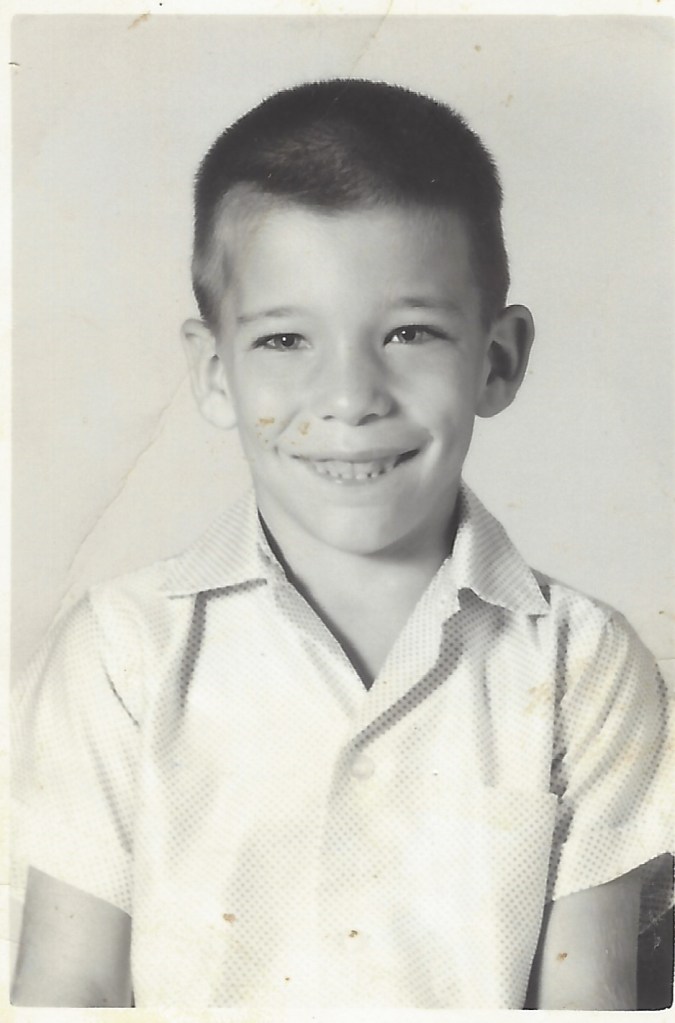

By Don Kenton Henry
PREFACE:
The first time I was ever paddled was in the 2nd grade. (In fact, what I did got me carried out of the classroom by my ear. The cartilage in my right ear was broken and still goes “snap, crackle, and pop” today.)
It was joke day, and I got up on a stool and told my joke, as did each of us, according to our seating order.
And that’s when things went bad.
- (Caveat: I will not rewrite history for the sake of an overly sensitive, woke audience. The past was no more perfect than our present will be deemed to have been by our children and grandchildren. It was what it was, and remembering it allows us to judge how far we have come as a society. I am not proud of all within, yet I tell this story as it happened. If you cannot handle an imperfect past, spare yourself and read no further. I will not be apologizing for any butt hurt you may suffer as a result of transgressions long past.)
**********************************************************************
It all began at Monnett Elementary School in Rensselaer, Indiana, during the 1961-1962 academic year. It was the end of a Thursday in Miss Beulah Arnott’s second-grade class when she announced a special assignment.
“Tomorrow is Friday, and we are going to prepare for the weekend with a little fun,” she began. I would like you to go home today and learn a joke. Practice telling it tonight, and tomorrow, each of you will come up, sit on this stool (which she had already positioned in the front and center of the classroom), and tell the class the joke you have memorized. Now go home and ask your parents, or get in a book or newspaper and learn a joke you will share with the class right after phonics tomorrow.”
Boy, was I excited! I loved it when Mr. Moose told jokes on the Captain Kangaroo morning TV show. And I always listened when Bob Hope had my dad in stitches as he told jokes on stage—even if I didn’t get most of them. I always knew I would be famous someday, and tomorrow would be my big “breakthrough” moment on a meteoric rise to stardom. My feet barely touched the ground as I ran home to learn a joke. I could scarcely contain my excitement as I burst into our home’s front door on Weston Street. I didn’t want to scour the house for a joke from a book or newspaper. And there was no internet where, today, even a second grader would know how to Google one. That left my parents, and I knew my mother had never told a joke in her life. My dad, on the other hand, had told many. Not to me or my siblings so much. But to my uncles and dad’s buddies. And usually, while they were sitting around drinking and smoking cigarettes. Like the Bob Hope jokes, I didn’t get most of them, but they must have been funny because my uncles always laughed heartily at them and followed with, “That was a good one, Don!”
And so, I began a search for my dad. Which ended quickly.
The black and white Philco television was on, and even though it was barely 3 in the afternoon, there was Dad, fast asleep on the sofa. A half-empty bottle of Jim Beam rested on the coffee table before him. This was great because I knew I had a captive audience.
I crawled up on him and straddled him about the waist. He was face up, and I immediately began tapping it gently with both hands. “Dad, Dad! Wake up! I need to learn a joke!”
“Aww, go away, Junior. I’m sleeping,” he mumbled.
“No, Dad, no! Wake up!” I really need you to teach me a joke!
He continued to urge me to leave him alone, but I was determined to get him to tell me one. “Dad, it’s my homework. It’s a school assignment. I have to learn a joke for class tomorrow!” I pleaded, continuing to tap his face and lightly jumping up and down on his chest.
Finally, with closed eyes and slurred words, he told me a joke. Once again, I didn’t get it, but I knew it must be another good one. Dad immediately fell back to sleep, and I immediately jumped off and ran upstairs to practice my joke.
I stood in front of the full-length mirror attached to my bedroom door and recited the joke over and over again until my siblings and I were called down to dinner. Dad remained passed out on the sofa. I could barely sit through my evening meal as I could not wait to return to my room to practice reciting my joke. And so, I did. I stood in front of that mirror, channeling my best Jack Benny until I could no longer stay awake.
The next day, I managed to get through phonics without wetting my pants as I waited for my big moment. With phonics behind us, Miss Arnott reminded us of our assignment. She said she would call on us in order of our seating position (which was alphabetical), and we, in turn, would take our seat on the tall grey steel stool to the right of her desk and tell our joke.
Now, permit me to inject a bit of insightful historical background at this point. For those of you who were not in grade school in the sixties, the big joke making the rounds with playground comedians those days involved the riddle,
“What’s black and white and read all over.”
The answer, of course, was, “A newspaper!”
As my last name is Henry, I was seated halfway through the second row of seats and had to listen to approximately eight or nine jokes before my name was called. Given the originality of the average parent of a second grader at that time, at least four of these jokes began with—you guessed it!—”What is black and white and read all over?”
Well, by that fourth time, even the biggest dullard in the class, Barry Hemminger, would scream out, “A newspaper!” while the rest of the class moaned in collective exasperation. Then came my turn.
“OK, Donnie Henry. It’s your turn. Come sit here on the stool and tell the class your joke.” I strutted forward and climbed atop it. The world was now my stage, and I would not fail in the all-important delivery of my joke. A joke that I was so determined to recite and deliver in a manner worthy of the best comics to grace the Ed Sullivan Show. I faced the class with the biggest smile I could muster over my buck teeth. Those same teeth my dad always said would allow me to “eat corn through a picket fence.”
“OK, Donnie. Tell us your joke,” urged Mrs. Arnott.
I posed the question, “What’s black and white and has three eyes?”
Up went that collective moan again, and Miss Arnott called on the first hand raised. Once again, we heard the answer, “A newspaper!”
“Nope!” I said.
Miss Arnott called on the second kid, and again came the answer, “A newspaper!”
“Uh, uh!” I replied.
This played out through two or three more students, the last of whom was Barry Hemminger, and again, I told the class, “No! It’s not a newspaper!”
By now, even Miss Arnott’s face bore a look of puzzled anticipation.
“OK, Donnie Henry, it looks as though you have stumped the class. What is black and white and has three eyes?”
I can still feel that smug look of pride and satisfaction I knew projected well beyond my expansive overbite when I delivered my well-rehearsed punch line. So, with a beaming face and all the gusto I could muster, I let them have it.
“Sammy Davis and May Britt . . . A one-eyed nigger that married a white woman!”
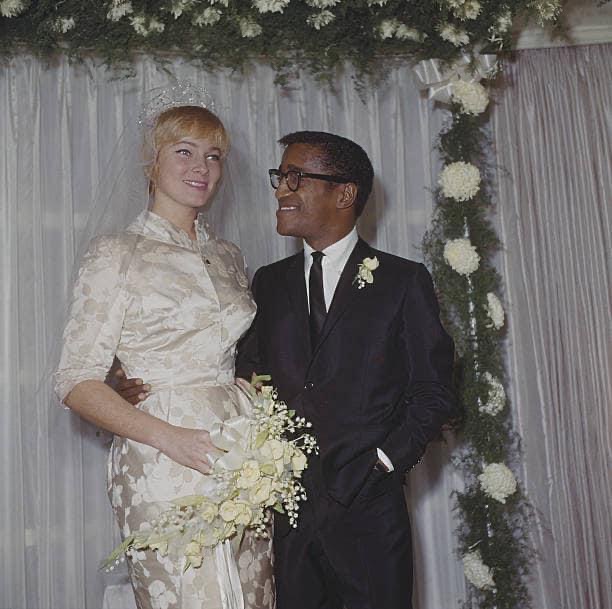
In retrospect, I wish the answer had been, “a newspaper”. Alas, I never heard the thunderous applause I am certain erupted from my audience. A sharp and painful ringing masked all else, and I would soon find myself levitating above the classroom floor. Miss Arnott leaped from her desk like a starved jaguar pounces on a newborn calf, picked me up by my right ear, and carried me into the hallway. (Over six decades later, the broken cartilage of my ear still crackles and pops when I touch it.)
Miss Arnott bore me down the hallway and into the principal’s office, where she related my joke to him. He listened and then began a dissertation on the Emancipation Proclamation and the 13th Amendment until my little eyes glazed over. All that even before the Civil Rights Act was passed three years later. (In 1964, I could say, “I saw that coming”.)
I looked up at the two of them and said, “I guess I’m not supposed to say the word ‘n*gg*r’?”
I scarcely got the words out of my mouth when I was told to “bend over and grab your ankles.”
There would be many paddlings to follow in those dark days plagued with political incorrectness. But that was the first for me. It seems corporal punishment and political incorrectness went hand in hand.
I wish this story (or confession) ended here. But it doesn’t. The rule in our house was that if one of us kids got paddled at school, we had to come home and tell our parents. That would have been fine if it had just involved my mom. But we weren’t to be so lucky.
I returned from school and went directly to my dad. There must have been a blue moon on the rise, as he was actually sober this particular afternoon. Through trembling lips, which could barely contain those corncob-eating teeth of mine, I related to him that I had been paddled by the principal at my school.
He looked down at me and said, “Well, Junior. You know what that means. Go out to the dog kennel, get the strap off the wall, and meet me in the side yard.”
“Yes, sir,” I replied.
He was waiting in the yard, and I heard, “Pull your pants down,” along with (for the second time that day), “Bend over and grab your ankles.”
This wasn’t my first rodeo. I did as Dad said, but unlike previous occasions where justice was administered, he paused in the middle of drawing back on the strap. “Now, before I give you what you have coming, why don’t you stand up for a second and tell me why you were paddled at school.”
Pulling my drawers up as I rose, I told him I was paddled because “I told them that joke you taught me yesterday.”
“Joke? I taught you a joke?”
“Yeah, Dad. While you were trying to sleep on the sofa.”
He appeared baffled. “What joke did I teach you?”
“You know, dad. The one about the one-eyed n*gg*r that married a white woman.”
His face appeared as though his prize hunting dog, Queen, had just birthed a cat.
“I told you that joke?”
“Yeah, Dad.” After a terminal pause, he said, “I’m sorry, son. You never should have been paddled. That’s my fault. Buckle your pants up, put the strap back on the kennel wall, and go to the dinner table.”
And that’s how I learned all about stand-up comedy, civil rights, and racism in the second grade.
Http://Bardofthewoods.com
Http://TheWoodlandsTXHealthInsurance.com
Http://HealthandMedicareInsurance.com
Discover more from bardofthewoods.com
Subscribe to get the latest posts sent to your email.


Leave a comment