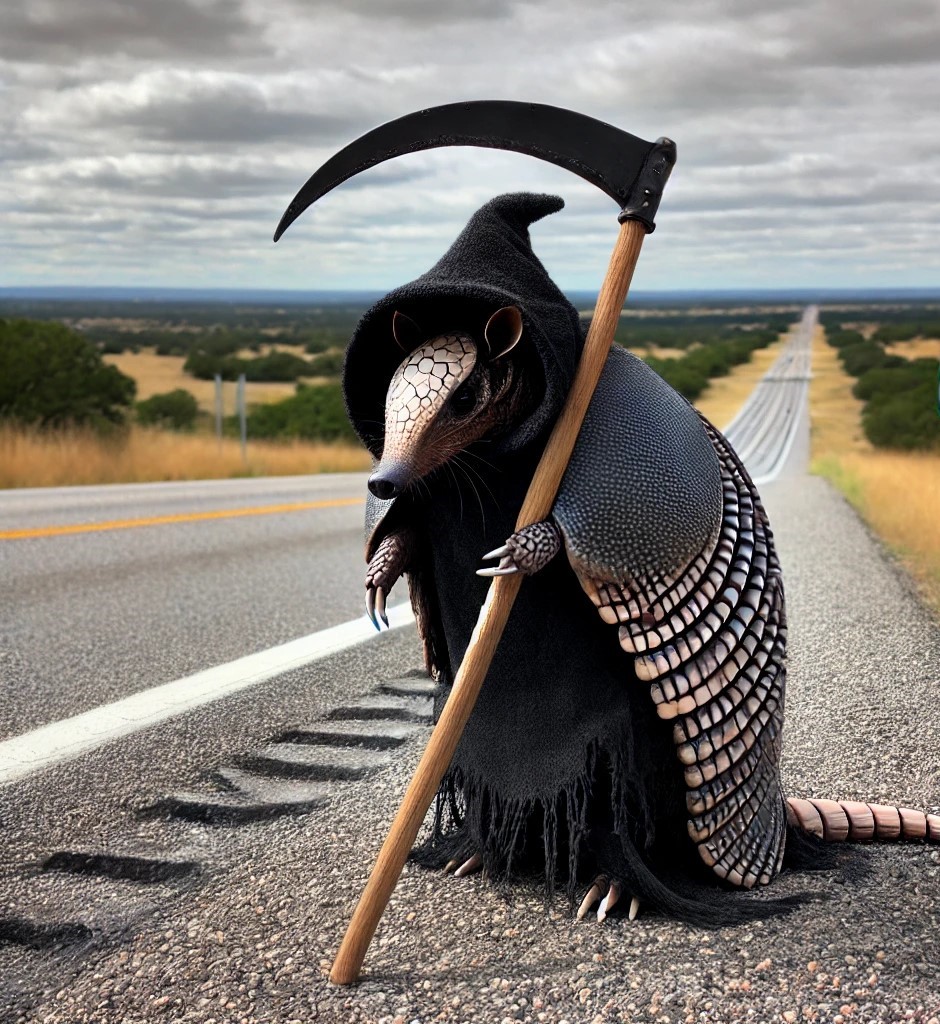
(“It was a symphony of nature and confirmation life around me would go on, unchecked by the coming and going of the likes of me, my dad, or any of us. Which got me thinking about the “going” part. Not mine. But his. I will call it the ‘Balcones Serenade’.”)
It was the week of Thanksgiving, 1979. I was attending my first year of law school at the University of San Francisco. It was a university in a city where I had no place being. My pride and stubbornness resisted the buyer’s remorse I immediately experienced upon enrolling. As much as anything, it was the embarrassment of having to admit my mistake to all the friends and relatives who had advised me not to go there in the first place. It seems they knew me better than I knew myself. And so I decided to stick out for that one year. I could have easily gone to three other schools more suited to my conservative, midwestern values, and hopefully, I would be able to continue my education elsewhere sometime in the future. In the meantime, however, I was stuck like a fish out of water and flat broke on top of it. While my mother and grandfather would have funded my school back home in Indiana, they let me know I would be entirely on my own if I pursued California. That made me more determined than ever to head west and, consequently, some weeks, I was getting by subsisting only on raisins mixed with peanut butter. This is also why I turned down the offer of the few good friends I somehow managed to make. That despite every overt and successful effort to alienate the remainder of my classmates and faculty at USF.
They had invited me to spend the holiday skiing with them in Tahoe. As I had never snow skied or seen the Sierra’s in the winter, that would have been a dream come true for a kid raised between the farm country of Indiana and the mosquito-friendly bible belt of east Texas. But I knew, with my budget, I couldn’t keep pace with my buddies. And yet I had to get out of that city. I knew my mom and grandfather wouldn’t be good for the ticket home, so I thought of my dad. He was living in a trailer outside Douglas, Arizona. Although I knew he was getting by on Social Security disability payments, I didn’t realize the extent of his own financial hardship. He was barely subsisting when I called and asked if he could cover a round-trip flight to Arizona to visit him for four days over the holiday. I could tell by his voice he was hesitant, but because of his pride, he didn’t admit to me he could not afford to do that. And so, he ultimately agreed. Later, it dawned on me he must have pawned some things to cover my ticket. All I cared about was breaking free of the city and its infamous fog that enveloped me literally and figuratively. I was much too young and positive to have fallen into such a crevasse of melancholy. The dry heat of a desert sounded like heaven. On the day before Thanksgiving, my friends embarked on their trip to Tahoe, and I departed out of SFO for Tucson.

In the days before 9/11, people could still arrive early and meet their friends and loved ones at the gate after they exited the plane. Looking out my window seat upon landing, I could see it was a beautiful sunny day in Arizona, just as I had imagined. The pilot announced it was eighty-three degrees, and there was a reason I came to remember this.
I disembarked, and there was the usual. A parent hugging their adult child and the lover hugging their girlfriend or boyfriend. I looked past them for my dad. He was nowhere to be seen, and I thought he must be running late. With no cell phones in existence, there was no way to check on this and I decided to take a seat and wait. Gradually, the crowd thinned out, and I was the only one waiting. Ten or more minutes passed, and I was becoming concerned. About then, a tall, nicely dressed middle-aged man approached me.
“Excuse me. Are you Don Henry, Jr,” he asked. I rose to greet him.
“Yes, sir, I am.”, I replied.
“Well, son, I hate to tell you this, but your father is downstairs in baggage claim. He’s passed out. I got him up against the wall and out of the way, but he managed to ask me if I could come up here, find you, and bring you down. I’m so sorry.”
I am certain my face flushed, and I thanked him but told him there was no need to accompany me. I would find my dad, and he could be on his way. Again, he apologized, and each of us headed down the terminal. He exited, and I descended to baggage claim.
The crowd was thinning there also, and sure enough, there he was, lying with his back against the wall. He was wearing beige khaki shorts, a short-sleeved shirt with the bottom three or four buttons unbuttoned to accommodate his ample belly and flip-flops. One of which was on and the other off and next to him. His once black head of hair and beard was now gray, and I could tell by the beard’s stubble he had been unshaven for at least several days. He reeked of whiskey but appeared to be asleep rather than passed out. I looked around and was relieved security had not yet spotted him, as I would have had to call my mom to cover his bail. I kneeled and shook his arm.
“Dad … dad. Get up! We have to get out of here!”
He moaned but, beyond that, was unresponsive. I persisted in shaking him and attempted to pull him to his feet. He remained sitting but finally opened his eyes and acknowledged me. “Welcome to the ‘Land of Enchantment,’ Junior,” he mumbled.
“I think that’s New Mexico, Dad, but you’re close. And we still need to get out of here. Let me grab my suitcase, and we’ll head for the parking lot.”
I retrieved my luggage, returned, and managed to pull him to his feet. I wrapped his arm over my shoulder and held it with my right hand. He was mostly dead weight on my left side, but instead of being able to wrap my left arm around his waist, I had to support him entirely with my right hand and shoulder while I bent down and picked up my suitcase with my left. With the suitcase banging between off his knees, we made our way to the exit and into the Arizona sun and the vast parking lot.
At first, his white 1976 Buick Electra was down one lane. At the end of it, of course. In no time, that 80-degree dry heat began to kick in, and we arrived at the end of that lane only to find that, “No, I think it’s back down the lane next to us,” he slurred.
So I dragged him over into the lane to our left, and he said, “It’s back, close to the terminal.” Of course, it wasn’t, and this went on and on until I was soaked with sweat and felt as though my shoulder had dislocated. He simply could not remember where he had parked. If this had been in 2025, I would have simply been pressing his fob like a Jeopardy contestant buzzing in and waiting for his car alarm to chirp. But it was 1979, so I was SOL. I was beginning to feel like Moses lost in the desert when I finally spotted the rear of his Electra.
I dragged him to the passenger side and let him slide to the parking lot. If the pavement was 140 degrees, he was oblivious to pain as I rummaged through his pockets and retrieved his keys. Once I had the door open, I lifted him into the seat and buckled him in. Now, I had to exit the parking lot and find my way to Douglas, Arizona. My dad was still basically incoherent when I asked him how to get there, but fortunately, there was a Rand McNally Atlas on the bench seat between us. I identified the highway we needed to take, exited the airport, and proceeded to it for the 123-mile drive ahead.
No sooner was I relieved to be on the road than he said, “Pull over! Pull over!” For the life of me, I had no idea why, but he wanted me to take the exit onto the feeder. “Pull over; we’re going to stay in that motel. I need some sleep …” I looked ahead and saw the sign for the Sidewinder and, next to it, what appeared to be a roach trap at a motel about a thousand yards ahead.
“Dad, no way did I fly all the way from San Francisco to sit in some dump motel while you sleep off your whiskey! (The empty Jim Beam bottle had been rolling back and forth on the rear floorboard the entire time.) Now, go back to sleep, and when I get near Douglas, I’ll ask you for directions to your place.” He did, and I drove on until we exited I-10 and headed south toward the Mexican border. I say, “Mexican border” because that’s precisely where Douglas is. On the Mexican border. My dad always had to live close to it so that he could make weekend runs into Mexico for cigarettes, whiskey, Percodan, Valium, Codeine, and a host of other drugs that would require a prescription if he were to get them in the States. He had broken his back three different times, at least once from doing stupid human tricks after too much Jim Beam (and it was always too much). So, he self-prescribed because there was no way the VA was going to approve the quantities of painkillers he used.
Eventually, we took US-191 South into Douglas. I awakened him, and finally, he was coherent enough to tell me he didn’t actually live in Douglas. In fact, he lived about five or six miles into the desert, in a lone mobile home on blocks, a sniper’s bullet from the border. In addition to needing access to la farmacias (and you might as well know it now), my dad was on the lamb. For two things. He had come to the attention of the feds for running a ton of marijuana from Reynosa, Mexico, across the border from his home in McAllen, Texas, to Chicago every two weeks. That’s right. My dad was “Breaking Bad” before Walter White got his teaching degree.
Oh, yeah. There was the second thing. While he had evaded scrutiny for the drug running, he castrated a homosexual who attempted to molest him. He then flushed the guys’ cajones down the toilet, where I presume they had made their way into the Rio Grande. So, you can see why a garden spot like this seemed the ideal place for him to retire.
At Dad’s direction, I navigated the Electra between the tumbleweed and Saguaros until we finally arrived at a white, circa 1960s mobile home almost directly on the border and about five miles southeast of a desert butte.

I got him out of the car, and by this time, he was just able to get himself in the trailer, where he promptly put his hands on another bottle of JB, flopped on the sofa, and, gripping the neck of the bottle in two hands, began to empty it. I left him there, retrieved my suitcase from the car, and brought it to my room at the back of the trailer. There was no way I was going to sit down across from him and watch him drink himself back into a drunken stupor, so I changed into my orange jogging shorts and Adidas running shoes. I was an avid runner, constantly entering 10ks and half marathons, and if there was ever a time for a long run, that was it. I didn’t bother to tell my dad I was leaving. He wouldn’t have remembered it anyway.
I exited the mobile home and, after surveying the territory, set out for the only thing in sight. That was a lone butte in the distance of the Arizona desert. The sun was slowly descending to the horizon, turning that butte and the desert between us a pale shade of orange. I set my sights on it and was off.

The surface of the road felt good under my feet, and the dry heat was the same, although the temperature had dropped significantly since we had left that parking lot in Tucson. I had left the hills of San Francisco behind, and the run seemed like an effortless, low-altitude glide over the winding road that ascended gently to the west. I felt as though I could run forever, and a sense of resentment over my dad’s condition at the airport made me feel perhaps I should. As I continued, I began to feel detached from my body. Almost as though I were a passenger on it rather than one with it. I contemplated this until it dawned on me that’s really what our mind is. It’s a lone passenger. This is why a person’s body can be totally paralyzed, but their mind continues to experience all the thoughts it had up to and beyond the moment it parted ways with the tenement of bone and blood beneath it. Our mind is a lessee on property it can never own. The further I ran, the more resentment gave way to a state of calm attentiveness. I was experiencing Zen in my Addidas among the Saguaros.
Ultimately, I reached the foot of the butte and considered making it to the top as I did the hills of my current residence. But dusk was upon me, and I wasn’t sure a waning moon would compensate for a sun about to disappear before me. I thought it best to turn around.
By my estimation, I had covered approximately ten miles by the time I went up the wooden steps to the trailer door. It had been cathartic, and I hoped that, by some miracle, my dad would have put the bottle away and switched from whiskey to coffee. But there was no such aroma when I entered. I found him half on, half off the sofa, the bottle empty beneath his dangling arm. I sat in a stuffed chair on the opposite side of the coffee table between us. I just gazed at him and contemplated how his condition surprised me. And it did. Only because, in the thirteen years since my mom divorced him and he moved to Texas, there was never a visit by him to us, or us to him, when he had not cleaned himself up. Despite being a daily drunk in our absence, he would be clean-shaven, clear-eyed, and sober—not only when he picked us up at the airport—but the entire length of our stay. We would never have known he had a drinking problem were it not for our history as a family. The occasions of his sobriety were less and less during the passing years, but when we were lucky enough to experience them, my dad was charming and positive. He had a contagious laugh and smile. A voracious reader, he was a wealth of information. As a sober father, he was a source of guidance and encouragement. He was even my and my brother’s Cub Scout den master for a couple years until the end of one meeting. Left unattended, a den of eight-year-olds let their curiosity get the best of them, and a stack of Playboy magazines I retrieved from his foot locker at the base of my parent’s bed to share with them proved his undoing. “Word travels fast in a small, small town,” and the scouts did not award merit badges for the ability to identify aspects of the female anatomy. That talent wouldn’t be rewarded until ninth-grade biology.
My mother was academically gifted. Throughout her entire education, culminating in a Master’s degree from Purdue, I never knew her to get less than an “A” grade. And yet, to our surprise, she always insisted my dad was far more intelligent than her. Sadly, his drunkenness eventually manifested itself in the wasted potential I saw before me. As he slept, I turned on the small television sitting on a faux brass stand with wheels and attempted to find a movie. I continued to adjust the rabbit ear antennas but could never bring in more than two Spanish language channels. It was clear this border hideout was a good place to be a voracious reader. With that, I retreated to my bedroom and fell asleep, a Civil Procedure casebook on my chest.
The eastern sun came through the curtain of my room and awakened me. It was quiet in the trailer as I made my way to the hallway bathroom. I took care of business, hoping I would find Dad awake with a renewed sense of responsibility and committed to sobriety for the remainder of the trip. It was not to be. I rounded the corner into the living room, and there he was. No matter how drunk the night before, he would always awaken early. On all previous visits, he would be sipping coffee, inviting you to share in it, and telling you he was about to prepare a hearty breakfast for you. Not that day. He was seated upright on the sofa. His shirt was gone, and a new fifth of whiskey sat between the legs of his shorts. His feet were bare. He managed a “good morning” and then raised the bottle by its neck. He was gripping it with both hands, yet they trembled so much the whiskey dribbled from the bottle and ran down through the gray hair on his chest and into his crotch. At age 52, he was a shadow of a young blue-eyed Turk with jet black hair who, as a hunting guide, would hike a dozen or more miles a day leading hunting parties in search of quail and pheasant among the rows of dried corn stalks and bean fields of Indiana and Ohio. Of course, they always ended up back at the lodge with drinking accompanied by games of poker. That was when he was in his real element. But now, the years of abuse had caught up with him, and I sat there contemplating where it all would end. I imagined that until it dawned on me, it was Thanksgiving. I realized that, unlike the Thanksgiving holidays of my early childhood, this one would not include quail stuffed with mushrooms and wild rice coupled with pheasant and perhaps some rabbit to go with mashed potatoes. I could still feel buckshot on my tongue before I picked it out of my mouth. I knew there would be none of that today and decided it was time for another run.
So it went that Thanksgiving Day and the next, which, of course, was a Friday. My routine continued to consist of reading in the bedroom, followed by a run. I had given up on him experiencing any semblance of guilt and turning his oldest son and namesake’s visit into something for which I could be thankful. I resigned myself to returning to California, hopefully grateful I didn’t have to make final arrangements for him before my departure. Once I endured Saturday, I could awaken Sunday, return to the airport in Tucson, and then fly on to SFO. I would be older, wiser, and infinitely more jaded.
Saturday dawned, and I prepared a meager breakfast with what I could scavenge in his kitchen. I would have gone into town for groceries; however, I had no credit card and no cash to speak of. What I found was enough to keep me alive until I returned to my peanut butter and raisins. If my dad was eating anything, it wasn’t in my presence.
Another jog amidst the tumbleweeds and cacti conjured thoughts of my buddies still skiing in mountain snow with the pretty coeds I was certain they were meeting. A road runner dashed into my path and then out again. He displayed an attitude of owning that road, and I envied the simplicity of his existence. How had I gotten myself so far out of place in my own? And how did my dad, by all appearances, become so irretrievably lost in his own?
Back in the trailer, the day turned to dusk and dusk to darkness. Not yet willing to retreat to my bedroom, I sat across from his place on the sofa, thinking perhaps, on my final evening with him for the foreseeable future, we might actually engage in some meaningful conversation. Maybe I could get through to him with something that would encourage him to redeem himself and grasp some measure of accomplishment and self-acceptance going forward.
Instead, he began reciting one after another wrong or stroke of bad luck he had suffered. I patiently listened until I said, “Dad, a lot of people have a lot of bad experiences and memories, but those memories are like dog shit in their backyard. They pick it up and put it where it belongs. In the trash. But you. You go outside and roll in it. Then you bring it in the house and force the stench on all of us.” He pretended to ignore me and then continued.
“Your grandfather cost me my marriage. That son-of-a-bitch couldn’t stay out of our lives, and that’s what cost me your mother and you kids.”
That did it. My entire youth, I listened to my dad curse my grandfather, saying anything to discredit (of which there was none) and disparage him. He did this because he knew himself to be very intelligent, but his drinking and rebellious nature prevented him from getting along with any kind of boss or management. He was always looking for the easy way to be his own boss, have his own business, and find success. But he lacked the discipline to earn it the hard way. That and his drunken escapades prevented him from getting any kind of momentum in the working world.
Thirteen years earlier, it was a Sunday night and normally time for us to be in bed when my mom brought Preston and me into the dining room of our home in Peru, Indiana. Having recently lost his last job in town, Dad had taken a new one away from home. He was working as a hunting guide on a private game preserve a couple hours away in Ohio. Hunting is big on weekends during bird season, and he would make it home only for a day or two in the middle of the week every few weeks. I was twelve years old, and Preston was just barely eleven.
There was an old upright piano in that room, and Mom seated us on its bench and then closed the doors at each end of the room. She then pulled up a chair and seated herself in front of us. Her knees were almost touching our own. She was thirty-eight years old. Her hair was still black as obsidian, and her deep brown eyes behind her glasses and beneath the longest black lashes gave her face an exotic look, almost Persian. That’s all I see when I recall the conversation that followed. She explained that the two younger children were in bed because they were too young to understand what she was about to discuss with us.
She began, “I always believed that when you marry—you marry for life. And when I married your father, I firmly believed that is how long our marriage would last. No matter what happened, for ‘better or worse,’ as they say, my marriage to your father would last forever. And then, a few weeks ago—as I know you know—your father lost his job when he knocked Mr. Richter through the window at the car dealership.”
When my dad cleaned up, he looked like the consummate businessman. And, on the rare occasions he was sober, he could charm anyone. This (coupled with his sales experience at my grandpa’s car dealership) landed him a job as head of used car sales at Richter and Kern Buick. Conveniently for him, it was right across the street from a local tavern that served lunch. Of course, that’s where Dad went for lunch and, on this occasion, apparently, had more than one shot of Jim Beam to wash it down. He returned, probably late, to the small cinder block building on the used car lot. I’m also assuming he reeked of Jim Beam (which I can still smell as I relate this to you) and—when confronted—promptly punched Mr. Richter in the face and knocked him through the plate glass window onto the lot. Also conveniently (in this case for Mr. Richter and the Peru Police Department), the police department was also just across the street from the car lot, only one or two doors east of the tavern.
Like all perps, he got his one phone call and, of course, called my mom, who was working two blocks away in the Miami County Courthouse. You would have to have known her to know how humiliating it was to have to leave work and bail my dad out of jail. Peru was a small town, and, as such, everyone knew everyone else’s business. If that wasn’t enough, the fact that my dad’s arrest and the circumstances surrounding it were described in detail on the front page of the next day’s Peru Tribune made sure they did.
Mom went on to explain that our family could not depend on my dad’s income. My grandpa had refused further assistance after my dad’s last two monumental derailments. She said our welfare was absolutely dependent on her career and income. She was a County Extension Agent and an employee of the federal, state, and county governments along with Purdue, a land-grant university. The income wasn’t great for a mother raising four kids, but it was a high-profile job in a corn town of thirteen thousand. Mom had a weekly AM radio show at WARU and was in the Tribune about once a month for one event or another, so her face and name were known to everyone in town. Bud Lutz, our next-door neighbor and the editor of the Tribune, knew what she was up against and had nothing but sympathy for my mom. Even so, he could not keep my dad’s arrest out of the paper.
Mom said her job was highly political, and anything that reflected negatively on her could cost her her job. “That wasn’t enough,” she said, “but (at this point, those big brown deer eyes moistened up) nothing matters more to me than the health and safety of you kids. When I married your father, he was a kind and gentle man. But as his drinking worsened, he became more and more violent. I could live with what he has done to me, but when he hurts my children … I just can’t live with that. I have come to fear he will hurt you badly.” She didn’t have to convince us of that but went on to say, “I never wanted to have to ask you this, and if you two tell me not to—I will not do it. I will remain married to your father. But what would you say if I said I feel I have to divorce him?”
Simultaneously—with no hesitation whatsoever from the two us—both hands of the each of us shot straight toward the ceiling and, as one, we yelled, “Divorce him!”
Preston was much closer to my dad than I was. He was just seventeen months younger than me, shorter in stature, and suffered from severe asthma. I can’t recall how many times my mom took him to the hospital in the middle of the night, where they put him in an oxygen tent. He even came home a couple of times with one that went over his bed. I am certain his health also contributed to his small stature. My point is that because of his frailty, my dad went a little easier on him. He got a little less of the dog whip. Not to mention, Preston was smart and knew when to lay back and be a small target. Not that I wasn’t smart, but my angry and rebellious nature, which came from emulating my dad, interfered with any good sense I might have demonstrated otherwise. Preston remained much closer to my dad than I was in later years, so looking back, I am somewhat surprised he supported their divorce. In spite of his affection for him, it all got down to, knowing my dad posed a safety risk to all of us.
When mom heard us scream, “Divorce him,” she asked, “Are you certain? Are you really certain?”
Even at age twelve, I knew I was. It was as if the cavalry was finally on the way and would make it before the ranch burned down. With that, Mom said she would go see Al Cole the next day. Working in the courthouse, she knew all the lawyers in the county and thought the most of him. My dad would be served his papers while in Ohio later that week.
In that trailer in the desert, thirteen years later, my dad attempted to continue. “You’re grandfather. . .”
“Stop!” I said. “Stop! I have listened to this, it seems, since before I could walk. While you were married to my mom, I heard it day in and day out, with the only break when you somehow managed to be sober. And I believed you! Why? … Because you are my dad! And like all little boys, I worshipped you. Even when you were drunk and beat Mom and me. I worshipped you. I wanted to believe everything you told me. Because you were my dad, I thought it must have been the truth. You constantly blamed my grandpa, and eventually, I came to despise him. Like you, I came to blame and resent him. So I made his life miserable, and my mother’s in the process. He heard me blame him. He heard me repeat your terrible words. And he knew where they came from. Dad, do you know what he said about you? My dad just sat there, his bottle between his legs. Do you know what he said about you?”
He still just sat there staring at me. I said, “Not a thing. Not one damn thing! In spite of the hurt I caused him, he knew why I was so angry and more at issue: he knew it was not right to disparage a father to his son. And he knew that in time—and that time had long since arrived—I would come to realize it was you. It was you that was the son-of-a-bitch!
He did everything he could to help you help yourself. Everything he could to help you be successful. Not because he loved you. You had done nothing to deserve that! But because he loved his daughter and grandchildren so much, he simply wanted them to be safe and happy.
You wanted to live in Texas. So even though it broke his heart, he moved us all to Tyler, where at least mom could live close to her first and closest cousin. That ripped his heart out, but that’s what his daughter wanted. She wanted you to be happy and thought that would end your anger and save her marriage. And to make sure of that, he also bought us a beautiful home on a lake in the middle of Tyler and paid to convert a former nursing home into a motel. He spent a fortune in 1958 dollars to make sure you were a success.” My dad just took another pull on his whiskey as I continued.
“But no. No—you couldn’t just be grateful and make the most of it. You resented him even more. Why? Because you knew you would never have any of it without him. So instead of showing your gratitude by helping my mother with the business, you just drank more and more—and then—when she had just given birth to little Mark, your fourth child, you up and run off to Arizona to do who knows what! (It wasn’t until thirty years later I learned “what.”)
You left mom a six-year-old, a four-year-old, a two-year-old, and a newborn. During the first six months of his life, he was essentially raised by a black maid, the head of the motel’s household department! For four months, you were gone, and all we got was postcards of beautiful Arizona while you were doing who knows what! Finally, Grandpa had enough. He bought a used Mayflower moving van, came to Texas, sold the house and motel in a fire sale, and brought us home to Indiana. Only then, when you knew you were losing your only source of income and had nothing left to call your own, did you come traipsing after! Back in Indiana, you became angrier and angrier, realizing you had blown a great thing. You could have had mom and me and my brothers and sister. Instead, you beat Mom, and you beat me. Just like you beat your dogs. Who has a custom leather whip to discipline their dogs then when drunk and angry turns it on their kids! Yet you pretend to not know why you lost us!
And now? Now you want to continue blaming Grandpa! For three solid days, I have listened to you blame him and say it was him who cost you your marriage. Well, I’m not twelve or thirteen years old anymore. My grandfather didn’t cost you your marriage. He didn’t cost you your family. There’s your family … You have it right between your legs! There’s your bride … You’ve got both hands around her neck right now where they’ve been the last three days! My grandfather didn’t didn’t cost you your marriage. That bottle did! That is your chosen bride! You chose it over my mom and us kids. It was your choice, and now you have to live with it. We have our own lives now. We’ve moved on without you, and any friends you ever had, you’ve lost in what brought you here.” I stopped and caught my breath. I wanted to say most of those things to him for fifteen years or more. For the first few, I was too young to articulate them, and for most of the rest, I was too intimidated to have the courage to speak them. But “the cat was in the cradle,” and that was all over now. The latent words and resentment had been purged from where they had lain dormant. Unplanned and unforeseen, I had brought a reckoning with me to Arizona. No, it was not the Thanksgiving I had planned. I had come expecting to see the father, who always managed to clean himself up for our visits. The man who would pretend, for at least a few days, to be the father I had always wanted.
His eyes finally broke with mine, and he reached for the magazine atop the coffee table in front of him, picked it up, and waved it in my direction. It needed no introduction. It was the Hemlock Society magazine, advocating suicide, to which he had subscribed for years. No matter his residence, he kept it conspicuously lying in sight whenever we would visit. It was always the eight-hundred-pound gorilla in the room. I never commented on it and pretended I didn’t notice it. But it had a profound impact on my sister, who would see it and be overwhelmed with sympathy, a sense of resentment for my mother for having divorced him, and guilt for not being in a position to do more for him. Which is just what he intended.
“I’ve tried suicide,” he slurred. “It doesn’t work!” He said it as though it were some profound insight he was sharing for shock effect. I was unphased. I had seen it coming.
A guttural sound of incredulity emanated from my diaphragm, passed through my throat, and exited my mouth. “You’ve taken handfuls of Percocet, Valium, and oxycodone and washed them down with a quart of Jim Beam every day for 25 years. It would take more drugs to kill you than a bull elephant!” I didn’t hold back. “If you want to kill yourself, there are ways that are guaranteed to work. If you want to do it, just do it! You can find a way to do the trick. I’m tired of listening to it. Don’t hang it over my head and try to manipulate me the way you do, my little sister. You have screwed her head up and have her blaming Mom the way I did, Grandpa. You messed my head up for years with anger born out of a sense of helplessness to the point I plotted to kill you myself. You remember that .410 shotgun you bought me when I was in the fourth grade? You taught me how to hit 30 out of 30 clay pigeons with it. Well, I kept a shell in it and had it leaning up against the wall in the clothes closet just inside our front door. The next time you got Mom down on the living room floor and started beating her beautiful face, it would have been the last. Fortunately, Mom sensed something ominous and divorced you just in time. I’ve finally worked through that, and I won’t let you take me to a dark place anymore. I won’t be affected by whatever you do.”
He just sat there wearing a thousand-yard stare. One hand was on his bottle, and the other rested on his knee, a smoldering cigarette glowed red between its fingers. I had never in my life won an argument with my dad. He would have been a good lawyer in his own right … He always had to be right. But at that moment, he said nothing. No one had ever confronted him with the cold, hard truth. At least no one that meant anything to him. And what kind of defense is there against the truth?
“Now … if you don’t mind,” I said, “I’m going to my bedroom. I’ve got to catch a flight back to San Francisco tomorrow.”
I slept soundly that night, relieved I would be out of what could very well be my dad’s last stand and the last time I would see him. I awakened to the aroma of bacon in the kitchen, pulled on my jeans and t-shirt, and entered the hallway leading past the living room into the kitchen. It was a big open kitchen with no wall separating the two. I could see my dad’s profile as he cooked over the stovetop on the island. Before me was a spread to rival the buffet at the Hyatt on a Sunday morning. There were platters of bacon and sausage, even steak. And mountains of hash browns and pancakes. There was fresh butter, maple syrup, and bowls of fruit. And a pitcher of orange juice. The scent of freshly brewed coffee combined with that of everything else and filled the trailer. Where had he gotten all this! When had he gotten up to buy it, and how did he get out and in without my hearing him! But what shocked me more than the feast before me was my dad. His appearance, that is.
When I went to bed, he still had not shaved for at least five or six days. His hair was unkempt. Whiskey matted his chest hair, and the whites of his eyes were red. But no longer. I looked at him, transfixed by what appeared to be a mystical transformation.
Beginning with his shoes, his flip flops were gone, replaced with black dress shoes. A military man of at least eight years, he knew how to spit-shine shoes, and the shine on his was brilliant. He wore cuffed and pressed black trousers held by a black leather belt with a brass buckle. His white dress shirt appeared starched and pressed. It was neatly tucked inside those trousers. But it was his face that had me staring in disbelief. His face was clean-shaven. I caught a subtle scent of aftershave. Though not the jet black of his younger years, his hair was neatly combed and groomed into place.
I said, “Dad! Where did you get all this food? There is enough here for an army!”
With a laugh, he replied, “I thought you might need a few calories to get you back to California!” He laughed with his eyes as much as his smile and that is what I remember about that morning than anything. After being on what I knew to be a four-day drunk, which, in reality, was probably much longer, his eyes, which had been swollen and totally red when I went to bed the night before, were now clear. Their whites were white as fresh snow, and their irises blue as the Arizona sky on a cloudless day. I remained in awe as I filled my plate, thinking if I looked at him again, that haggard visage of him the days and night before would return and replace today’s—the one that (in a rare and early year of their marriage) had accompanied my mom and siblings to the church on Easter Sunday.
As we finished our feast, he instructed me to go to my room and pack while he cleaned up. “I know how you like history, especially Western history, and because your flight doesn’t leave until early evening, I thought we would leave soon and go to Tombstone. I can show you the OK Corral and the other haunts of Wyatt Earp, his brothers, and the Clanton gang. Would you like that?”
“Well, yeah, Dad. That would be great!”
And so, it was. We arrived in Tombstone before noon, and, just as he said, he showed me all those things. He owned the complete American Heritage History of America collection and had seemingly committed every word to memory, so he made a wonderful tour guide. I was channeling Wyatt Earp as the sun rose in the noon sky when he said, “Why don’t we take a break in the shade of that cantina and get something cool to drink al fresco and watch the other tourists pass by.” I thought that sounded good and quickly agreed.
We seated ourselves at a little metal table for two on the patio’s edge. I was turning my chair to better observe the pretty senoritas as they walked by when the waitress came to our table to take our order. I said,
“I’ll have a cerveza, please. Carta Blanca, if you have it.”
The waitress turned to my dad, and he said, “I’ll have a coke.”
“What! You’ll have a coke!” I was shocked. “Since when do you have a coke!”
“I want a Coke and—if I want a Coke—I’m gonna have a Coke, goddamn it!”
Although still incredulous, I conceded, “Ok, ok! … You’re gonna have a Coke!” And he did.
We finished our drinks and, as the sun got a little lower, headed back to our car. It had been a great day with my dad. It was such a contrast to the previous four days, I could hardly believe he was the same person. Today, he was the person we had always wished him to be. We never expected Superman, and we didn’t need Ward Cleaver or a dad like the ones in the 60’s weekly network television shows. We just wanted a kind dad who, in addition to loving my mom and us, went to work each day and responsibly took care of us. I’m not saying it made up for the last four days, but it went in the right direction.
We drove to Tucson, and I found myself back at the gate preparing to depart. This time, Dad was with me, and as I was instructed to board, we hugged and said we loved each other. It’s the part I try to remember most.
I returned to San Francisco to finish out the semester. With only a week or two to go, my phone rang. It was my dad. He sounded sober and upbeat. After a little small talk about school, he said, “Hey, Junior. You know, I was stationed a short time in San Francisco while in the Navy. In fact, you were conceived there.”
“Oh, geez!” I thought. “The irony!”
“Your mom and I were newly married, and I loved that place. I wish I could have stayed. In fact, that’s why I’m calling. I want to come out there. I thought you and I could get a place together, and I could help you with your expenses.”
I was shocked. In light of his drinking problem, there was no way I was going to live with him and expose myself to the drama that would inevitably ensue. Secondly, I had absolutely no intention of staying there for another year. I had stuck the first one out solely out of pride, afraid to admit I had made a mistake in going there in the first place. Other than intermural football and playing on the USF law school rugby team, my time there was a penance for poor judgment. A handful of guys who somehow found it within themselves to accept “Buck Henry from Texas” was all I would miss. I didn’t hesitate to explain.
“Dad … this is not San Francisco of the early 1950’s. This city has changed big time. It’s still beautiful, but there has been a cultural revolution since you were here. It’s the birthplace of and spearhead of the gay pride movement. I can’t go anywhere without getting hit on, and that just doesn’t sit well with my Midwestern values. If I had a hundred dollars to drop on the sidewalk, I wouldn’t bother to bend over to pick it up. It wouldn’t be worth the risk of being compromised. I have to get out of here, and when I do, I’m going to break off the rear-view mirror, so I can’t even look back by accident. I’m going home with the armadillo, Dad.”
Jerry Jeff Walker, along with Willie, was an icon of the Austin-based progressive country movement. That line about the armadillo was from what was arguably his anthem and that of every homesick Texan. I had introduced Dad to him in 1973 when I dropped in on him at his apartment in the Rio Grande Valley. I was fresh from Austin, with Walker’s album Viva Terlingua in hand.
“So, Junior. You’re going home to Texas?”
“Yeah, Dad. I am.”
That second semester ended, and I returned to my mother’s home in Indiana to regroup and get what I needed to return to Texas. I contacted Baylor Law School, where I had been previously accepted, but they informed me, in so many words, “You declined our offer, so now we are giving it to someone else.”
I knew it would take a while to find another school, so I decided to return to Texas anyway and work until I succeeded. I knew any further education would be totally self-funded, so working would help with that. Hopefully, it wouldn’t take more than a year. I was making those plans when my dad called me at my mother’s house. I picked up the phone.
“Hey, Dad,” I said.
“I’ve gone home with the armadillo, Junior.”
“You’re in Texas?”
‘I’m in Oak Hill, a little town just south of Austin.”
I couldn’t believe it. He had beaten me back to Texas in that white Buick Electra and, on top of that, to Austin, where I had always dreamed of living.
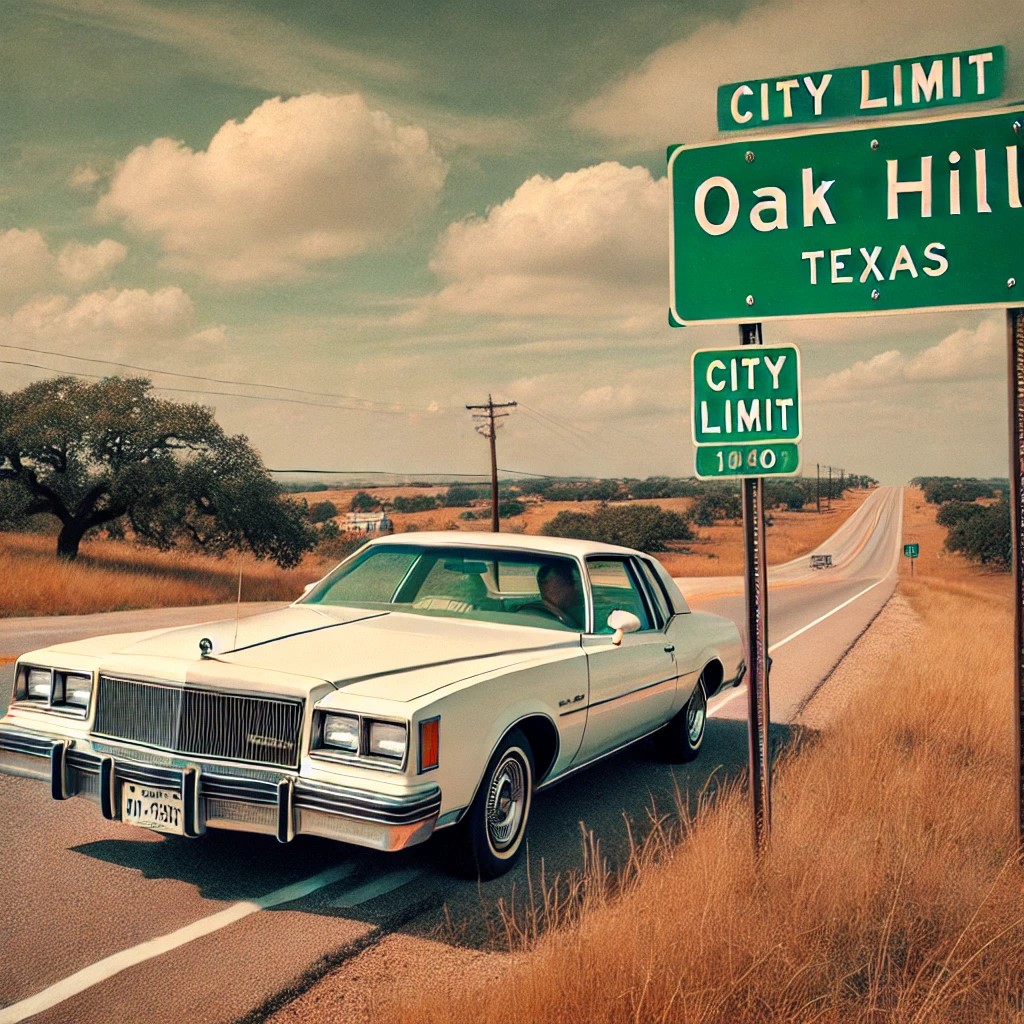
I got my black ’78 Chevy Monte Carlo with its red, crushed velvet interior back from my sister, who I had given it up to when I went to San Francisco. She was attending Purdue University, which my grandfather reminded me was an “instate” school. The subtle implication was she was more deserving, and it was not lost on me. He went on to tell me I would be riding the Bay Area Rapid Transit Authority (BART) bus lines when I got there. But that was all behind me, and within two weeks, that Monte Carlo and I crossed through Texarkana into Texas.
I began seeking work in Austin, but so was everyone. It was considered such an ideal place by anyone familiar with it that no one who graduated there wanted to leave. People with PhDs were working behind the counter at McDonald’s just to remain. After a few weeks, the front money my mom had given me was just about gone, and I was sleeping on the sofa in a buddy’s one-bedroom apartment in Houston. After a few more weeks, I found a job as a college textbook rep with Harper & Row Publishing Company out of New York City. I would be based out of Houston but call on professors and bookstores at universities and colleges in southeast Texas. The Austin rep was not about to give up her territory.
My dad had settled into another trailer in the small, semi-rural community of Oak Hill on the southwestern outskirts of Austin. It rests on the Balcones Escarpment, which forms the eastern boundary of the Texas Hill Country. Consisting of rugged limestone cliffs, it was in sharp contrast to the desert and Saguaros he left behind in Arizona. His trailer was ensconced in a small park on the edge of town. It rested in the shade of stately live oak trees, which provided shade from the Texas sun.

As usual, he didn’t have a phone, so he called me from a pay phone near the manager’s office. It was there, he would also get his mail from a box atop a post in a row of boxes. He had called and gotten my new phone number from my mom. I heard the disappointment in his voice when I told him I couldn’t find a job in Austin and had to settle in Houston. He brightened up a bit when I told him I was dating a girl who attended the University of Texas in Austin. I would be visiting her there every couple of weeks or so.
Harper & Row didn’t pay me much of a salary, but as I was constantly on the road, they provided me with a company car and gas card. When I made my trips north and west of Houston to spend a work week, once a month, at Texas A&M in College Station, I was already halfway to UT when I cut out early on Friday afternoons. It was coming to and from I would drop in on him. I said, “Drop in” because he didn’t have a phone, so that’s just what I did. I’d pull my car up under one of those oak trees and, on the rare occasion, he wasn’t home, would get a key out from under a flower pot and let myself in the front door.
In late August, I surprised him with what, by then, was my fourth or fifth visit since returning to Texas. He was excited to see me, and as I sat on the sofa in his living room, he told me he would really like to see a movie. He asked if we could go to see Brubaker about the new warden in a small prison farm starring Robert Redford. “I thought we could leave early and go for ice cream at the Dairy Queen.”
“Sure, Dad. That sounds good to me.” And with that, he left the living room to clean up.
I sat there and thought about it. This was at least the fourth or fifth time I had dropped in to see him. Each time, it was unannounced, and each time, he was clean and sober. If he’d known I was coming, I would not have been that surprised, but unannounced? I calculated the odds of that to be less likely than him being recruited as an astronaut on NASA’s next mission to the moon. With his social security disability income and little, if any, friends in his new town, getting out to a movie was a rare luxury for him. I’m saying, “it was a big deal”. So when I could hear him showering, I decided it was a good time to look for the bottle, which I knew had to be hidden somewhere in that trailer.
I went through all the cabinets and pantry in the kitchen, but I couldn’t even find a beer in the fridge. So I looked under all the furniture in the living room. I looked in the broom closet in the hallway, and when I could still hear him in the shower, I tip-toed into his bedroom and rifled through it. There was not one bottle to be found. I was shocked. The only place left to search was the bathroom, and I would do that before we left for the movie.
I was back on the sofa when he came out. Just as that last morning in Arizona before we departed for Tombstone and on to the Tucson airport, he was cleaned up head to toe. He had changed into his white, starched dress shirt, pressed black trousers, and shined black shoes. Again, he had shaved and groomed his hair. I was touched by how important this time beyond the confines of his trailer was to him.
I used the restroom. It was the last place I expected to find a bottle, and I did not. However, I did expect to find the usual self-prescribed assortment of painkillers. When I failed at that, I felt as though I had fallen into some alternative universe.
As planned, we drove to the local Dairy Queen and ordered from the car-hop. I had a sundae, and he was eating a banana split. We caught up on small talk, including me showing him a picture of the UT Tri-Delta I was dating. He was quite approving when I interrupted him to make a confession.
“Dad,” I said, turning my face toward him, “I’ve dropped in on you, without you knowing I was coming, four or five times since we’ve been back in Texas, and you’ve been stone-cold sober each time. … What’s with that?”
He didn’t look up from his ice cream but said, “I haven’t had a drink in ten months.”
The silence was deafening as I processed what he just told me. I counted backward in my head until it hit me. “Ten months”, I thought. “Oh my god, he’s talking about Thanksgiving in Arizona! He hasn’t had a drink since that night. I unleashed years of anger and resentment and held him accountable for all the ways he’d let himself and our family down!” I had shamed him into sobriety. I wondered how he did it and whether he had gotten treatment. He said, “No.” He explained he had gone cold turkey. “I just took every bottle in the house and poured it down the sink. Then I went into my bedroom, shut the door, stripped my clothes off, and got in bed.
I dreamed I had died and gone to hell. After four days, I awakened and opened my eyes. I said, ‘So this is what hell looks like’. I got out of bed, and my feet landed in a giant pool of liquid that extended from under the bed halfway to the door. I sweat so much that it had gone all the way through the mattress and box springs and covered the linoleum floor. Only when I got my newspapers did I realize I had been in that bed for four days.
A couple weeks later, I thought, ‘Well, you’ve already died once. You might as well quit the pills.’ So I went to the kitchen counter, then to the medicine cabinet in the bathroom. I gathered all the pills, flushed them down the toilet, and got back in bed. It was then I realized where I hadn’t gone to hell weeks earlier. Giving up the booze didn’t take me to hell. That was just preparation for what real hell is.”
I had read stories. I couldn’t imagine what doing that all by yourself was like. Especially after almost forty years of drinking and fifteen of pill-popping. When I had composed my thoughts, I told him, “Dad, I have waited my whole life to hear you tell me that. It’s all I’ve ever wanted from you. I am so proud of you. Please keep it up. Just keep it up!” He just took the last bite of his banana split, and we were on our way into south Austin to see Brubaker.
I made a brief stop to see him in September. He was still clear-eyed, clean, and sober. When I prepared to leave, he followed me to my car.
“Hey, Don. Now if I could just quit these damn cigarettes.”
I had been on him to quit even as a young child. In fact, ever since the surgeon general came out with his report that smoking caused cancer. I had pretty much given up on that ever happening. I figured dying of cancer was the only way he’d quit. He went on to say, “I read in the paper that the University of Texas wants heavy smokers to participate in a smoking cessation program. There’s no cost to the participants, and they will provide individual and group support and medication if necessary. We would meet five days a week, and part of the program would include walking laps around the Texas Longhorn stadium for exercise and improving lung capacity. Do you think I should do it?”
“Hell, yeah, Dad!” That sounds great. You should absolutely do that! The next time I’m here, I expect to hear all about it!”
Fall was coming, and football season was with it. The annual “Red River Shootout” on neutral ground in Dallas was coming up between the UT Longhorns and the Oklahoma Sooners. My girlfriend grew up in Dallas, and her mother still lived there. She thought the weekend of the game would be a good time to meet her mother and at least one of her brothers and suggested we stay at her mother’s while in town for the game. She explained the rivalry between the two teams and schools was really something I should experience. I couldn’t wait.
I had to work Friday, the day before the game. First, I’d go from Houston to College Station, where I would finish up as soon as possible. From there, I would be on to Austin to pick Beth up and then to her mother’s in Dallas. It was going to be a lot of driving for me. Wanting to give me time to prepare, she told me about this big weekend just before my last meeting with my dad, so I explained it all to him before departing that day. I told him I wouldn’t have long, but I would definitely stop in to check on him that Friday afternoon before heading into Austin and the sorority to pick up my girlfriend. He smiled and waved goodbye as I drove away.
Friday, October 10th came, and I was detained in wrapping things up at A&M and got out of College Station a couple hours later than planned. I sped to make up time but realized we would get to Beth’s mother’s home very late, but even later if I stopped to see my dad. I was reluctant but decided to forgo seeing him and decided to proceed directly to pick up Beth. Since Dad had no phone, I had no way to tell him I would not be stopping by. Knowing he must be lonely living like that, I felt guilty but thought I would at least see him after dropping Beth off on the way home Sunday.
On game day, the Red River Shootout lived up to all the hype, with the Longhorns beating the Sooners 20-13. Even better, the time with Beth’s family was special. In fact, it was so special that we were late getting out of Dallas to get Beth back in Austin for classes the next day. We left after dark for the three-hour drive.
I-35 South was slow going with weekend traffic, and that didn’t help with our schedule. I dropped her off at her sorority and headed east for my apartment in Houston. That last leg of the trip would take almost another three hours and put me in around midnight. I then had to rise the, get in my car, and be back in College Station the next morning.
It was Monday, October 13th, when I checked into the LaQuinta directly across from the main entrance to the campus. It was a beautiful fall day in Texas. As I worked, I strolled the campus and couldn’t wait to return to my room to change into those orange gym shorts and go for my typical three-mile run before showering and dinner.
The humidity is usually relatively low, and the temperature moderate in October, which it was this day. I could have run much longer, but the sun was going down, and I didn’t want to step in a hole and twist an ankle as I covered the grounds of the campus. So, after my three miles, I called it a wrap and returned to my room for a shower before dinner. I entered the room, and the first thing I saw was the message light on the phone flashing orange. No one I could think of knew I was here as of yet. However, my manager, Chuck Hickman, who lived just north of Austin in Round Rock, had guessed as much from past expense reports I had submitted. Usually, I would talk with him on Friday, so to get a call from him on my first day at a location was out of the ordinary.
“Hey, Chuck. How are you … what’s up?” I asked.
It was not in his usual upbeat, enthusiastic voice, and he began. “Don . . . I don’t know how to tell you this, but I got a phone call today from the medical examiner at Brackenridge Hospital in Austin. He didn’t know how to reach you directly but somehow got hold of me. I hate to be the one to break this to you, but your dad is deceased. The examiner is holding his body in their morgue, and they need the next of kin to come claim it.”
I can’t recall what I said. Possibly an “Oh, no,” Perhaps nothing. Oddly, I just felt a sense of numbness throughout my entire body and a slight ringing in my ears. I asked if he knew how my dad died, and he said he did not. He said he had not asked and assumed that was confidential.
Chuck provided me with the examiner’s name and phone number, which I wrote on the little pad of paper with the tiny pencil they always kept next to the hotel room phone.
He then continued, “Don, I am so sorry. I know you have no other relatives in Texas, so you are going to have to take care of this. Take the entire week off to do what you need to do, and we’ll talk on Sunday evening or Monday morning. You call me. In the meantime, don’t worry about work. Take care of yourself, and again, I am sorry.”
I thanked him and hung up the phone. I propped up the pillows and lay back against them, still in my jogging shorts and shoes, while I thought about who to call first. It was almost six in the evening, but I thought I might still be able to catch the medical examiner, so I called the number on the pad. To my surprise, he was still on his shift. I introduced myself, and, like Chuck, he expressed his condolences and then told me I would need to come to claim the body if there was no other family member available to do so. He said I could do that at virtually any time, but he would be on duty until five pm through the week. He just happened to be working a little late that day. Then, it became time to ask the inevitable question.
“How did my dad die?”
“Suicide, Don. It was suicide.”
I asked if he was certain, and he replied, “Yes. He even left a note. It is addressed directly to you. I will have it for you when you get here. Again, I am sorry for your loss.” I explained I would be over the following day as soon as I could get there.
It didn’t take long to know who to call next. My youngest brother was in the military and hard to reach, and there was no way I was going to call my sister. She had always been his “little princess.” Four years younger than me, she had slept through most of the dark moments before my parents divorced. He had convinced her my grandfather and mother were entirely to blame for the divorce and, in her eyes, he could do no wrong. He was her hero.
My brother, Preston, was much closer to my sister than I. They were both attending law school at Indiana University. He was in his third year, and she was in her first. They were, in fact, extremely close, and I had no question that he should be the one to break it to her. She would need someone close who could get to her right away. So I called Preston and broke the news.
“Preston, I hate to tell you this, but . . . dad’s dead.”
He was a very rational person. Much more in control of his emotions than the rest of us. He listened as I told him of the cause of death. I don’t think he was any more surprised than me, as I had pretty well guessed it when Chuck broke the news. This had been coming for a long time.
I don’t remember sleeping much that night. Then again … I don’t remember not. I can’t deny I remember a sense of relief along with sadness. I lay there and thought, “At least I will no longer have to worry if he is ok. Was he eating enough? Was he going to need another surgery on his back at the VA in Chicago?” where he had always gone because of its proximity to his sister. No longer would I have to wonder when the phone call I had just taken would be coming.
The following day, I got up and made a phone call to my mom. There is no other way to describe her. She was a “fixer”. She might get hysterical over something minor, but when it came to a crisis—she rose to the occasion. It was as though she lived for them. She told me that my dad surely had not left any life insurance and that she would handle any expenses. As far as his remains, we agreed that, given the circumstances, cremation was appropriate and to call her again when I knew what was needed to arrange that.
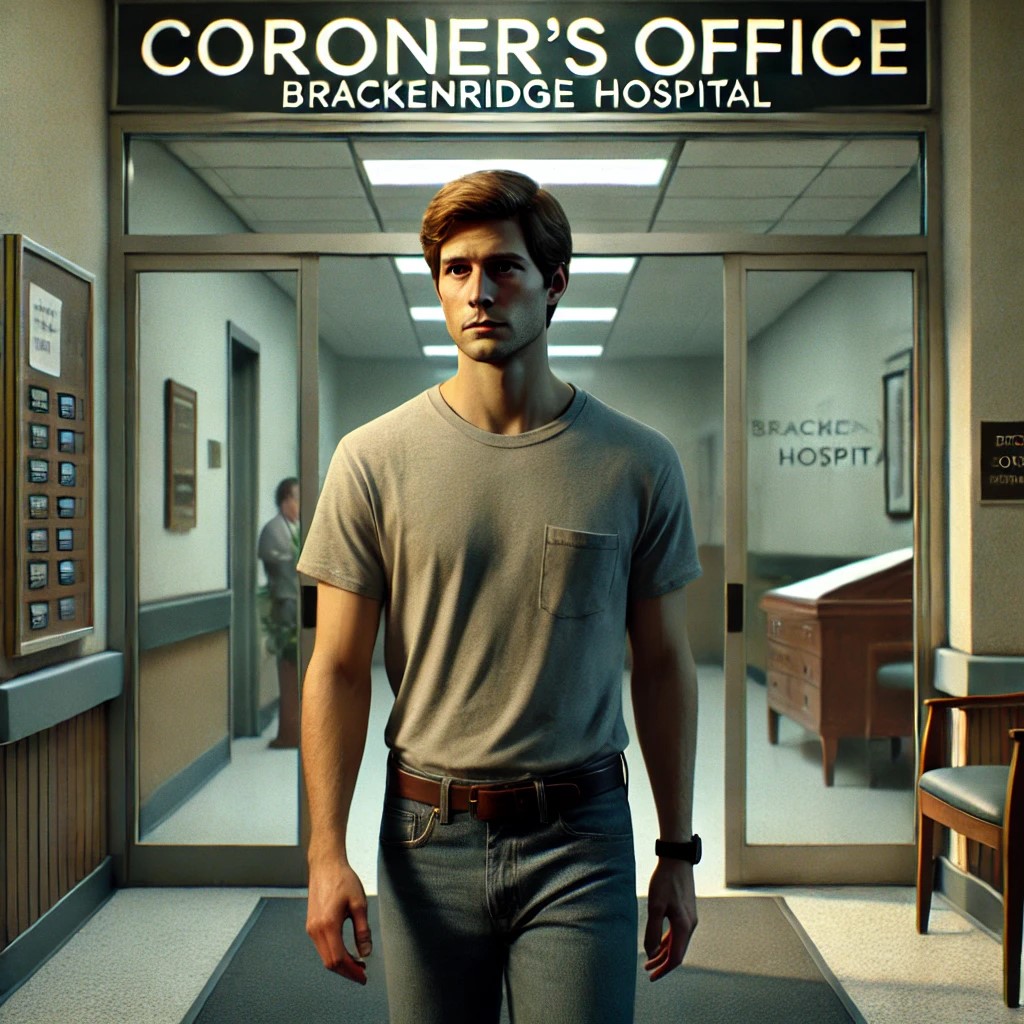
I got into Austin in the early afternoon and was asked to wait until the examiner returned from lunch. He greeted me, and we took seats next to each other in hallway chairs outside the doors of the morgue. He was a middle-aged man, professional but empathetic. Especially so when I told him this was the first death of a family member I had experienced and that I was Dad’s only relative within thirteen hundred miles. I got to the inevitable question … “How did my dad kill himself?”
“He bent over a deer rifle inside the front door of his trailer and shot himself through the heart.”
“Well, that would certainly do it,” I thought. I then asked him to let me see my dad’s body.
“Oh, no, son. You don’t want to do that!”
I insisted, so he explained. “Don … your dad was dead inside the trailer for four days. The examiner on the scene reported the time of death as Friday. In part, that was determined by the newspapers in his home. He had brought in the last one on Thursday.”
“So Friday … Friday the tenth was the estimated time of death?” I asked.
“Yes. The tenth. By the time his landlord found his body yesterday, he had lain there for four days, his remains festering. He had turned off the electricity and shut all the windows. With no air conditioning, even in October, he basically cooked in our Texas heat inside that trailer. I’m a professional, and I see bodies every day, and I don’t even want to look at him. No … I just can’t do that to you. Try to remember him as he was, Don.”
I knew I could have insisted and made it happen, but I processed what he said and came to acknowledge the examiner was correct. I didn’t need to see my dad like that.
“You said he left a note. May I have it?” He reached into his pocket and then placed it in my hand.
It ended with, “Dear Don … ain’t this a helluva way to kick the cigarette habit.” (If this had been a modern text, it would have had a laughing emoji after it.)
When I explained I wanted his remains cremated, he provided me the name of a man and the number of a local crematorium. He even gave me a quarter for the phone call and pointed me to a pay phone on the hallway wall. I called and made arrangements for them to collect my dad’s remains. In the meantime, I signed the appropriate paperwork to allow that.
I had friends in Austin and decided to stay close if needed to transact any business with the crematorium. I checked into a local hotel and then, with the address of his trailer park, headed there to talk with the landlord.
He looked to be in his fifties. He lived with his wife in their own trailer, closest to the entrance to the park. I went to his door and introduced myself. Like everyone else, he expressed his condolences, and then I asked how he had discovered my dad’s body. He said, “Let’s take a walk,” We left his porch and headed to Dad’s trailer.
We got about fifty feet away, and I could already see black flies clinging and caked to every inch of the trailer’s window screens. Within about thirty feet, you could already smell the stench. We stopped, and he related the details.
“Yesterday, my wife asked me if I’d seen Don lately. ‘He hasn’t picked up his mail in several days. I think you better go check on him. We got to about where we are now, and I saw just what you’re seeing and smelling, and I knew immediately your dad was gone. I didn’t bother to go in; I just went to my phone and called the local sheriff. He arrived, and the coroner soon followed. When they had left with your dad’s body, I went inside.
You know, your dad wrecked my trailer. Blood ran toward the edge of the wall beneath the door, and the pool of it is still there. There is also a big hole in the ceiling above where he shot himself, and it has his remains clinging to it. That trailer is how I make my living. I can’t rent it to anyone like that. You will have to arrange to get it cleaned up and pay for the repair.”
I explained I had just gotten out of college, gotten my first job, and barely my first paycheck. “I am his only relative in Texas. I can’t afford to pay a service company. I will have to do it myself.” He gave me the front door key and returned to his own trailer.
The following morning, I got up early. There were no Home Depots in Texas in 1980, but there was a similar retail chain called Handy Dan’s. I drove to their closest location and loaded up on cleaning supplies. They consisted of a couple of big yellow buckets and scrubbing brushes—one with an extended handle, a gallon of bleach, a bottle of Lysol disinfectant and Mr. Clean, some sponges, and a mop. I returned to the trailer and parked next to his Electra.
I carried the cleaning supplies onto the deck of his trailer. As much as I had attempted to prepare myself for the aftermath of his suicide, I could not have. I opened the door and immediately began to gag. The landlord had not bothered to turn the air conditioner back on, and the heat and stench inside entered my nostrils and crawled down my throat into my gut like a giant, rotting nutria hell. Unless you have experienced the smell of a corpse that has been rotting for days, I cannot do justice in describing it. It stays with you for the rest of your life and returns to me as I write this. I immediately turned and vomited. It was just one thing more to clean up.
With the door open and a bucket of supplies in hand, I stepped inside. I had to clear the pool of blood about three feet deep from the door jam. Once past it, I put the bucket down and turned to survey the mess. The floor was unlevel, and the blood ran toward it until it stopped. It collected until it was a good inch deep. By now, maggots were crawling through it, twisting and squirming. I looked up at the hole in the ceiling. Strands of viscera clung to its edge and extended another twelve to eighteen inches from its center.
“Where to begin,” I thought. I realized I needed to get that red pool out from under my feet so as not to find myself lying in that undulating pool of larvae in the process of consuming it. I knew it would require the one thing I had not brought. A small, thin shovel. My dad had been conscientious enough to box every last thing he owned and had stacked most of the boxes neatly against the sofa. But I went to one on the kitchen counter marked “utensils” and retrieved a spatula from it. I returned to the pool and looked down.
This was something of a defining moment in the process. Everywhere I had engaged in manual labor up to and including summer breaks in college, I was the guy the foreman always called on for the dirtiest jobs. It was either because I was the rookie on the crew or because I quickly earned the reputation as the guy who went straight to work and took care of the situation without complaint. I was heretofore unfamiliar with the term “biohazard remediation,” but that’s exactly what I was undertaking. If I were to get through it, I was going to have to disassociate myself from the conscious acknowledgment that this was the flesh from which I came … that this was my dad I would be scraping into a bucket. I channeled the boiler factory I worked in just out of high school and convinced myself I was back there cleaning up the worst mess on the shop floor and proceeded to knock the job out.
I had just gotten most of the blood into one of the buckets and was about to begin scraping the ceiling above me when I heard someone approaching. I looked out the open door to see that manager coming onto the porch. He came in and surveyed the scene. His eyes were softer than when we met the day before, and he said, “We saw you unloading these supplies through our kitchen window, and my wife said, ‘Tom, you can’t let that boy clean up that mess by himself. You need to get out there and help him. She shamed me into this.”
I thanked him, and we divided up the duties (whatever was left of them). By late afternoon, we had done all we could do. I left the windows open and went back to my hotel room. The next day, I made a phone call, left my room, and arrived back there with a U-Haul trailer attached to the rear of my Monte Carlo. A short while later, two friends arrived. Billy and Barry had traveled all the way from Houston to help me load it. As a country western song says, “You find out who your friends are …”
Even over the smell of bleach and Lysol, they gagged when they hit the front door. “Man, I can’t believe you had to do this!” they said, almost in unison. I just shrugged. My conscious mind remained detached. I was still on a shop floor somewhere.

With the U-Haul loaded, Billy and Barry prepared to head back to Houston. I told them I would follow a little later, and as they departed, I took a seat on the edge of the porch deck. The sun was going down and glowing burnt orange through the branches of the live oak trees. Perched on them, the Grackles, accompanied by crickets and cicadas, raised an orchestral cacophony I knew I would capture in a poem someday. “I’ll call it ‘Balcones Serenade,'” I thought.

It was a symphony of nature and confirmation life around me would go on, unchecked by the coming and going of the likes of me, my dad, or any of us. Which got me thinking about the “going” part. Not mine. But his.
It’s difficult for me to say, but you must have determined by now that my dad set me up to find him. He knew I was coming through Austin that Friday afternoon. And he knew—or at least thought—I would be dropping in to check on him. And were it not for my running so late, I would have. He also knew that when he didn’t answer the door, I would try the door and walk in. And there, at my very feet, I would have found him in that pool of red and the remnants of his shredded heart hanging from the ceiling above him. Like a scene from a Shakespearean tragedy, he had set the stage. And all I had to do was open the curtain. I knew him. And I knew exactly how he thought.
His last thought was (and I am certain he grinned as he thought), “This will show Junior. He told me to find a way to do it. ‘This will do the trick.’ I only wish I could see his face when he opens the door.” . . . Bang.
Yeah, I knew my dad. You see, I’m a lot like him. He always had to be right. He never lost an argument, and he always . . . and I mean always . . . had to have the last word.
Discover more from bardofthewoods.com
Subscribe to get the latest posts sent to your email.


Leave a comment